Day 11: The James Gang!
Main Page > Cowboys & Indians >
"I sleep all day,
out all night
I know where you're goin'
I don't think that's actin' right
You don't think it's showin!"
Ma-Zerelda to Jesse
Funk #49
By Joe Walsh and the James Gange
The morning was one of those sticky hot 90 degree Midwestern days that made Mike and Bone miss the Utah Desert, they had grabbed a quick breakfast from the Hotel, including horrible Hotel coffee. and headed to a den of vipers! Bad Guys, Black Hats!! The home of Jesse and Frank James!!
Crossing the Missouri, into Kearney Missouri!
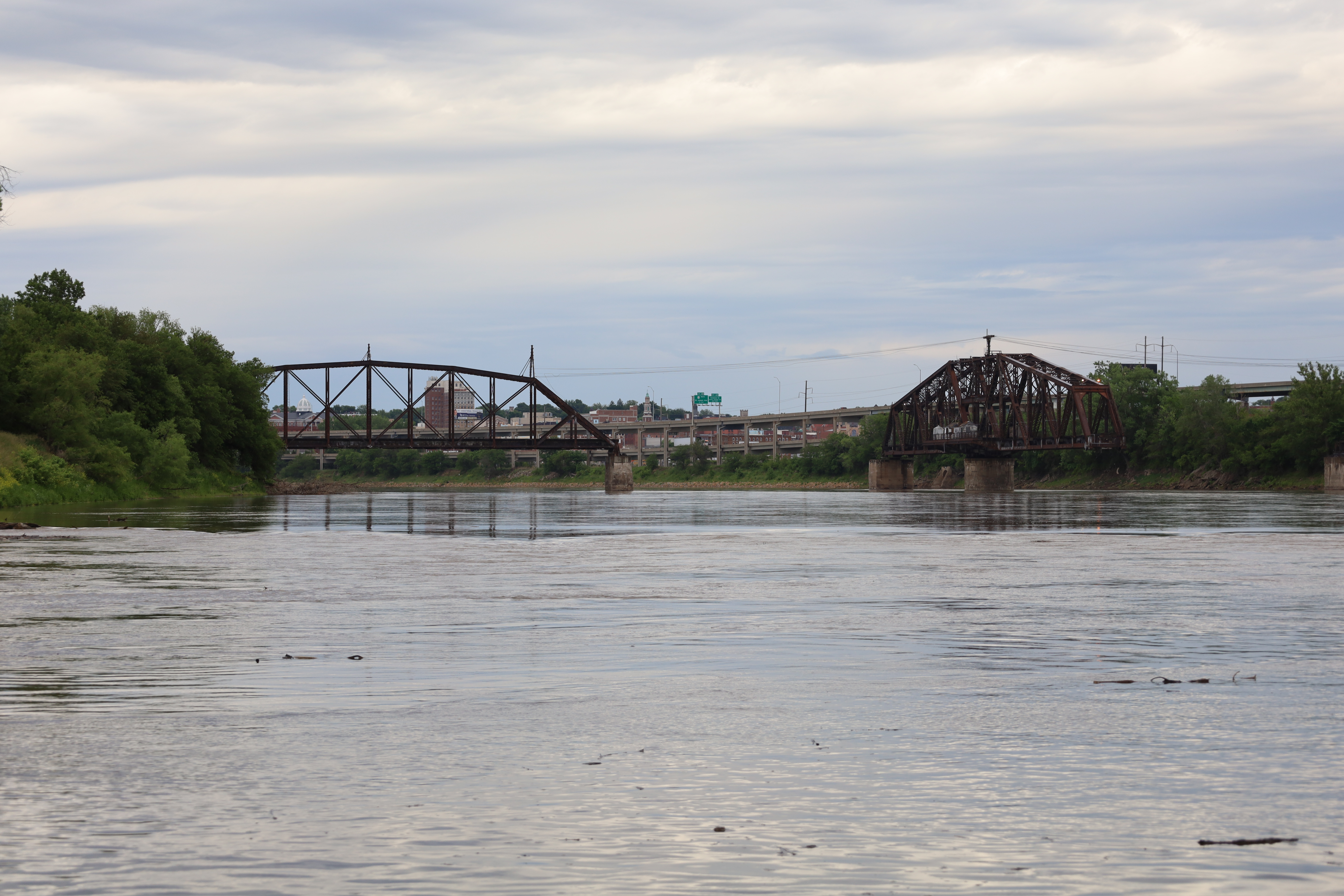
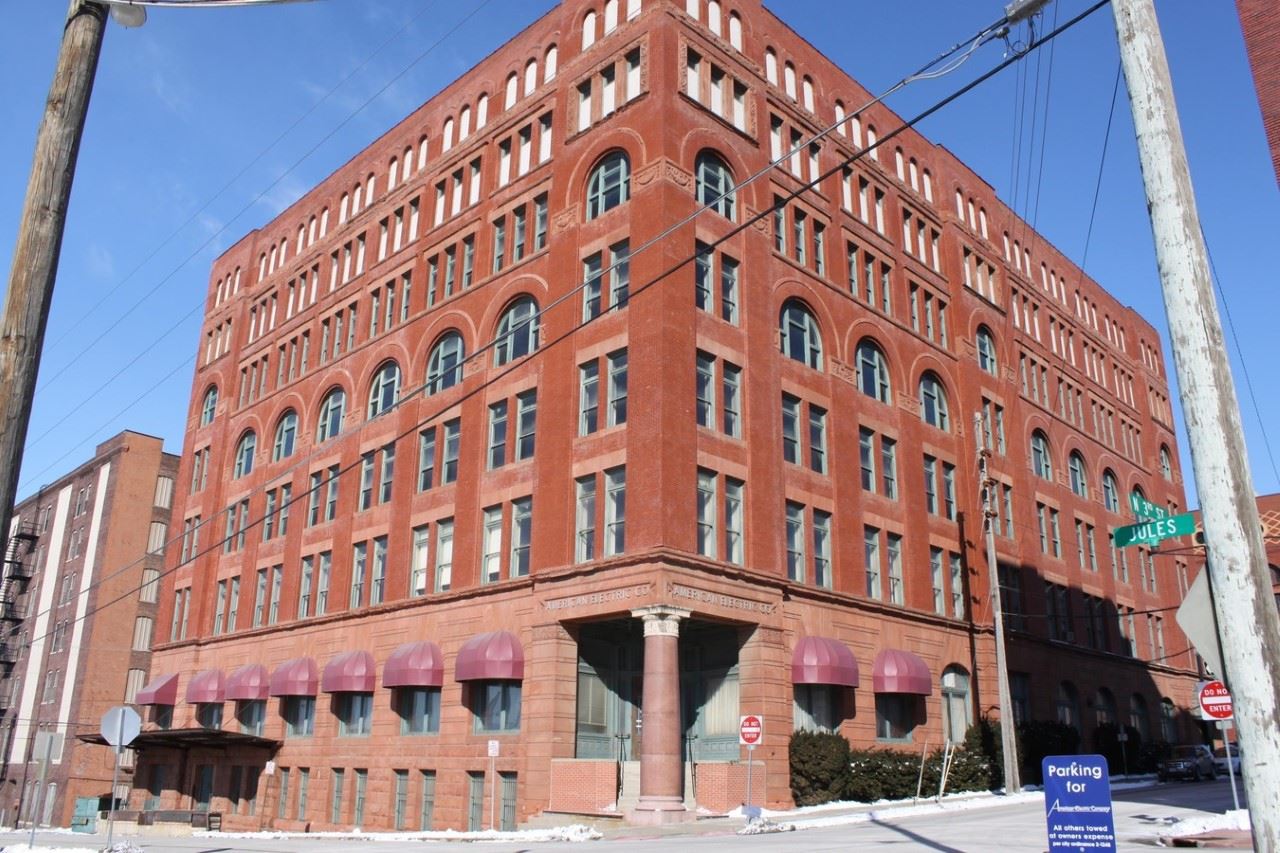
The James Family were traditional western Missouri citizens in the middle 1860's, were originally from Southern states—primarily Tennessee, Kentucky, and Virginia. Frank and Jesse James parents were themselves from Woodford County Kentucky, which explained their love of bourbon and slavery! Siding with the South, the James Family played an interesting role in the Civil War years and more importantly after. Much of that activity surrounded the Family home just on the Kansas border in Kearney Missouri!
The Den of Snakes" The Home of Zerelda James - One of Frank and Jesse James Hideouts!
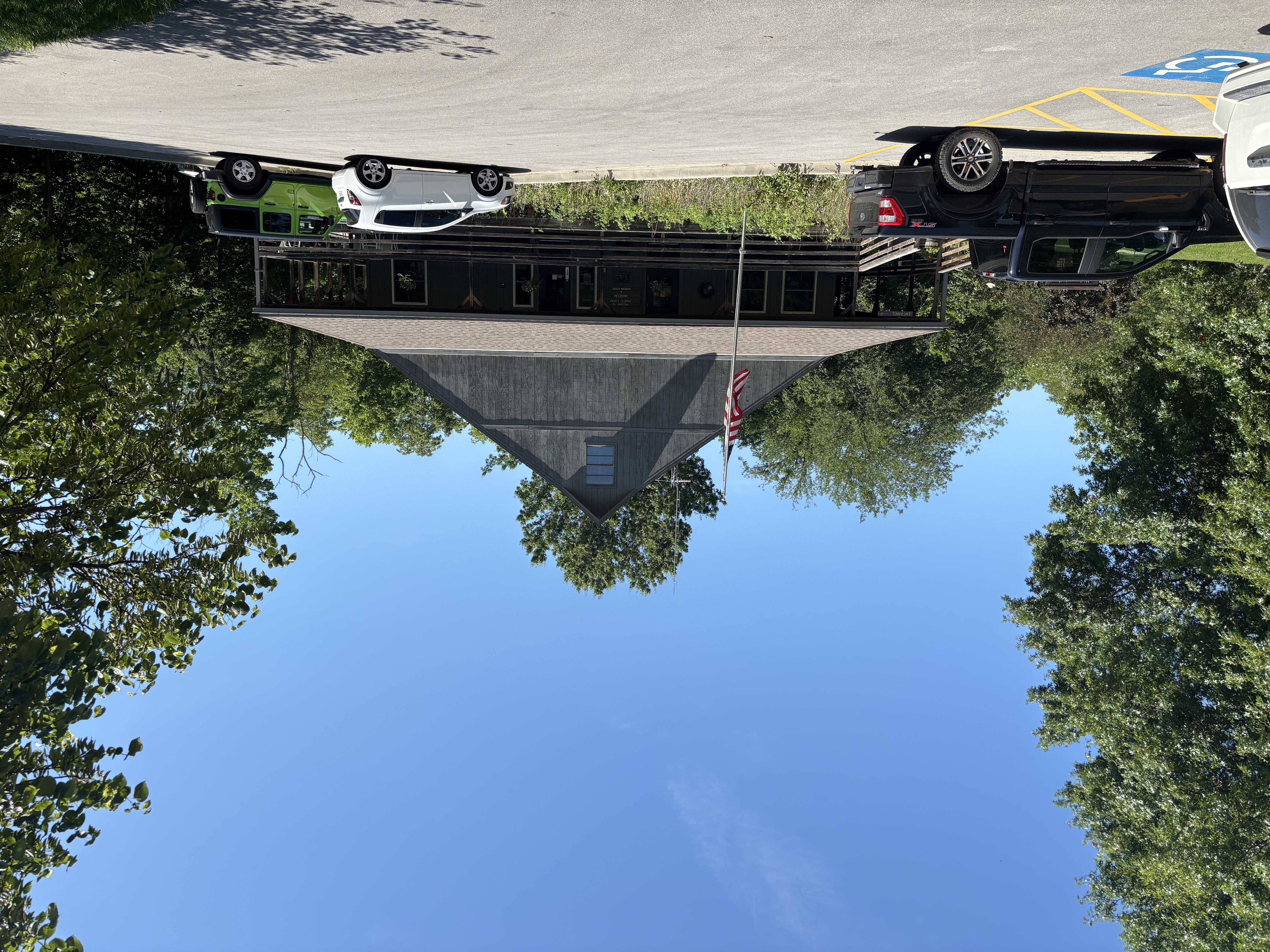
Mike and Bone wanted to check out the Jesse James Birthplace Museum, where they covered the life and times of a controversial family of confederates and the broader historical context that shaped their lives, including the Civil War, particularly the Missouri Border War, and Frank and Jesse’s post-war “activities.” Getting the site around 9:00 AM, the Boys checked out the cool little museum for the James Family!
Bushwhacking Bloody Bill and Buddies!
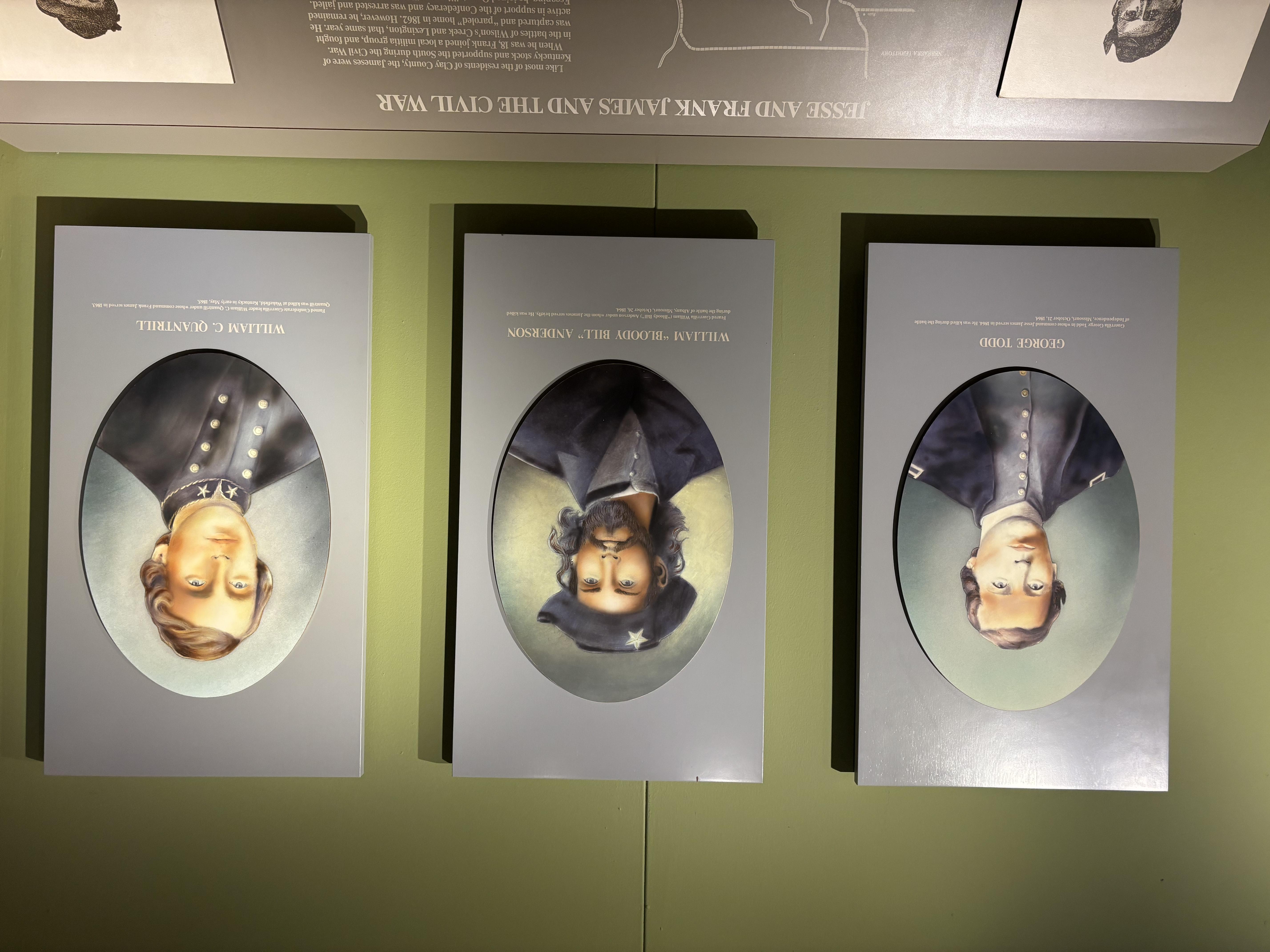
Learning about James and Frank, requires a good understanding of the Civil War, The Civil War in Missouri may have only a few big battles, but Missouri ranks third in the number of Civil War battles fought on its soil. Although some sizable actions were fought in the state, most of the battles were the result of the intense guerrilla activity. These battles are only the actions reported by Federal troops against the guerrillas. The attacks on civilians were equally as numerous. Long before the Civil War began, Missouri was deeply divided over whether slavery should be extended to neighboring Kansas, with those on the border supporting the south like the James Family highly agitated about being dictated by Washington that they have to stay in the Union, despite Missouri wanting to join the Confederacy. So what do you do when you do not have the ability to win in traditional war? You go guerilla! Most of the "battles" in Missouri, that were some of the most bloody and gruesome, were the guerilla battles in Missouri. The Frank James started in the regular Confederate Army and fought in the Battle of Centrallia, without his ardent little brother Jesse, that Mommy Zeralda wouldn't let the 14 year old Jesse join. HOWEVER, once the Confederate Regular Army in Missouri crumbled Frank and now Jesse joined the irregulars, also known as the Guerillas, or more known as the Bushwackers!
Guerrilla warfare or bushwhacking went on in Missouri for most of the Civil War. Bands of pro-South men would hunt and kill Union soldiers and pro-Union civilians. William Quantrill and Bill Anderson were perfect examples of bushwhacking leaders. Their campaigns during the war characterize how unique the Civil War was in Missouri.
William Quantrill was born in Ohio and became a schoolteacher. He moved to Kansas and then Missouri. While it is unclear how or why, sometime during this period Quantrill developed a radical hatred of anti-slavery men and women in Kansas known as Jayhawkers. His hatred compelled him to work secretly to gain the trust of a band of Jayhawkers so that in 1858 he could help trap them in an ambush, where he helped in the killing of three.
When the Civil War broke out, Quantrill became the leader of a band of some 400 guerrillas organized into smaller groups. They terrorized Union soldiers, moving quickly and sneakily.
Most famously, Quantrill led a raid on Lawrence, Kansas, where he burned and murdered fathers and sons in a brutal fashion.
Eventually, Quantrill was killed in a conflict in Kentucky following the end of the Civil War. His legacy is a statement to the fiercely divided loyalties of Missourians during the war. He is remembered as a brutal murderer by some, and as a defender against Federal aggression
“Bloody” Bill Anderson was born in Randolph County, Missouri, in 1840. In 1862, after General Sterling Price was driven from Missouri, Bill Anderson joined William Quantrill’s band of Bushwhackers. In 1864 he broke from Quantrill after a dispute and went on to terrorize Missouri with an independent band. He was said to have decorated his horse with the skulls of those he killed and marked each kill with a knot in a silken cord.
Most notable was his attack at Centralia, Missouri, where he ran into about 20 Union soldiers on leave. He had them stripped, murdered, and mutilated. This he did with Frank and Jesse James!
He was finally killed in October 1864 when a group of Union soldiers led by Colonel Samuel P. Cox found him and shot him from his horse. The brutality of Bloody Bill’s gang was infamous. Young 16-year old Jesse James learn how to be both ruthless and merciless in raiding with Quantrill and Bloody Bill! In 1864 he broke from Quantrill after a dispute and went on to terrorize Missouri with an independent band. Most notable was his attack at Centralia, Missouri, where he found about 20 Union soldiers on leave. He had them stripped, murdered, and mutilated. He then defeated a band of 120 Union Calvary that was sent to pursue him. He finally met his demise in October 1864 when a group of Union soldiers led by Colonel Samuel P. Cox found him and shot him from his horse. The brutality of Bloody Bill’s gang, with such infamous members as Frank and Jesse James, would continue on and become legendary after the war’s end.
Frank's Civil War Battle
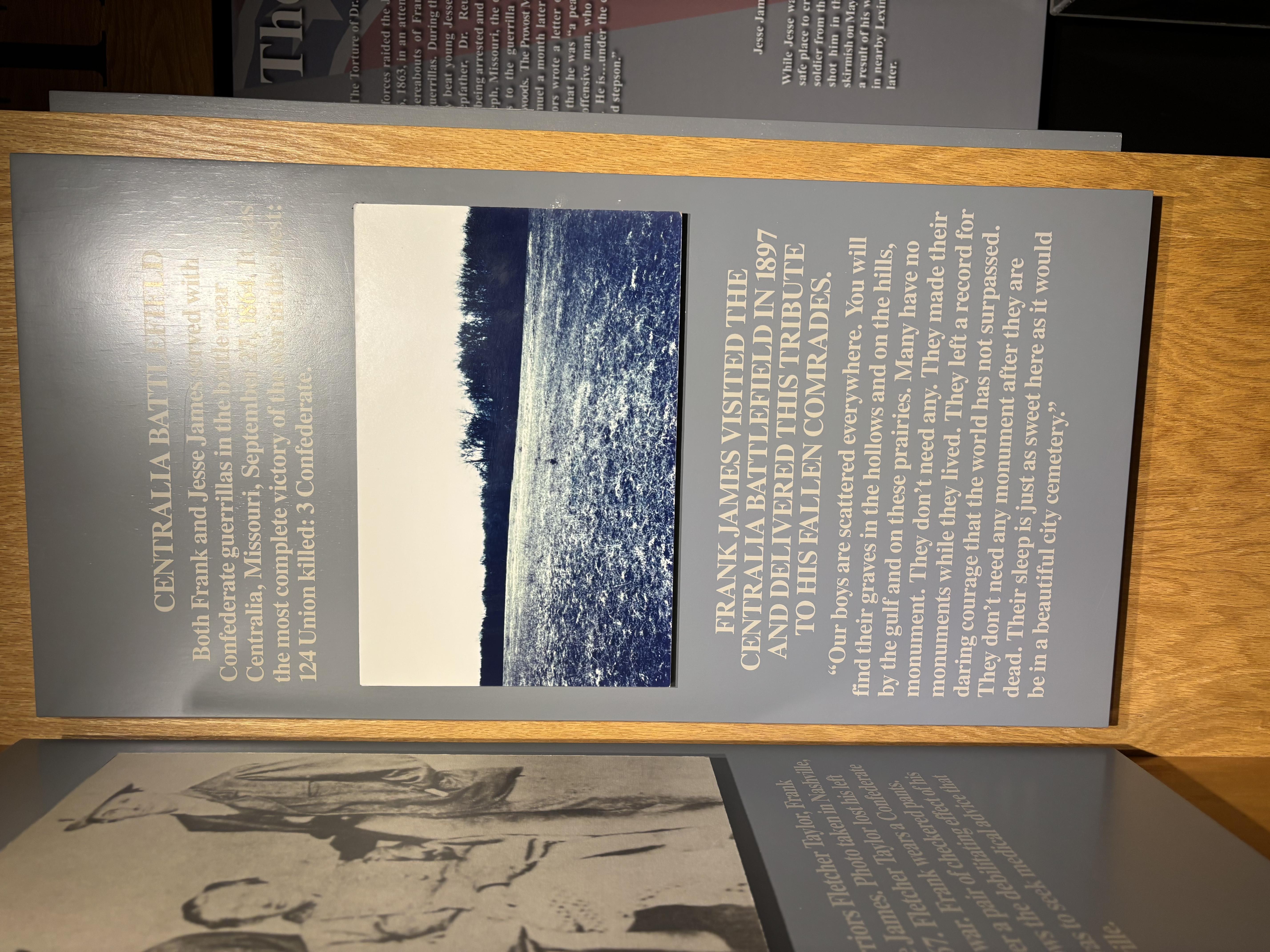
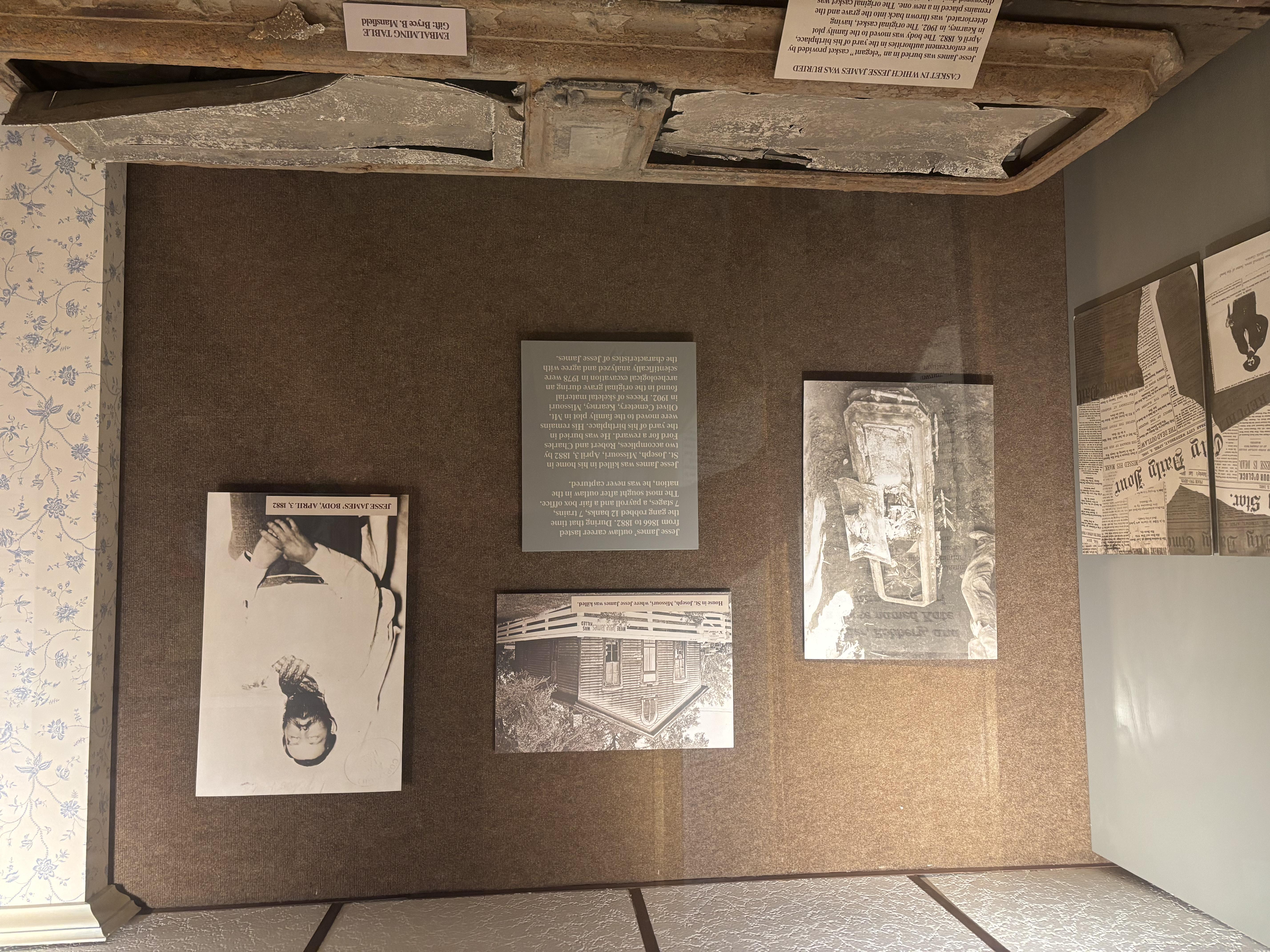
That legend started shortly after the Civil War ended. The James brothers lived and worked on Zerelda’s farm after the war, even joining the local Baptist Church. But lawlessness was still the scourge of the Missouri countryside as bands of wartime irregulars, unable to readjust to civilian life, harassed the citizenry. The state militia was often called in to disrupt the felons, although sometimes the cure was worse than the disease. When and why Frank and Jesse turned to robbery is debated by the many chroniclers of their life. Most of the crimes attributed to them cannot be validated decisively, and again, myth and legend prevail. Regardless, the former guerrillas were held accountable for many of the robberies, and men named and hunted by authorities were often former members of Quantrill’s band and known friends and associates of the James brothers. One such, Allan Parmar, even married the James’s sister, Susan. While some historians question the association of the James brothers with early robberies charged to them at the Clay County Savings Association bank at Liberty, at Russellville, and others, there is general agreement that it was they who robbed the Daviess County Savings Association at Gallatin, Missouri, on December 7, 1869, and killed Captain John W. Sheets. With this crime, the reputation of Frank and Jesse James was solidified and a price put on their heads. Many robberies over the next 13 years were associated with one or both of them, along with their James-Younger Gang.
The man most responsible for glorifying the post-war deeds of Frank and Jesse James was John Newman Edwards, editor and co-founder of the Kansas City Times, a former Confederate adjutant for General Joseph O. Shelby and a staunch supporter of the Lost Cause. After the James brothers robbed the Kansas City Industrial Exposition in 1872, Edwards published an editorial, The Chivalry of Crime, in which he downplayed the shooting and wounding of a young girl and—without actually naming them—compared the perpetrators to “men who might have sat with Arthur at the Round Table . . . .” Edwards contended that these men were ostensibly innocent of crimes after the war because they were forced into a life of banditry when pursued by those seeking revenge on them for their wartime behaviors. The audacity of the crime, which took place at an event with thousands of attendees, contributed equally to Edwards’s mythology. Shortly after the fair robbery, the gang took up a new form of thievery – train robbery. While not the first to do so, they perfected the technique, starting with their first robbery of the Chicago, Rock Island and Pacific Railroad about midway between Council Bluffs and Des Moines, Iowa.
The James brothers were aided and abetted by their neighbors, living openly in Clay County and surrounding areas despite the publicity surrounding their crimes and the rewards offered for their capture. Many in the area felt aggrieved by banks who charged high interest rates and by the railroad companies—for which they were taxed to subsidize—and then charged unreasonable rates to ship their products. This, coupled with Edwards’s glorification of the James gang as Robin Hoods who stole only from Union sympathizers and who had suffered at the hands of Union soldiers, provided Frank and Jesse with a certain amount of protection for many years. Alongside government agents, the private detectives hired by the railroads were stonewalled by the residents of Little Dixie, making the brothers’ capture more difficult. Referring to Jesse James as the “last rebel of the Civil War,” historian T.J. Stiles argues that the anti-Unionist and anti-Reconstruction sentiments urged by Edwards (and the gang itself) were the leading source of support and myth-making for Jesse James. Other historians place more emphasis on public distrust of banks and railroads, but whatever the mechanism, the James brothers managed to craft a public image that elicited sympathy rather than scorn for their crimes.
Bloody Bill and Buddies!
In 1881, Governor Thomas T. Crittenden, weary of the violence and concerned that Missouri was viewed by Easterners as a home for bandits and miscreants, offered a reward of $5,000 each for Frank or Jesse James delivered to the sheriff of Daviess County, plus a reward of $5,000 each if either was convicted for participating in the train robberies at Glendale or at Winston or for the murder of John W. Sheets, William Westfall, or John McCulloch. Finally, a similar reward was offered for information leading to the arrest and conviction of anyone else involved in the crimes.
The Killing of Jesse James by the "Coward" Robert Ford!
The reward money proved tempting to Robert Ford, one of the newer members of Jesse’s gang. He talked with his brother Charley, another gang member, about killing Jesse for the reward. Then in January 1882, he met with Governor Crittenden who agreed to give Ford a pardon and the reward money in exchange for his assistance in capturing Jesse. Whether Crittenden knew that Ford’s intention was to assassinate Jesse is not clear. Nonetheless, having gained Jesse’s confidence, Ford spent several days with him and his family in St. Joseph, Missouri.
After breakfast on the morning of April 3, 1882, Jesse, Ford, and his brother Charles went into the living room. While Jesse’s back was turned, Robert Ford shot him in the back of the head, just behind the ear. The Ford brothers fled the house, wired the governor that Jesse James was dead, and gave themselves up to the authorities in the town. The brothers were indicted for first degree murder and sentenced to hang, but on the very day they were sentenced, Governor Crittenden gave them an unconditional, full pardon.
Initially the public assumed that Frank James would seek revenge for his brother’s death. This was not the case. Instead, with the help of Edwards, who negotiated on his behalf, he arranged to surrender. On October 4, 1882, Frank James, with Edwards at his side, walked into the governor’s office where a group of newspapermen were assembled, and surrendered. He was taken by train to Independence, Missouri, and held in the local jail pending trial. He denied that he had participated in any crimes perpetuated by the band in the four years prior to his surrender.
The sympathy in which Frank and Jesse were held by those in Jackson County who had suffered the abuse of the jayhawkers and the infamous General Order No. 11, made conviction of Frank James problematic. The press argued not only for his acquittal but that his efforts on behalf of the South in the war earned him a “not guilty” verdict. There was also a serious lack of concrete evidence of his involvement in the crimes for which he was accused. On August 21, 1883, Frank James went on trial in Gallatin, Missouri, for the murder of Frank McMillan. He was found not guilty, but his legal problems were not over.
After plans to try James in Jackson County for the robbery at Blue Cut fell through due to legal wrangling, Frank was transported to Huntsville, Alabama, to await trial for the 1881 robbery of paymaster Alexander Smith. James was again found not guilty. In February 1885 prosecutors dropped the case brought against him for the 1876 Missouri Pacific robbery when their key witness died. Although other jurisdictions indicated that they were interested in trying James for crimes committed in their towns, no additional charges were brought against Frank James. He lived the rest of his life in relative quiet. He died on February 18, 1915, at the family farm in Kearney, Missouri. He was cremated to prevent his body from being stolen from the grave. Eventually his ashes were interred with those of his wife in a Kansas City cemetery.
Zerelda's Original Log Cabin
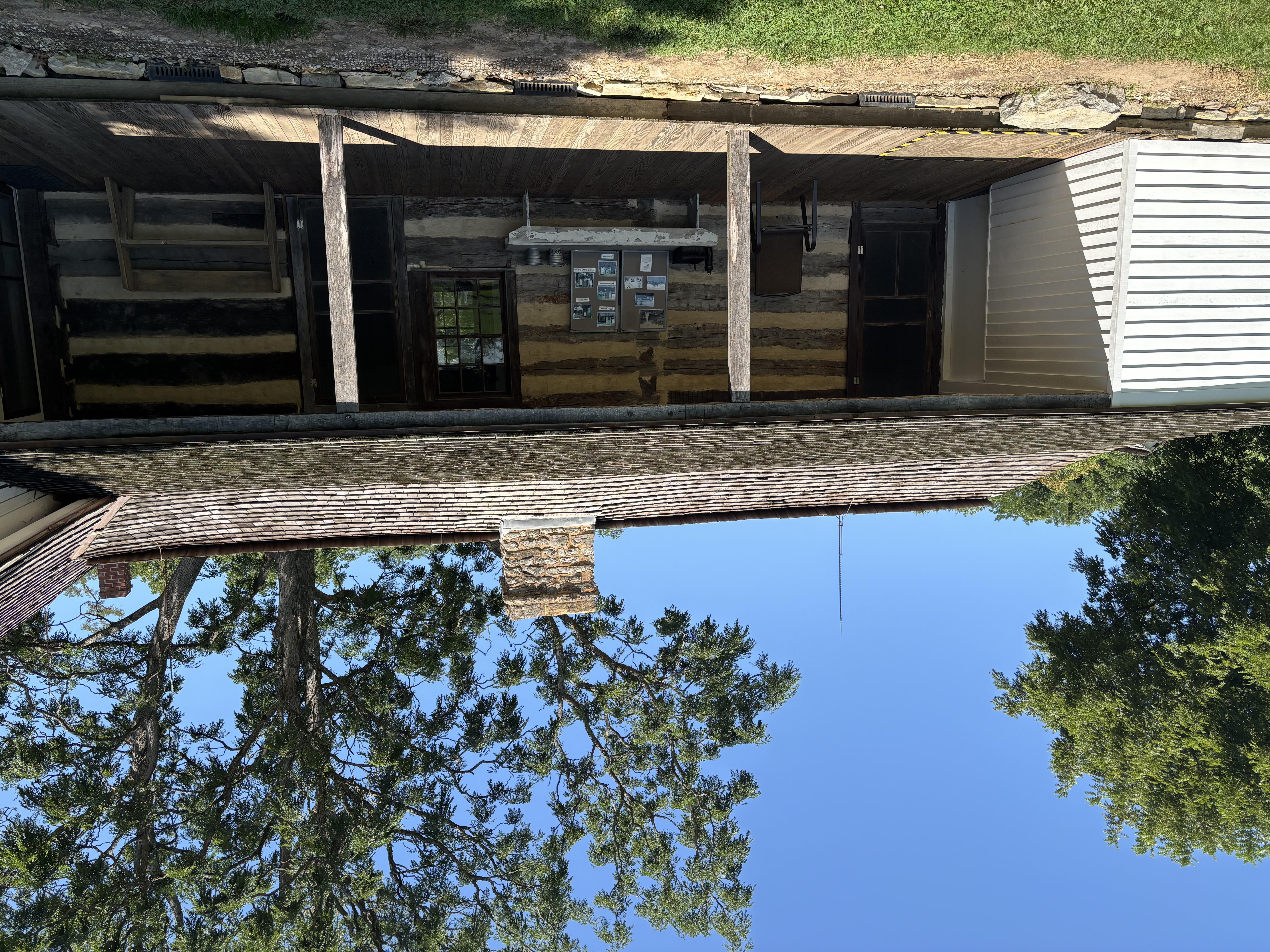
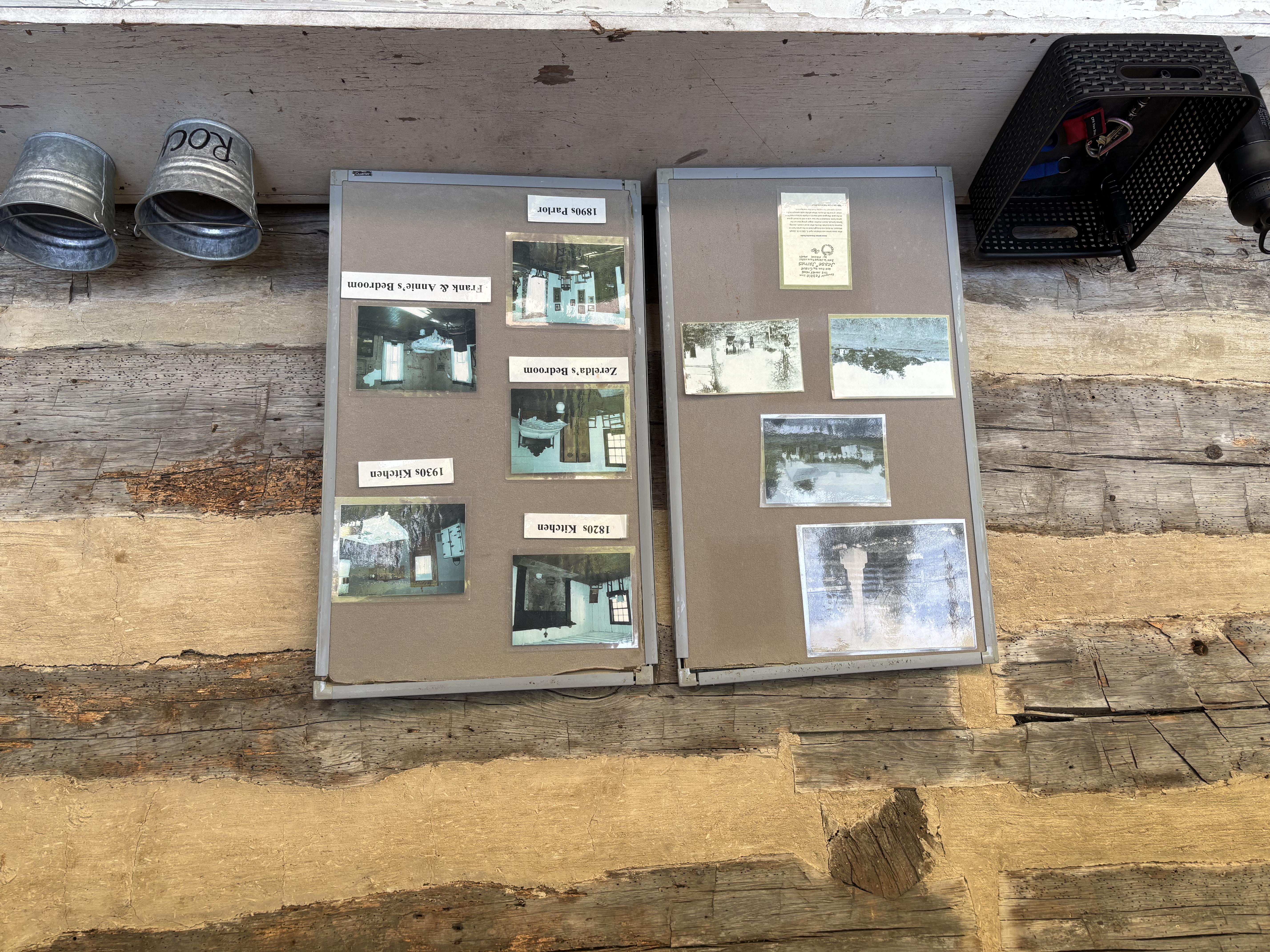
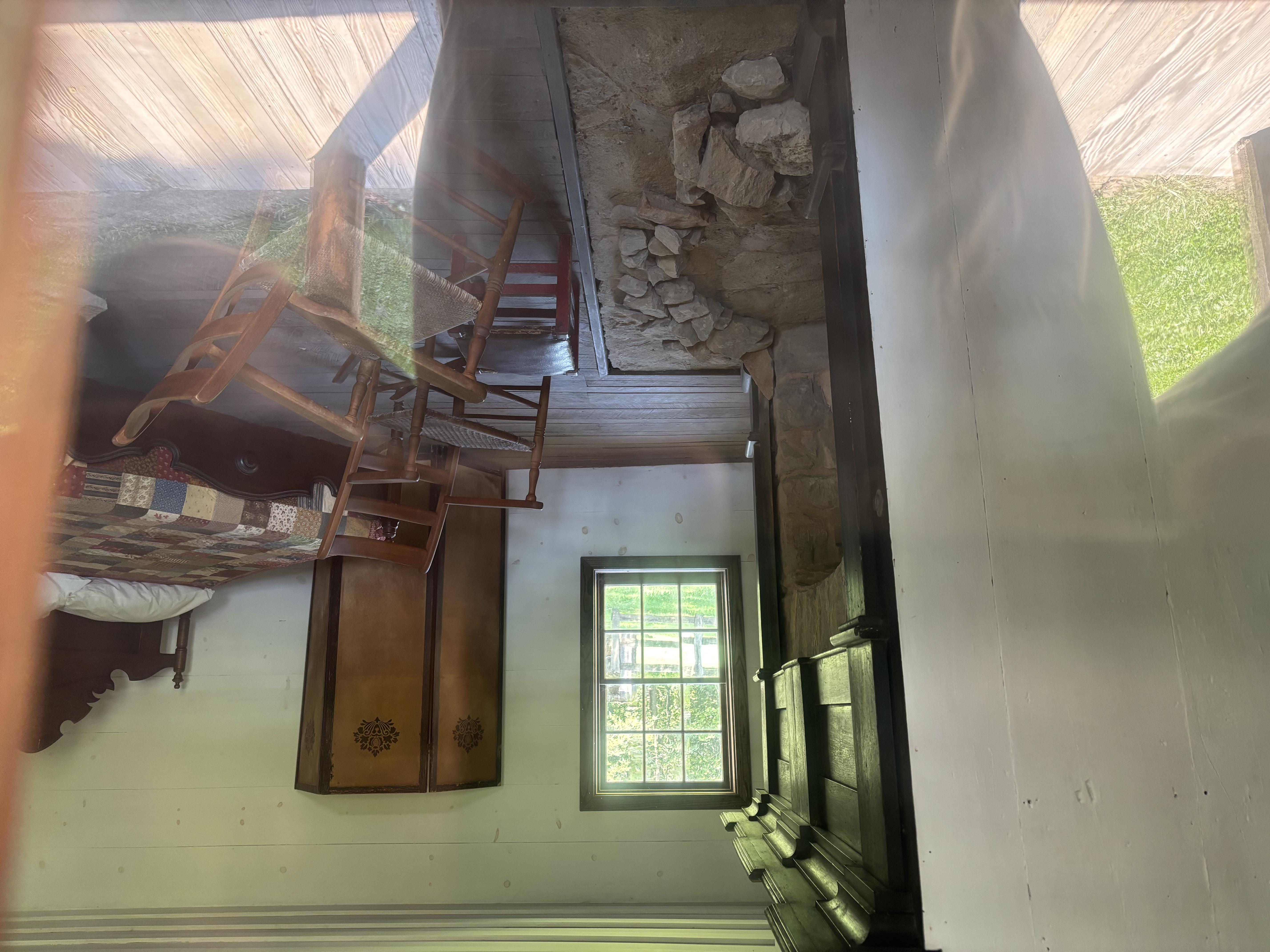
Mom Zerelda, almost outlived Robert, dying in 1911 at 86. After she had her right arm blew off during a Pinkerton Raid in 1875 looking for Frank and Jesse, she found unique ways to keep the farm going. Her son’s notoriety made many people wanted to visit the place where Jesse James grew up.
Zerelda charged for the tour, and the visitors were taken on a tour of the farmhouse including a vivid account of the Pinkerton Raid in January.
Here lies Jessie James, Shot in the Back by a Different Name!
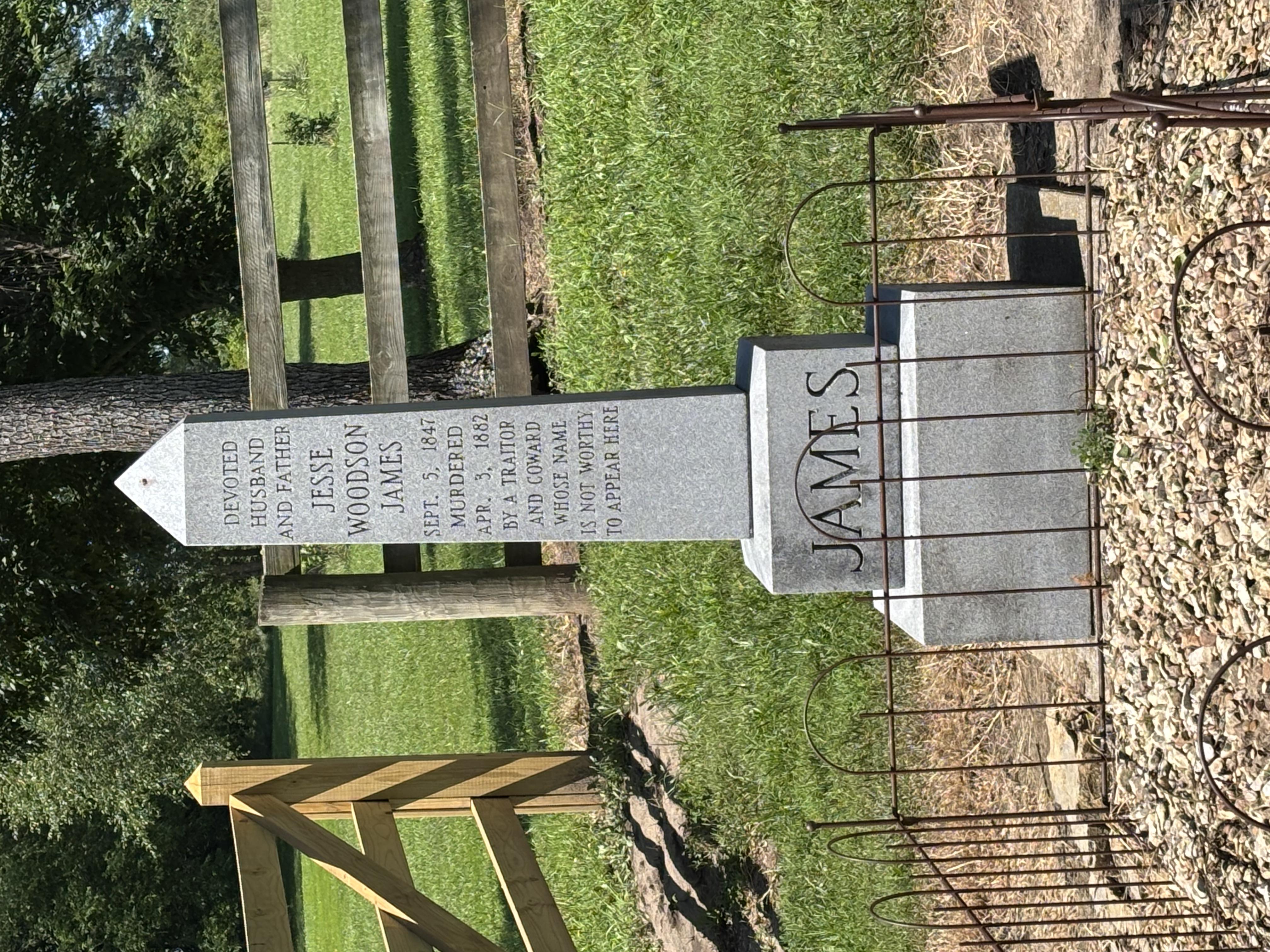
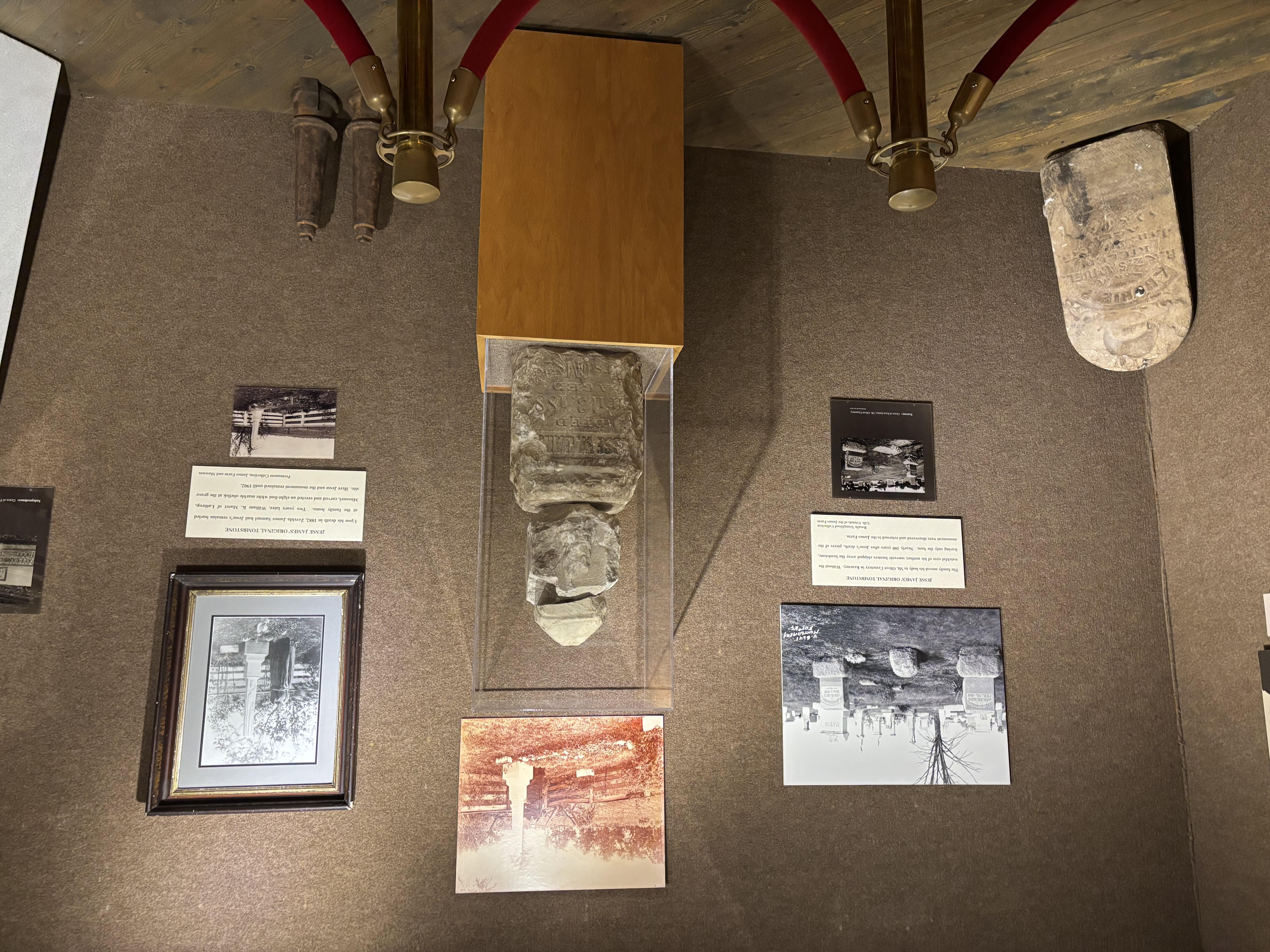
The tour culminated at the grave of Jesse, who was originally buried in the front yard outside Zerelda's bedroom window so when she slept at night, she had a clear, unobstructed view of his grave. Zerelda was worried that someone would come and take him so she had him buried an extra few feet down than the standard six. For an extra few coins visitors were allowed to scoop up the "authentic" pebbles from the grave. Zerelda replenished them from the stream where the boys used to play.
Years later when Jesse's wife, also named Zerelda, died, his mother had Jesse reburied alongside his wife at Mount Olivet in Kearney. She further would play on the sympathies of her visitors by offering to sell old, rusted, often inoperable guns that she said belonged to Jesse before he died, which in reality she had bought second-hand, leading to a proliferation of people claiming to and sincerely believing that they owned a gun that had once belonged to Jesse James. Exiting the Museum Mike and Bone checked out the old grave site, checking the box, they started the loong drive home!
Moving East across the Mighty Missippi!


With the visit to the James Farm over, Mike and Bone started down the country road to 400 east and on to I-70, moving at a good clip north and east through the steamy summer day, it was time to head home!
Trip, Postscript!
Mike drove deftly through the summer haze through Missouri,across the Mississippi, which is so much bigger than where the Boys stood in it in Lake Itasca! Gas Station Lunches were the fare of the day to multi-task in filling the tank as they filled their bellies and by 9:30, they crossed the familiar border of Byron Center! From Grandma's, to Lake Itasca, Wall Drug, Deadwood and Wild Bill, dinosaurs, and Grand Tetons, Grizzies and grizzled hikers in the Canyonlands. Mike and Bone parleyed with the Sioux at Wounded Knee, and a million dollar highway to the James Gang, Mike and Bone drove 6,800 miles seeing Cowboys and Indians!