Day 5: A Devil of a Monument to Wild Bill!
Main Page > Cowboys & Indians >
"Up on us all, a little rain must fall" quotes Robert Plant, and this morning it looked like one of those muggy, wet summer daze that all mid-westerners deal with. The lack of dining options in cruddy Kadoka damned the Boys to gas station coffee and breakfast burrito from the dump next to the Sunset grill. Regardless of the weather and food, Mike and Bone were dead set on getting to Deadwood!
A Soggy Start, Heading West on I-90!
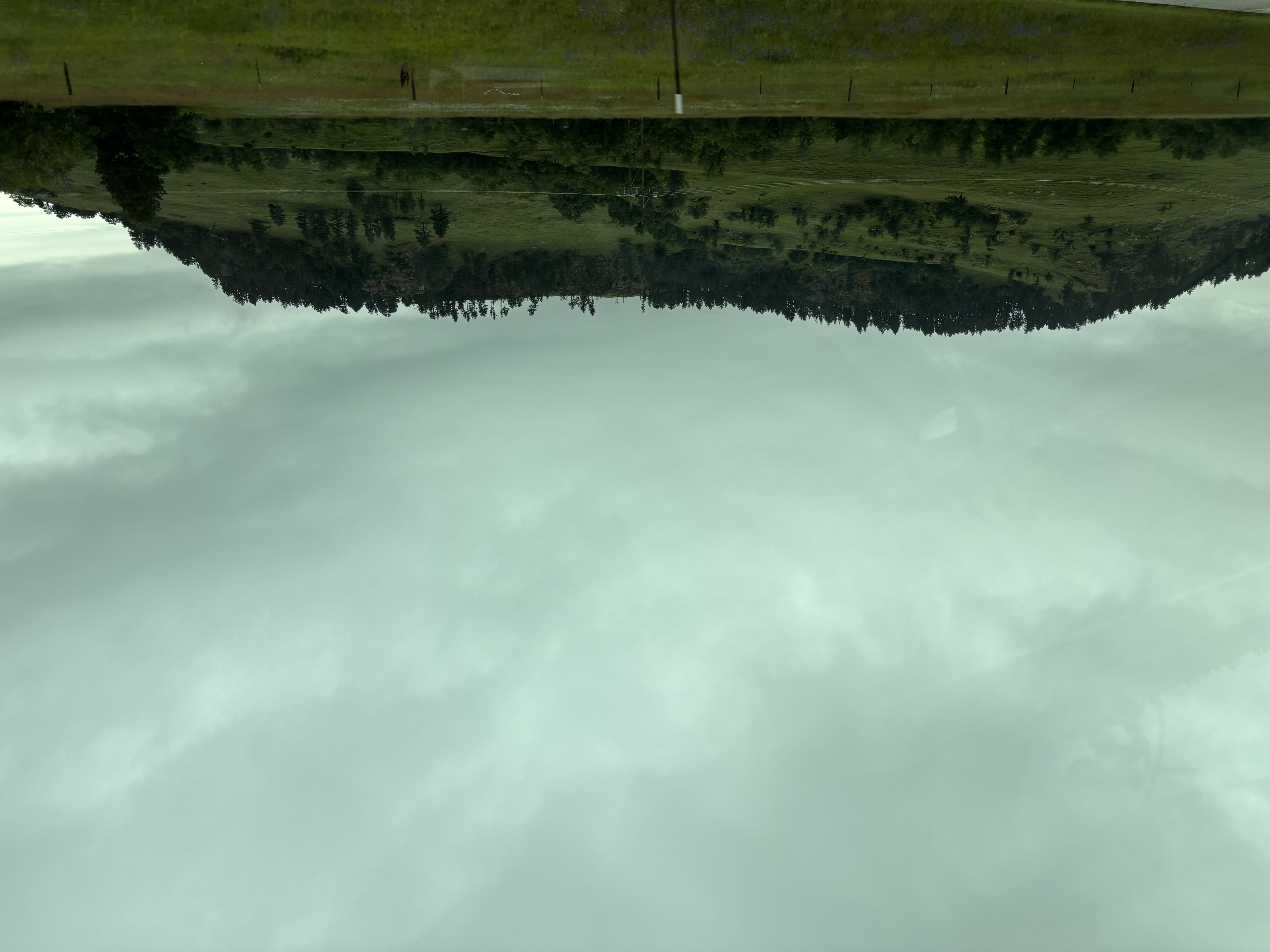
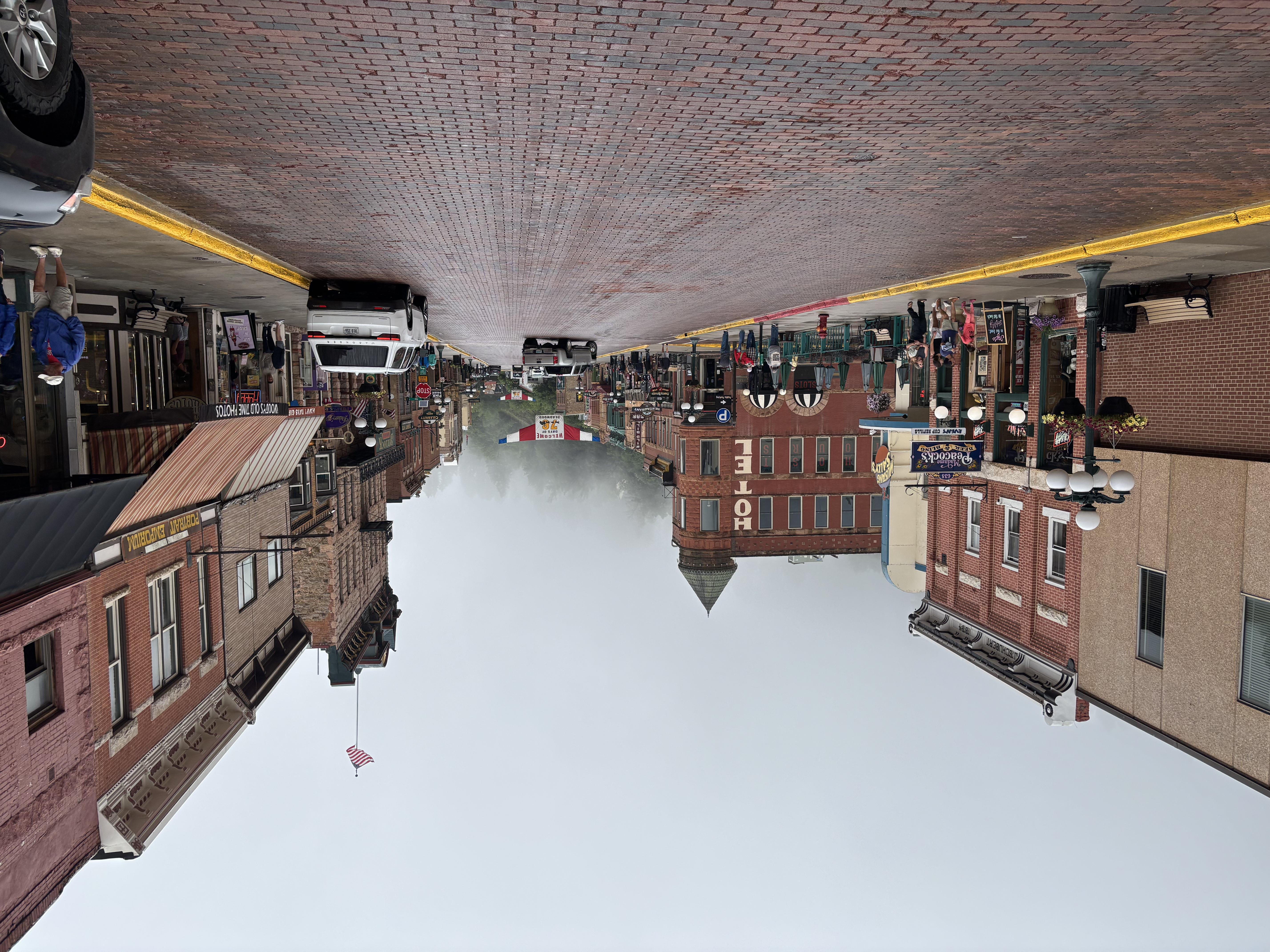
Deadwood, just the freakin' name sounds like the old west, and similar to Tombstone, it denotes a violent cowboy past! Well sorta! Deadwood is a non-sexy name, it was named in 1876 from early settlers and miners who discovered a gulch filled with an a whole bunch of dead, fallen trees. However it is has a storied past!
A Foggy Start to Downtown Deadwood!
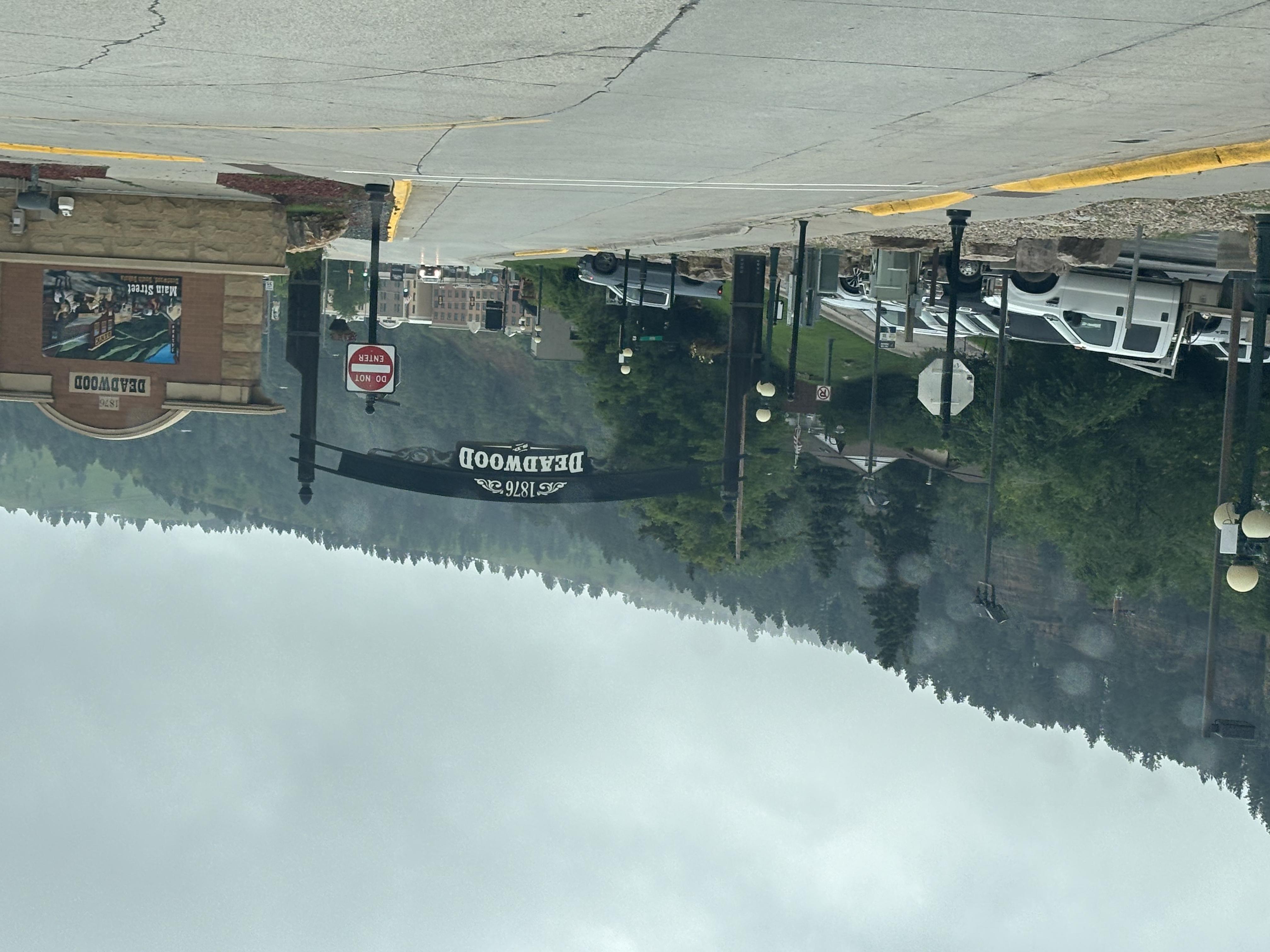
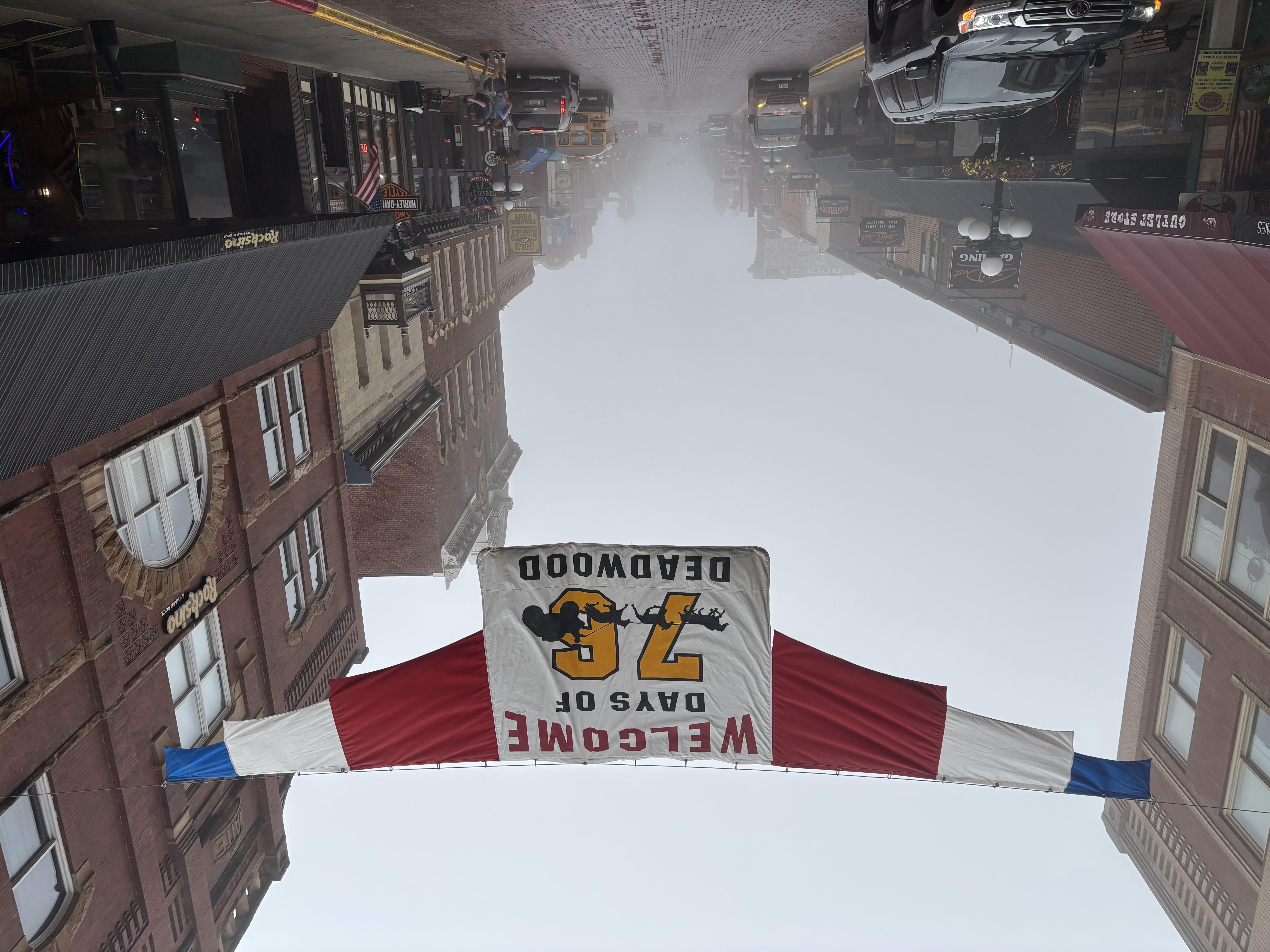
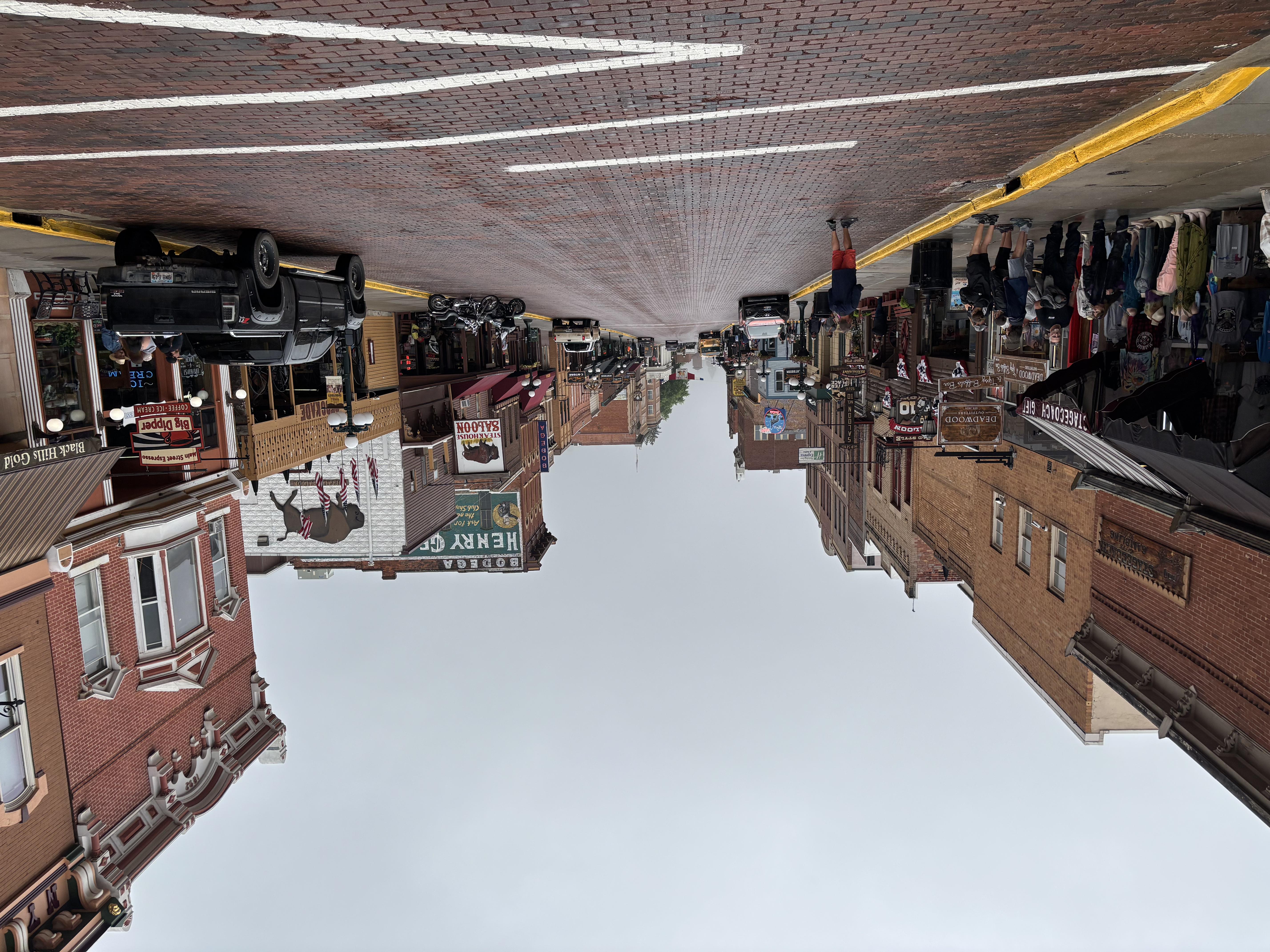
It is famously known as a rowdy 1870s Black Hills Gold Rush town, celebrated for its "Wild West" history, notorious gunslingers, which earned it a National Historic Landmark!
Ironically, being an outlaw town, Deadwood began illegally in the 1870s, on land which had been granted to the Lakota people in the 1868 Treaty of Fort Laramie. The treaty had guaranteed ownership of the Black Hills to the Lakota people, who consider this area to be sacred. The settlers' squatting led to numerous land disputes, several of which reached the United States Supreme Court.
However, everything changed after Custer was ordered to lead an expedition into the Black Hills and announced the discovery of gold in 1874, on French Creek near present-day Custer, South Dakota. This announcement was a catalyst for the Black Hills Gold Rush, and miners and entrepreneurs swept into the area. They created the new and lawless town of Deadwood.
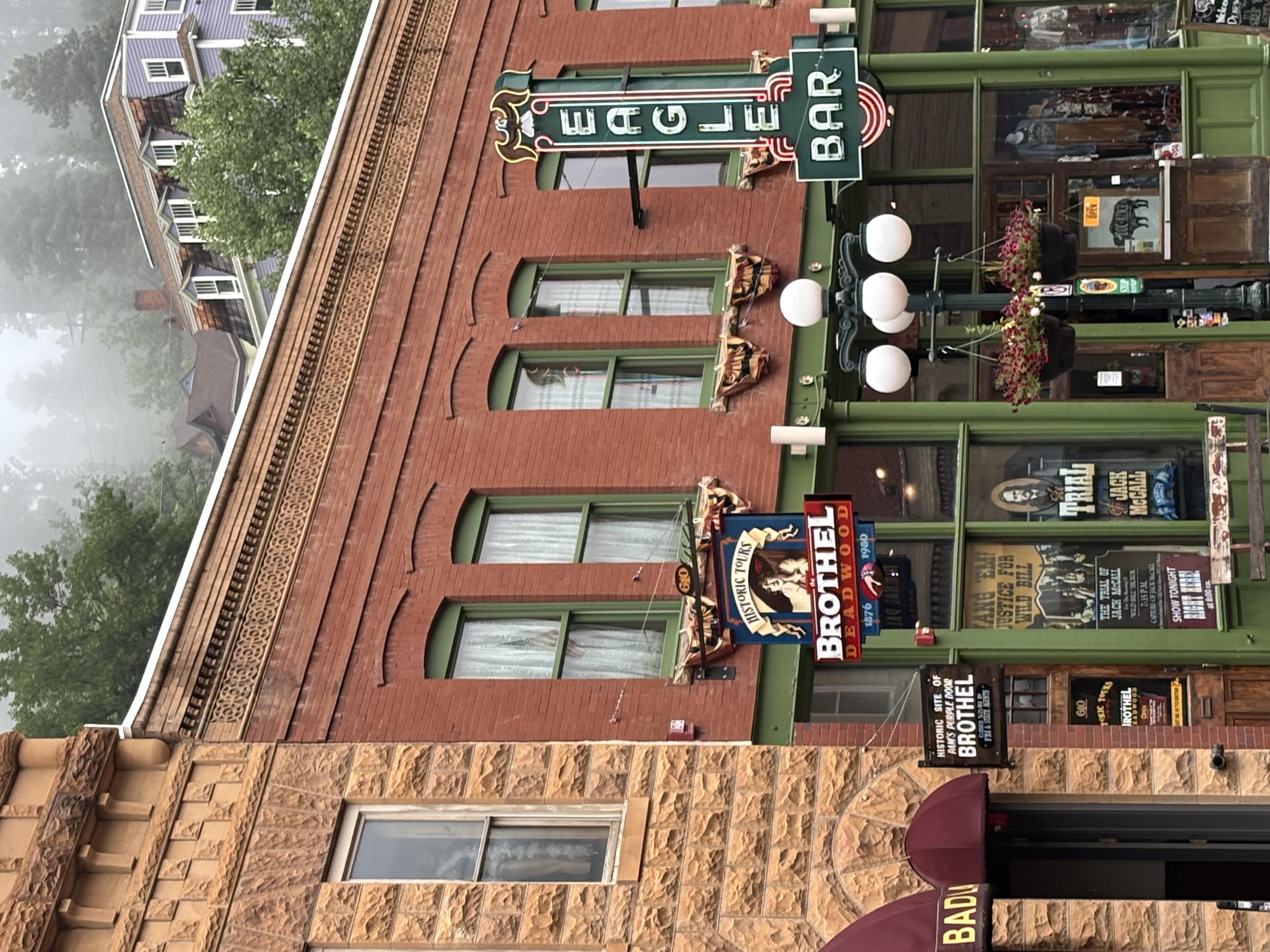
In early 1876, frontiersman Charlie Utter and his brother Steve led to Deadwood a wagon train containing what they believed were needed commodities, to bolster business. The town's numerous gamblers and prostitutes staffed several profitable ventures. Madame Mustache and Dirty Em were on the wagon train, and set up shop in what was referred to as Deadwood Gulch.
Women were in high demand by the miners, and the business of prostitution proved to have a good market. Madam Dora DuFran eventually became the most profitable brothel owner in Deadwood, closely followed by Madam Mollie Johnson.
Deadwood became known for its lawlessness; murders were common, and justice for murders not always fair and impartial. The town attained further notoriety when gunman Wild Bill Hickok was killed on August 2, 1876.
The Town was so lawless, that Hickok's murderer, Jack McCall, was prosecuted twice, despite the U.S. Constitution's prohibition against double jeopardy. Because Deadwood was an illegal town in Indian Territory, non-native civil authorities lacked the jurisdiction to prosecute McCall. McCall's trial was moved to a Dakota Territory court, where he was found guilty of murder and hanged.
As the economy changed from gold panning to deep mining, the individual miners went elsewhere or began to work in other fields. Hence Deadwood lost some of its rough and rowdy character, and began to develop into a prosperous town.
The Homestake Mine in nearby Lead was established in October 1877. It operated for more than a century, becoming the longest continuously operating gold mine in the United States. Gold mining operations did not cease until 2002. The mine has recently been opened for tourism.
The Homestake Mine in nearby Lead was established in October 1877. It operated for more than a century, becoming the longest continuously operating gold mine in the United States. Gold mining operations did not cease until 2002. The mine has recently been opened for tourism. It was so foggy, that the Boys decided check out Wild Bill's Grave (since everybody in town said you needed to check it out!)
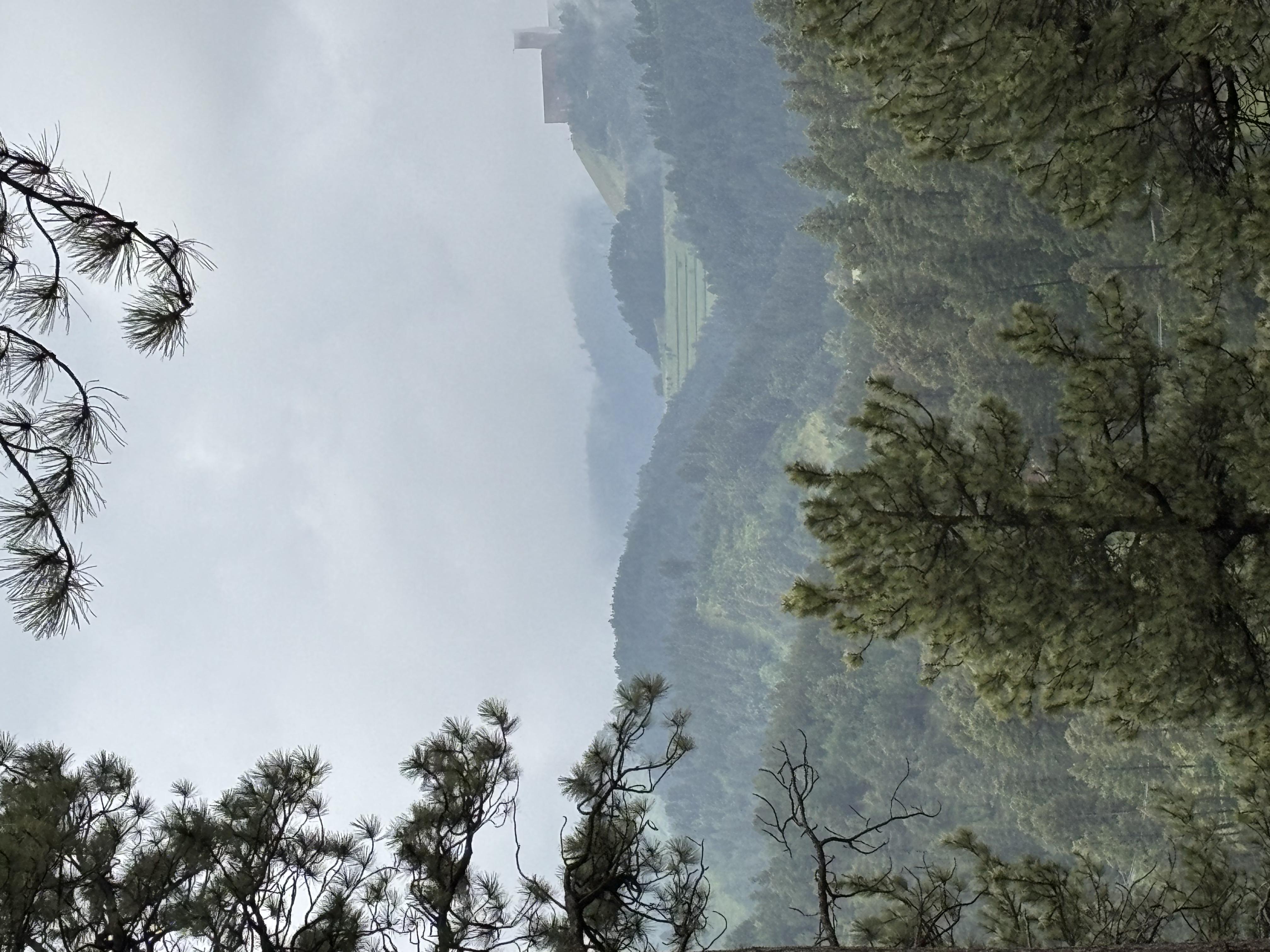
The drive to the Mt Moriah Cemetery took the Boys to the hilly edge of town. You can really check out the beautiful Badlands from the top of that hill. At the top, they actually had a little museum!
A Museum at the Cemetery!?!
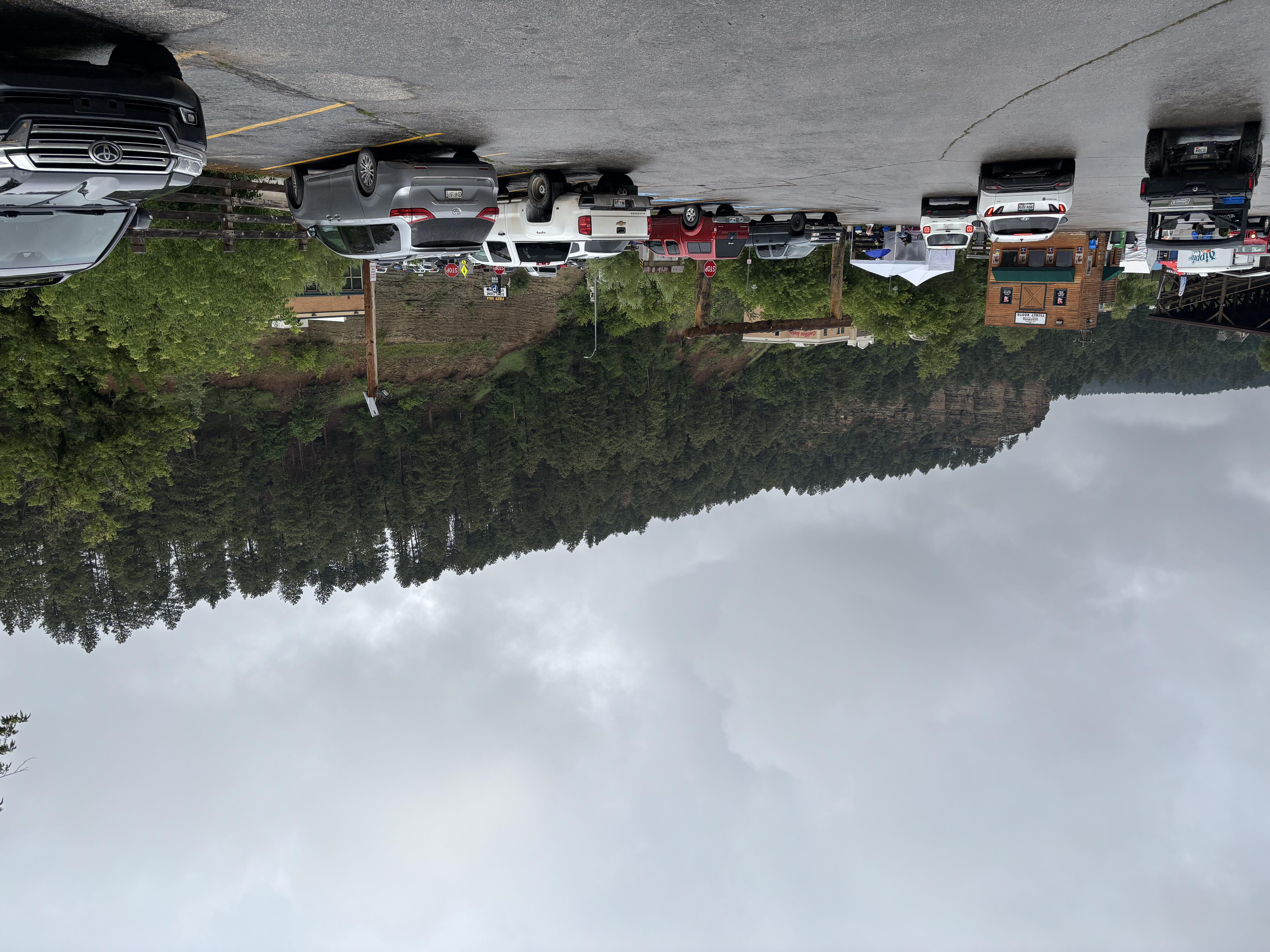
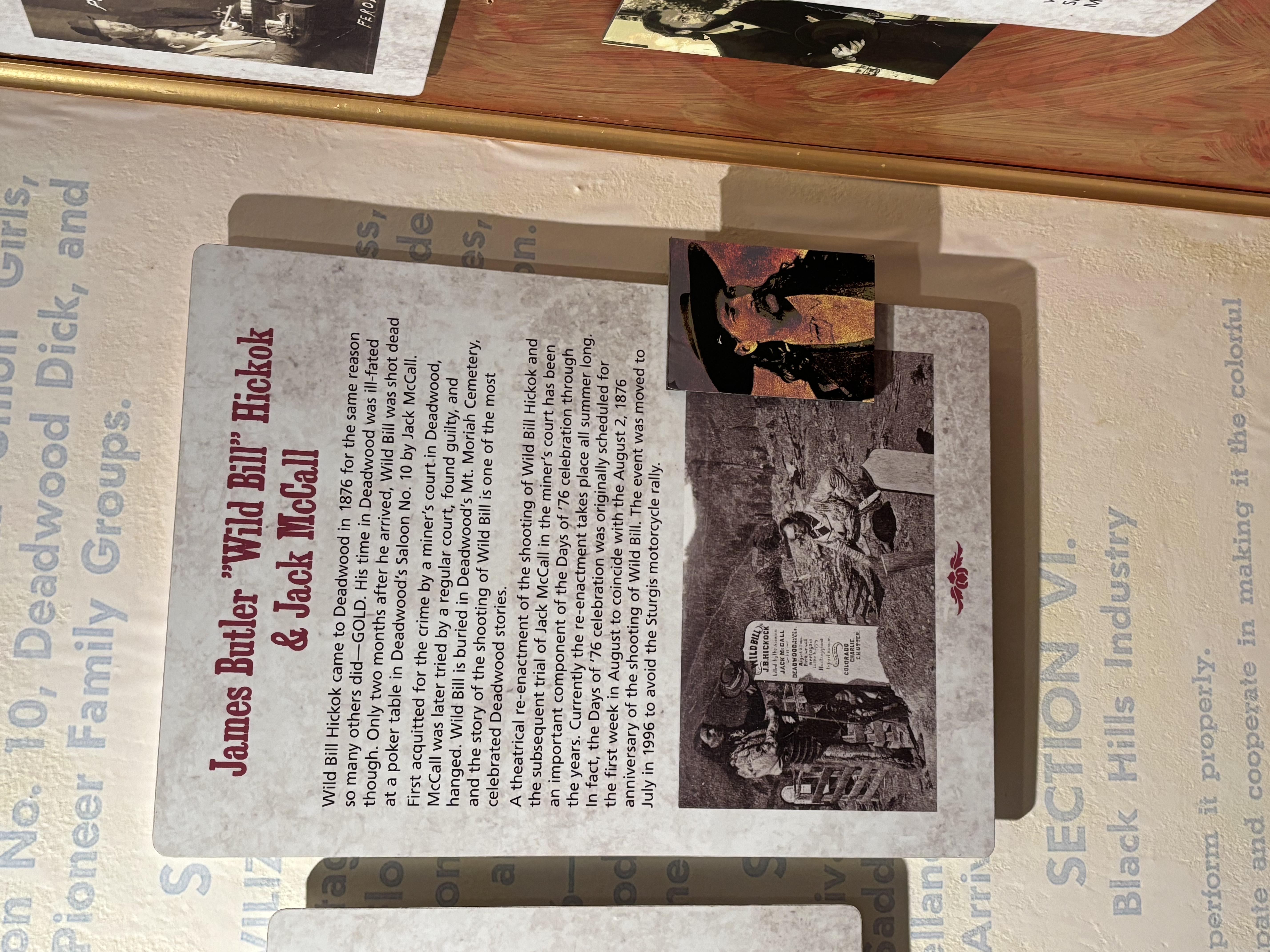
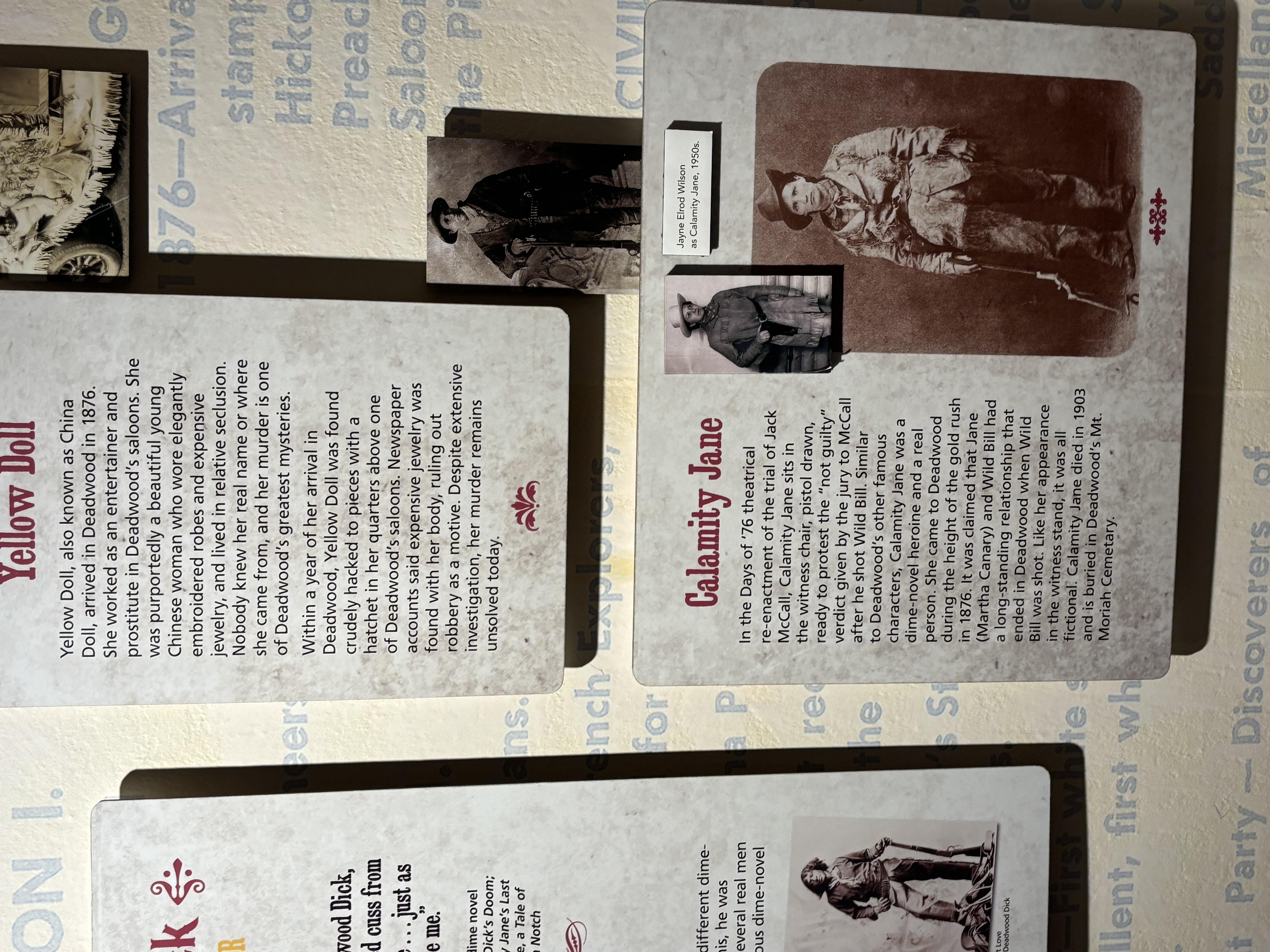
Walking through the Museum with a small mandatory fee, the Boys walked up the steep hill to the final resting place of two of the Wild Wests famous ( or infamous) characters!
The Final Resting Place of Wild Bill Hickok and Calamity Jane!
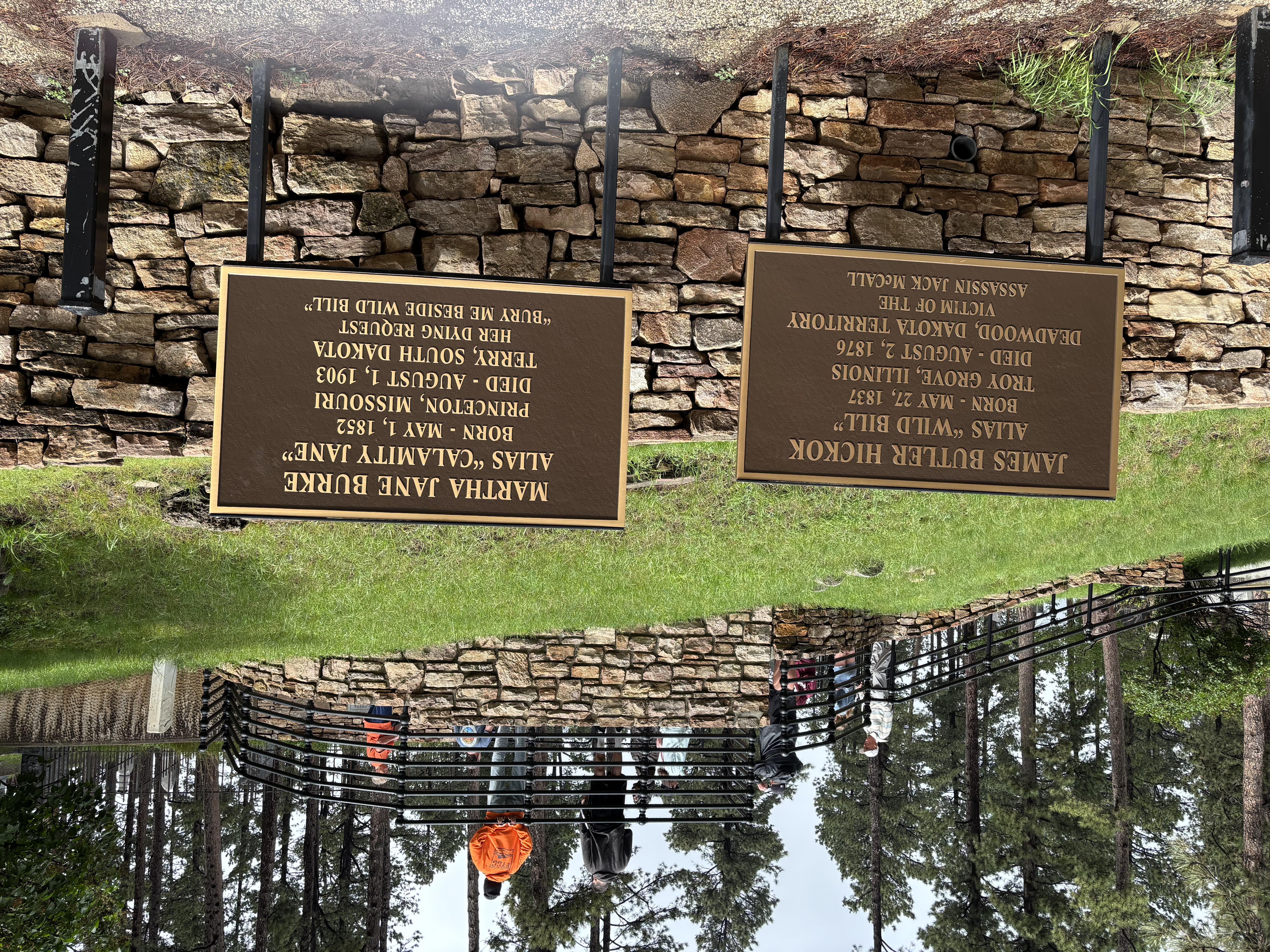
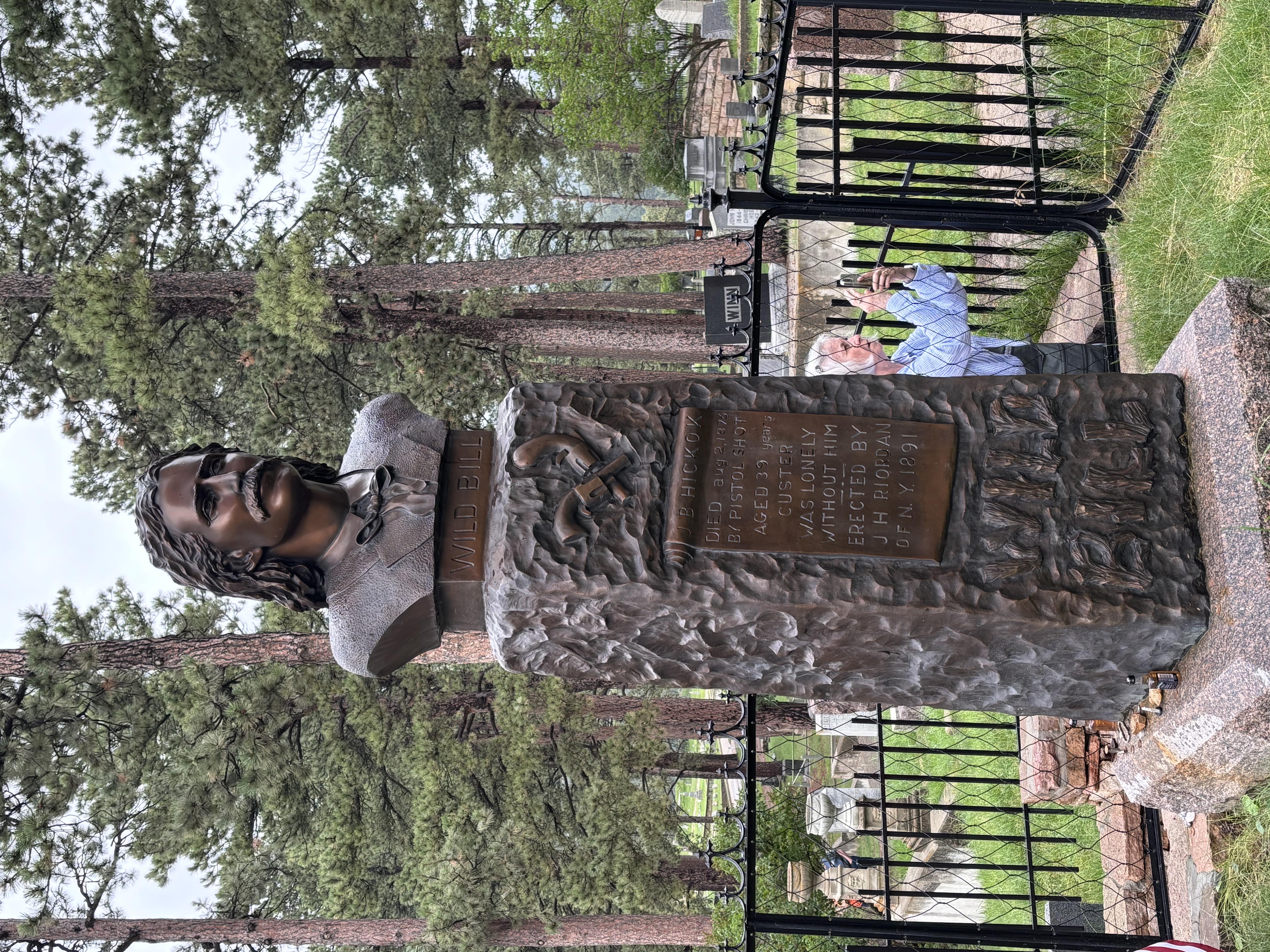
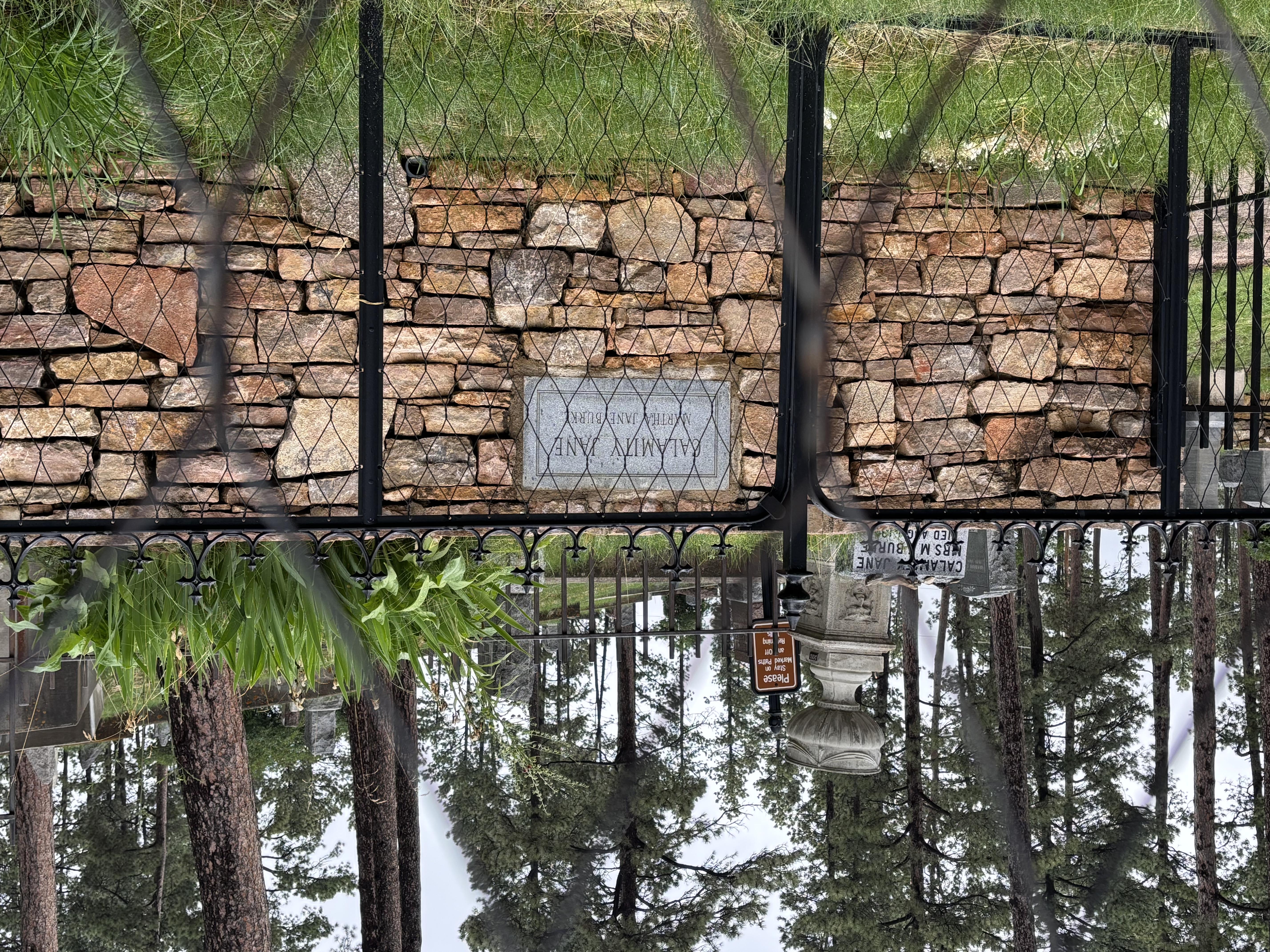
Walking through the Museum with a small mandatory fee, the Boys walked up the steep hill to the final resting place of two of the Wild West's famous ( or infamous) characters! Wild Bill Hickok and Calamity Jane's mortal remains are on the top of this biblically named hill (very different from the Temple Mount in Jerusalem!). James Butler Hickok (May 27, 1837 – August 2, 1876), better known as "Wild Bill" Hickok, was a folk hero of the American Old West known for his life on the frontier as a soldier, scout, lawman, cattle rustler, gunslinger, gambler, showman, and actor, and for his involvement in many famous gunfights. He earned a great deal of notoriety in his own time, much of it bolstered by the many outlandish and often fabricated tales he told about himself. Some contemporaneous reports of his exploits are known to be fictitious, but they remain the basis of much of his fame and reputation.
Hickok was born and raised on a farm in northern Illinois at a time when lawlessness and vigilante activity were rampant because of the influence of the "Banditti of the Prairie". Drawn to this criminal lifestyle, he headed west at age 18 as a fugitive from justice, working as a stagecoach driver and later as a lawman in the frontier territories of Kansas and Nebraska. He served in and spied for the Union army during the American Civil War and gained publicity after the war as a scout, marksman, actor, and professional gambler. He was involved in several notable shootouts during the course of his life.
In 1876, Hickok was shot and killed while playing poker in a saloon in Deadwood, Dakota Territory (present-day South Dakota) by Jack McCall, an unsuccessful gambler. The hand of cards that he supposedly held at the time of his death has become known as the dead man's hand: two pairs; black aces and eights.
Hickok remains a popular figure of frontier history. Many historic sites and monuments commemorate his life, and he has been depicted numerous times in literature, film, and television. He is chiefly portrayed as a protagonist, although historical accounts of his actions are often controversial, and much of his career is known to have been exaggerated both by himself and by contemporary mythmakers. Hickok claimed to have shot numerous gunmen in his lifetime, and he killed six or seven, all between 1861 and 1871 according to Joseph G. Rosa, Hickok's biographer and the foremost authority on him.
Calamity Jane was a bit of a "groupie" for Wild Bill. Calamity Jane, (legally known as Martha Jane Canary (May 1, 1852 – August 1, 1903), was an American frontierswoman, sharpshooter and storyteller. In addition to her many exploits, she was known for being an acquaintance of Wild Bill. Late in her life, she appeared in Buffalo Bill's Wild West show and at the 1901 Pan-American Exposition. She is said to have exhibited compassion to others, especially to the sick and needy. This facet of her character contrasted with her daredevil ways and helped to make her a celebrated frontier figure. She was also known for her habit of wearing men's attire. She claimed in her autobiography that she was married to Hickok and had divorced him so he could be free to marry Agnes Lake, but no records that support her account have been found.
The two possibly met for the first time after Jane was released from the guardhouse in Fort Laramie and joined the wagon train in which Hickok was traveling. The wagon train arrived in Deadwood in July 1876. In the spring of 1903 she returned to the Black Hills, where brothel owner Madame Dora DuFran was still running her business. For the next few months, Jane earned her keep by cooking and doing the laundry for Dora's girls in Belle Fourche. In late July, Jane traveled by ore train to Terry, South Dakota, a small mining village near Deadwood. It was reported that she had been drinking heavily while on board the train and had fallen ill. The conductor, S. G. Tillett, carried her off the train, a bartender secured a room for her at the Calloway Hotel, and a physician was summoned. Jane's condition deteriorated quickly, and she died at the hotel on Saturday, August 1, 1903, from inflammation of the bowels and pneumonia.
Four of the men who planned her funeral later stated that Hickok had "absolutely no use" for Jane while he was alive, so they decided to play a posthu6178mous joke on him by burying her by his side, hence why she is now next to him for eternity!
By now the fog had lifted, no better way to leave a tribute to Wild Bill than to have a beer in the saloon he was shot!
Having a Beer with Wild Bill at his Saloon!
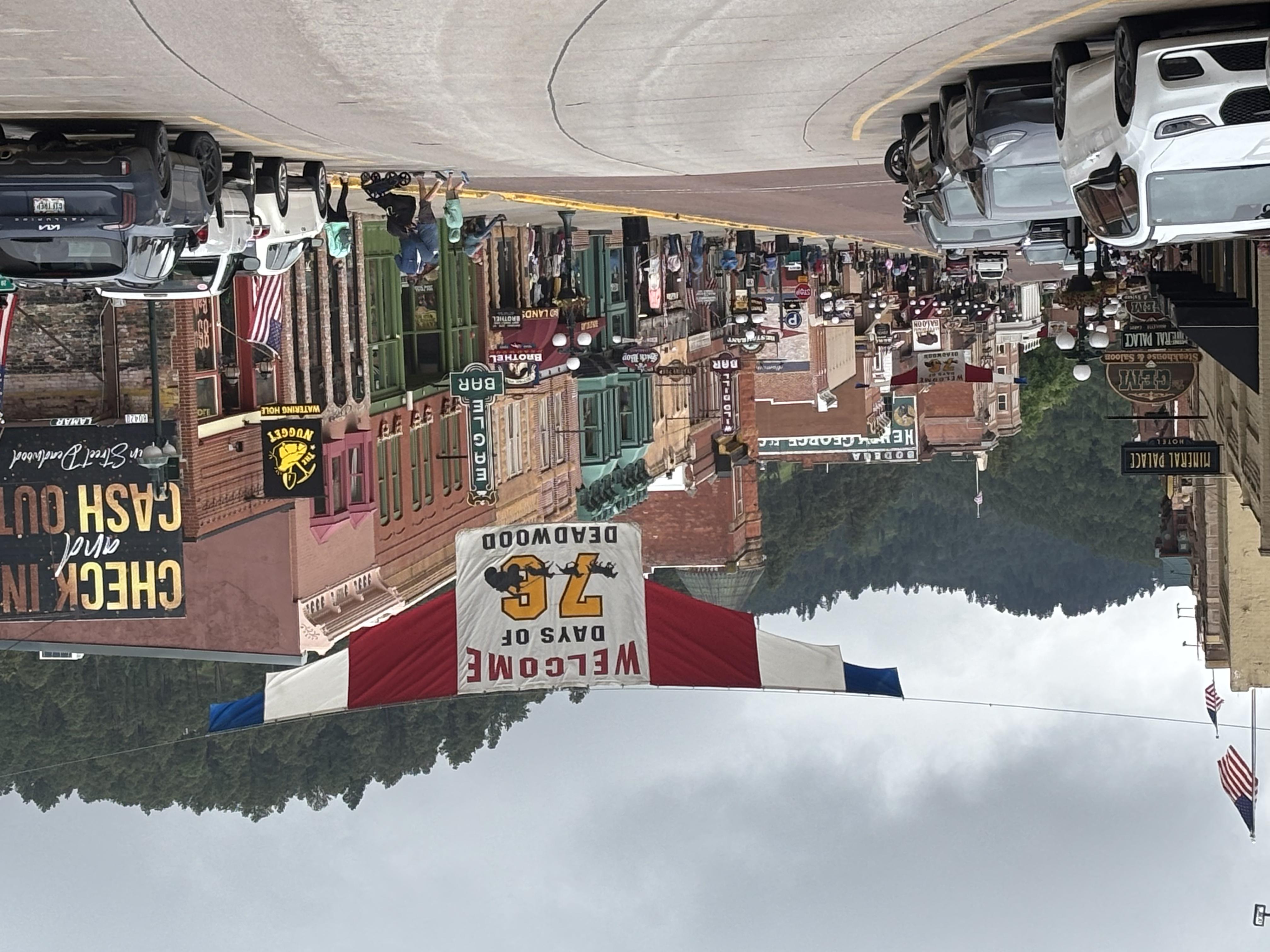
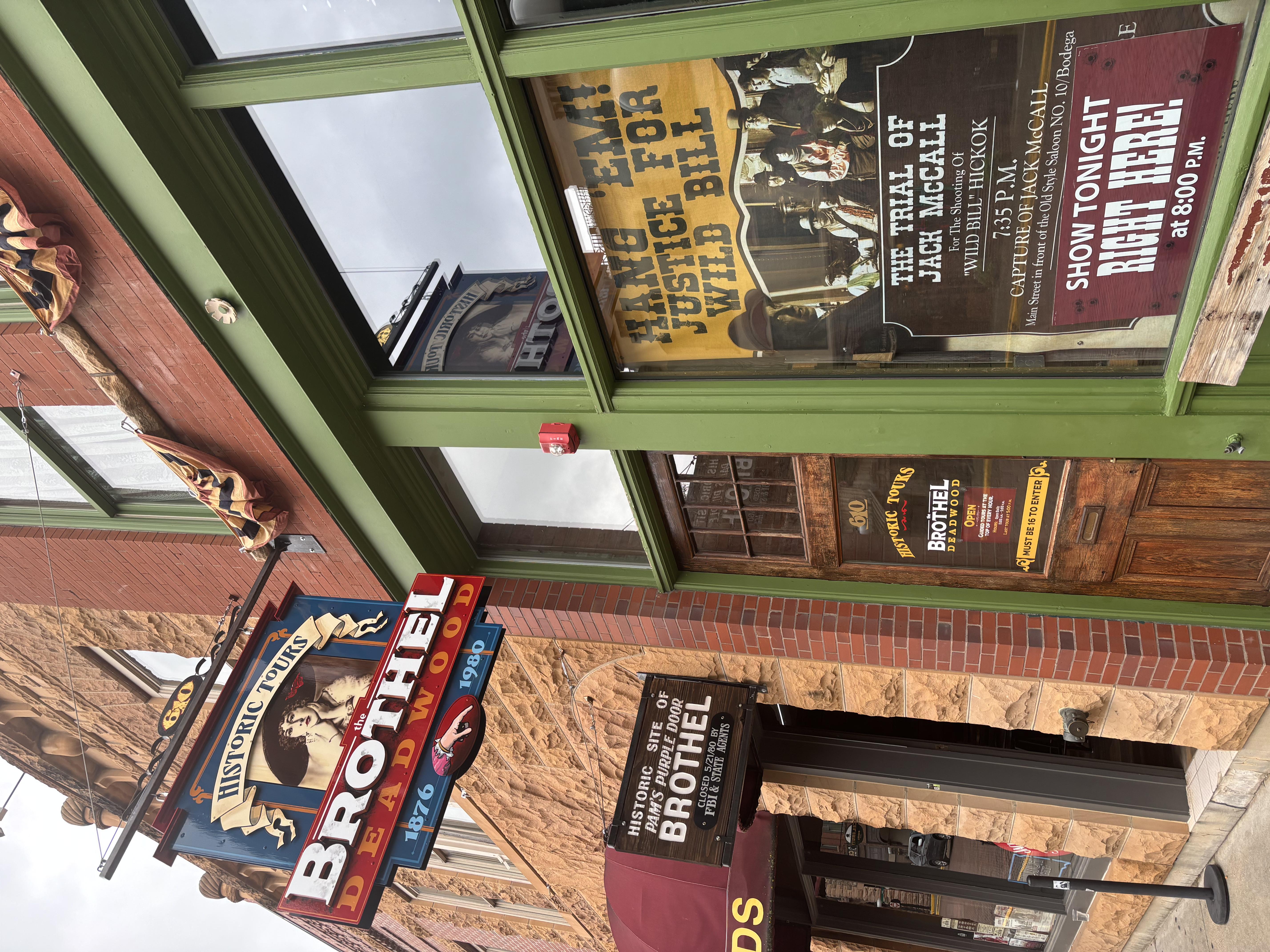
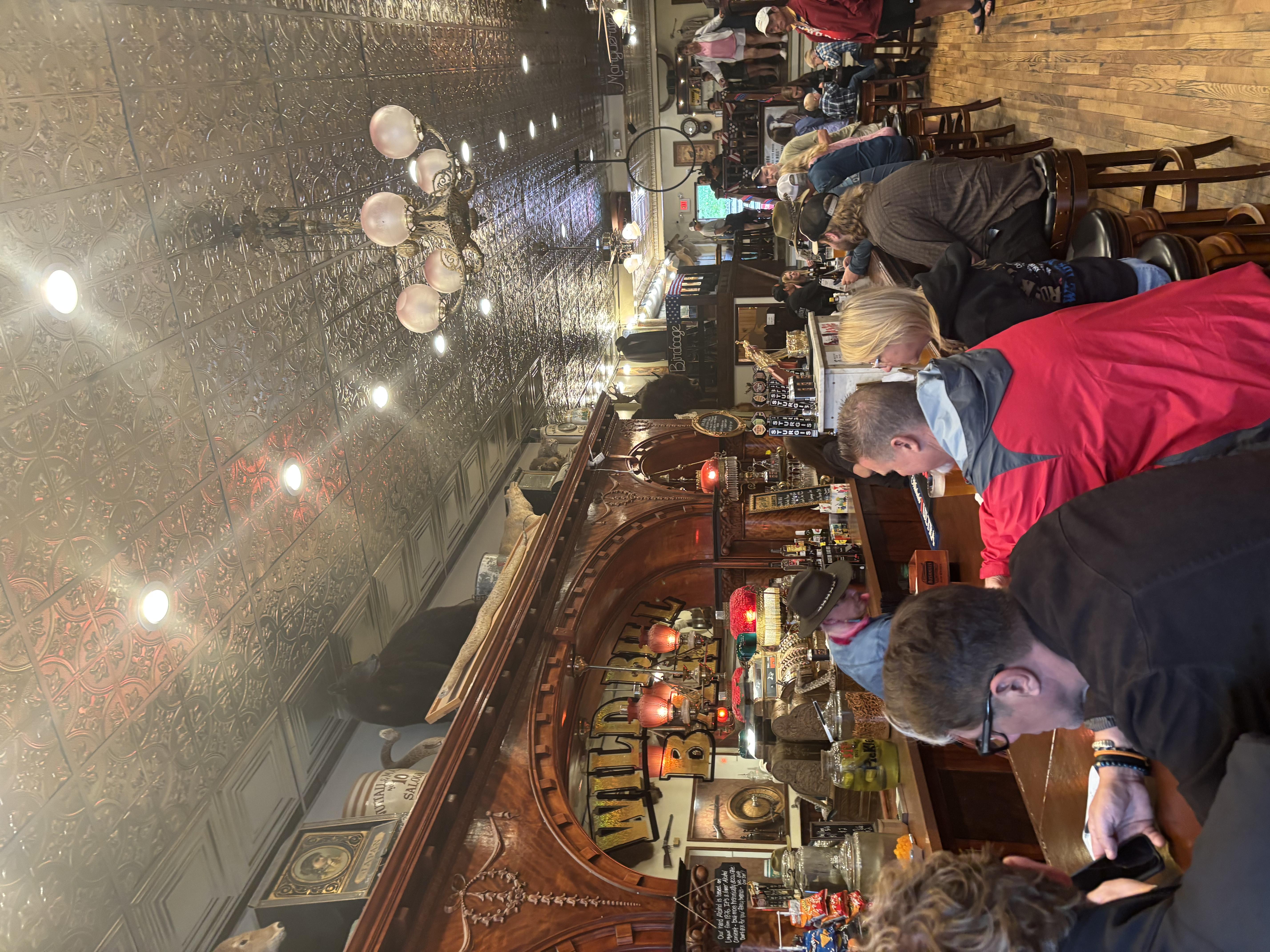
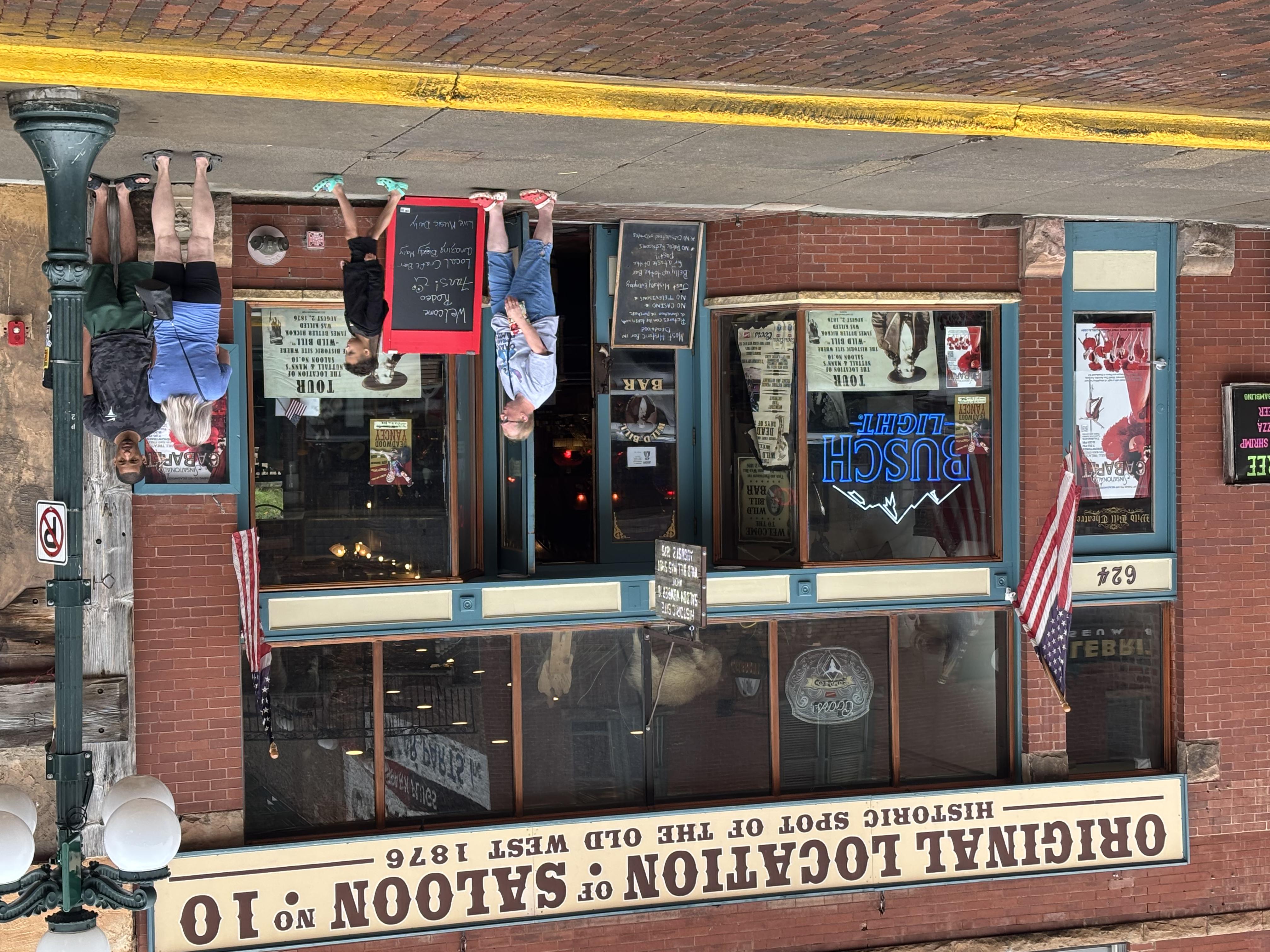
By now the fog had lifted, no better way to leave a tribute to Wild Bill than to have a beer in the saloon he was shot! Getting back into town, Mike and Bone parked and walked down to Nuttal & Mann's Saloon No. 10. The Boys went in Bone ordered a very good local porter, and learned the grisly end of the charismatic cowboy! To do that, they had to walk downtown to the original bar!
Mike and Bone, sitting by the table where Wild Bill met his end!
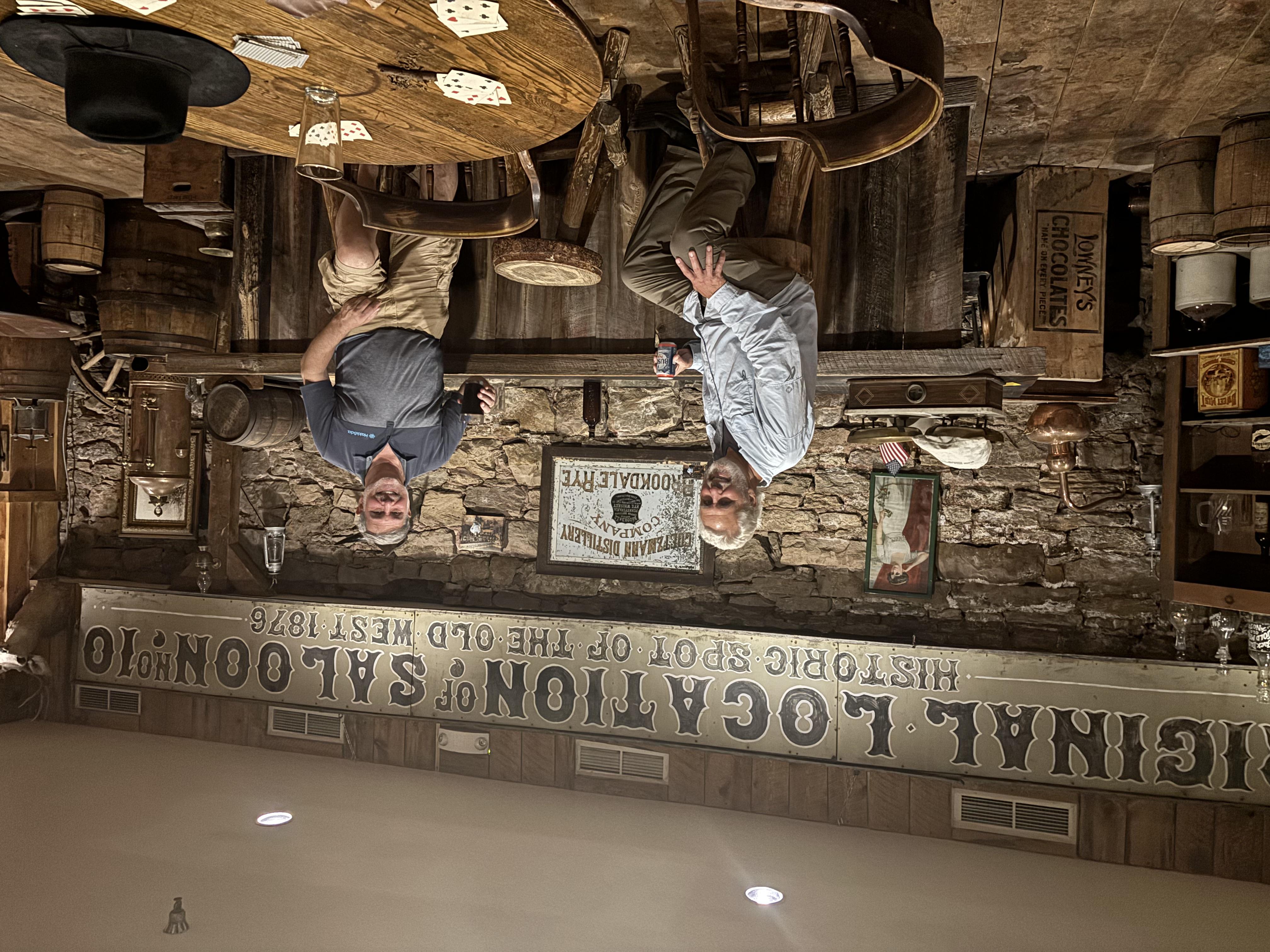
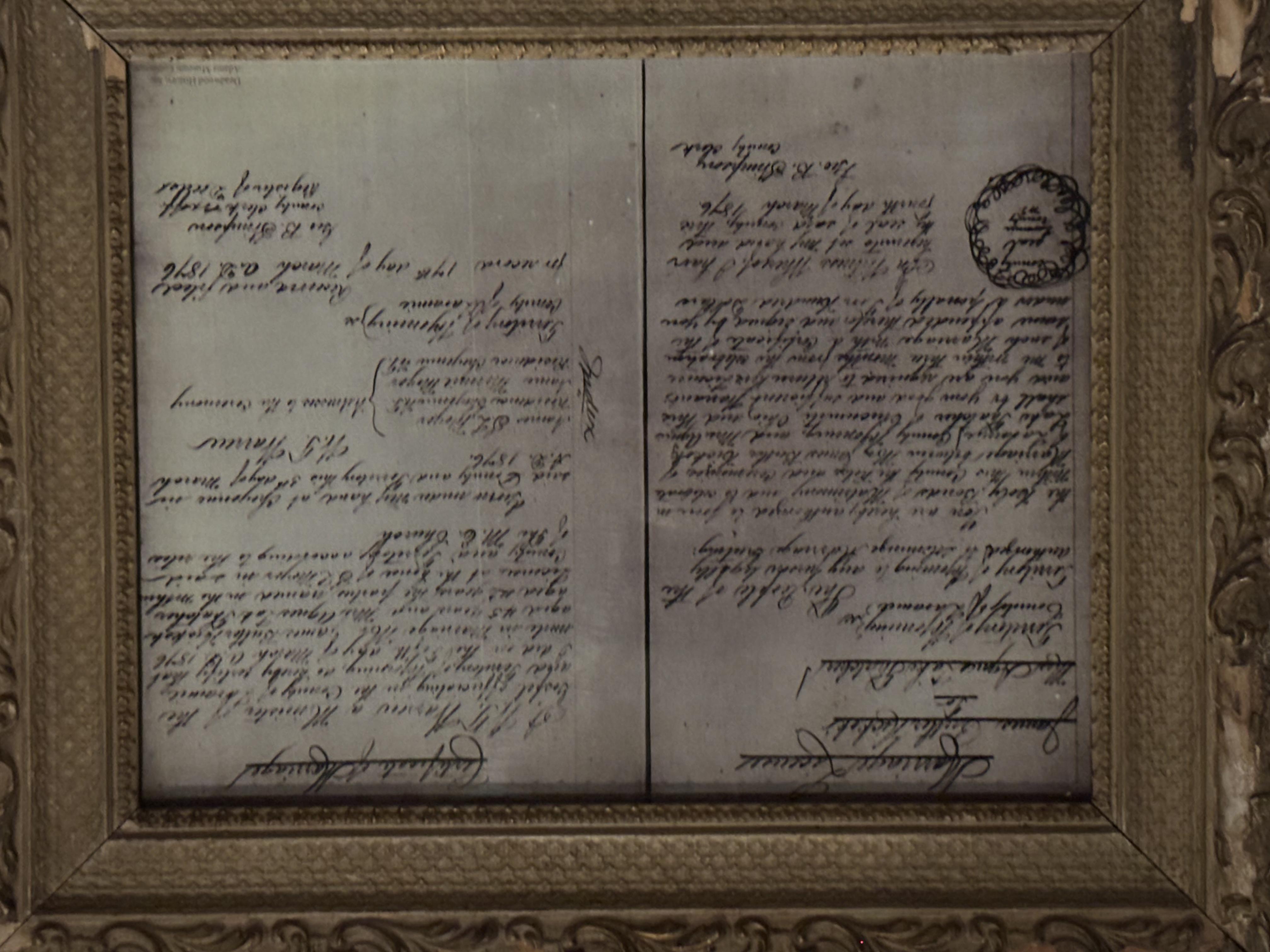
Mike and Bone read that sadly, shortly before the events in this here Saloon, Wild Bill had recently found happiness. He and Agnes Thatcher Lake, a widow and the proprietor of Lake's Hippo-Olympiad circus, had recently married in Cheyenne, Wyoming Territory. Hickok left his new bride a few months later, joining Charlie Utter's wagon train to seek his fortune in the gold fields of South Dakota. Ironically, shortly before his death, Hickok wrote a letter to his new wife, which read in part, "Agnes Darling, if such should be we never meet again, while firing my last shot, I will gently breathe the name of my wife—Agnes—and with wishes even for my enemies I will make the plunge and try to swim to the other shore."
Calamity Jane, claimed in her autobiography that she was married to Hickok and had divorced him so he could be free to marry Agnes Lake, but no records that support her account have been found.
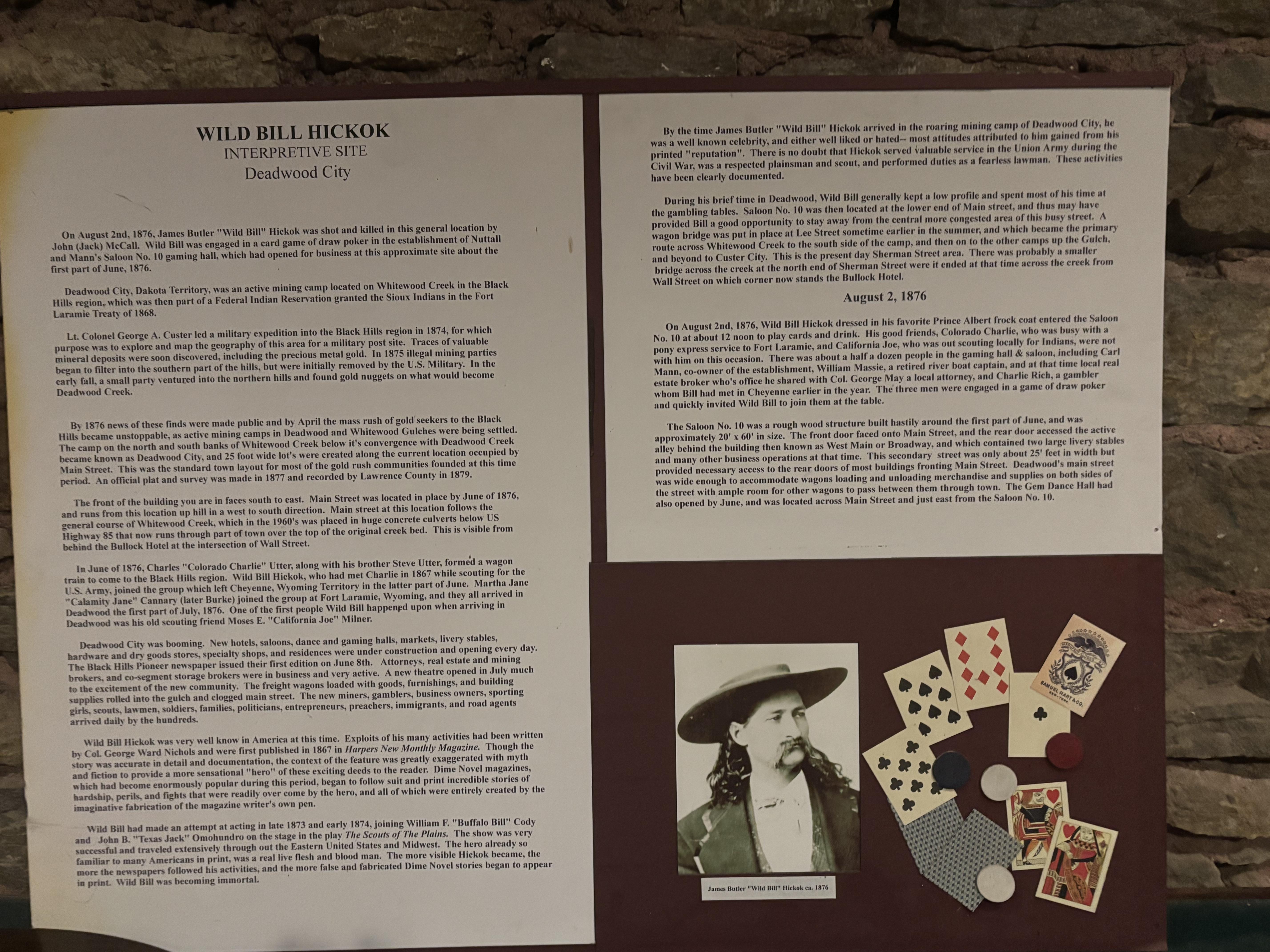
Regardless, on August 1, 1876, Hickok was playing poker at Nuttal & Mann's Saloon No. 10 in Deadwood, Dakota Territory. A seat opened up at the table and a drunk man named Jack McCall sat down to play. McCall lost heavily. Hickok encouraged him to quit the game until he could cover his losses, and offered to give him money for breakfast. McCall accepted the money, but he was apparently insulted.
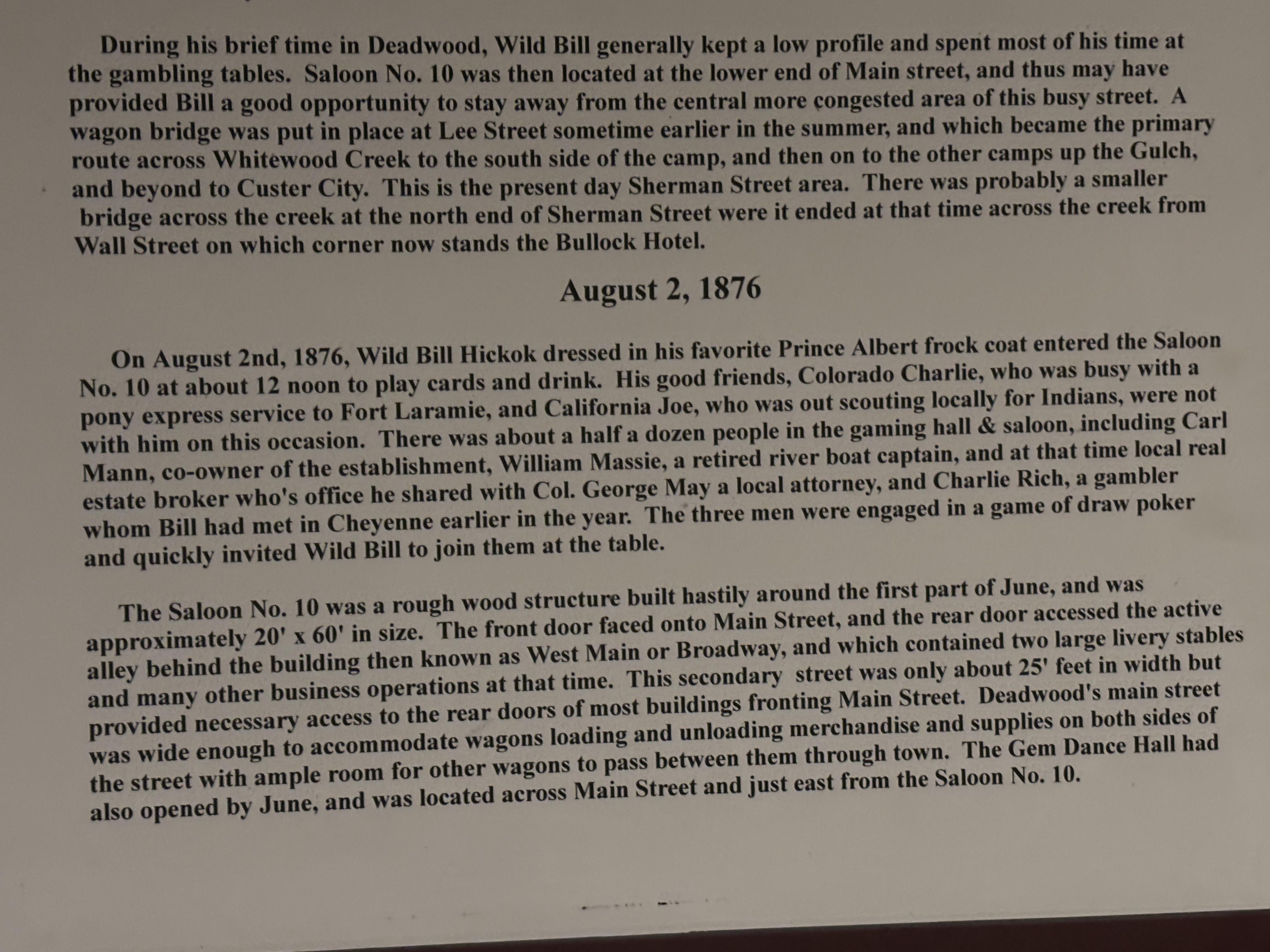
The next day, Hickok was playing poker again. He usually sat with his back to a wall so that he could see the entrance, but the only seat available when he joined the game was a chair facing away from the door. He twice asked Charles Rich to change seats with him, but Rich refused. McCall then entered the saloon, walked up behind Hickok, drew his Colt Single Action Army .45-caliber revolver serial #2079, and shouted, "Take that!" as he shot Hickok in the back of the head at point-blank range.
Hickok died instantly. The bullet emerged through his right cheek and struck Captain William Massie in the left wrist. With another bit of irony, Hickok had told his friend Charlie Utter that he thought that he would be killed while in Deadwood.
Wild Bill held a 5-card stud poker hand lays on a table showing black aces and eights, with the hole-card face down which has since become widely known as the "dead man's hand".
McCall's motive for killing Hickok is the subject of speculation, largely concerning McCall's anger at Hickok's giving him money for breakfast the day before after McCall had lost heavily.
McCall was summoned before an informal "miners' jury", an ad hoc local group of miners and businessmen. He claimed that he was avenging Hickok's slaying of his brother, which may have been true; a man named Lew McCall had indeed been killed by an unknown lawman in Abilene, Kansas, but whether the two McCall men were related is unknown. McCall was acquitted of the murder, which prompted editorializing in the Black Hills Pioneer: "Should it ever be our misfortune to kill a man ... we would simply ask that our trial may take place in some of the mining camps of these hills." Calamity Jane is reputed to have led a mob that threatened McCall with lynching, but she was actually being held by military authorities at the time.
McCall was rearrested after bragging about Hickok's death. The second trial was not considered double jeopardy because of the irregular jury in the first trial, and because Deadwood was in unorganized Indian country at the time. The new trial was held in Yankton, the capital of the Dakota Territory. McCall was found guilty and sentenced to death.
Leander Richardson interviewed McCall shortly before his execution and wrote an article about him for the April 1877 issue of Scribner's Monthly. Lorenzo Butler Hickok spoke with McCall after the trial, and said that McCall showed no remorse.
As I write the closing lines of this brief sketch, word reaches me that the slayer of Wild Bill has been rearrested by the United States authorinties, and after trial has been sentenced t"o death for willful murder. He is now at Yankton, D.T. awaiting execution. At the trial it was suggested that he was hired to do his work by gamblers who feared the time when better citizens should appoint Bill the champion of law and order – a post which he formerly sustained in Kansas border life, with credit to his manhood and his courage.
Jack McCall was hanged on March 1, 1877 and buried in a Roman Catholic cemetery. The cemetery was moved in 1881, and the noose was still around McCall's neck when his body was exhumed.
With Bone's beer drained and the story told, it was time to mosey on to the next Mike and Bone destination, so after a figurative tip of their non-existent Stetson's to Wild Bill Hickok, they hit the road!
The Chinatown in Deadwood!
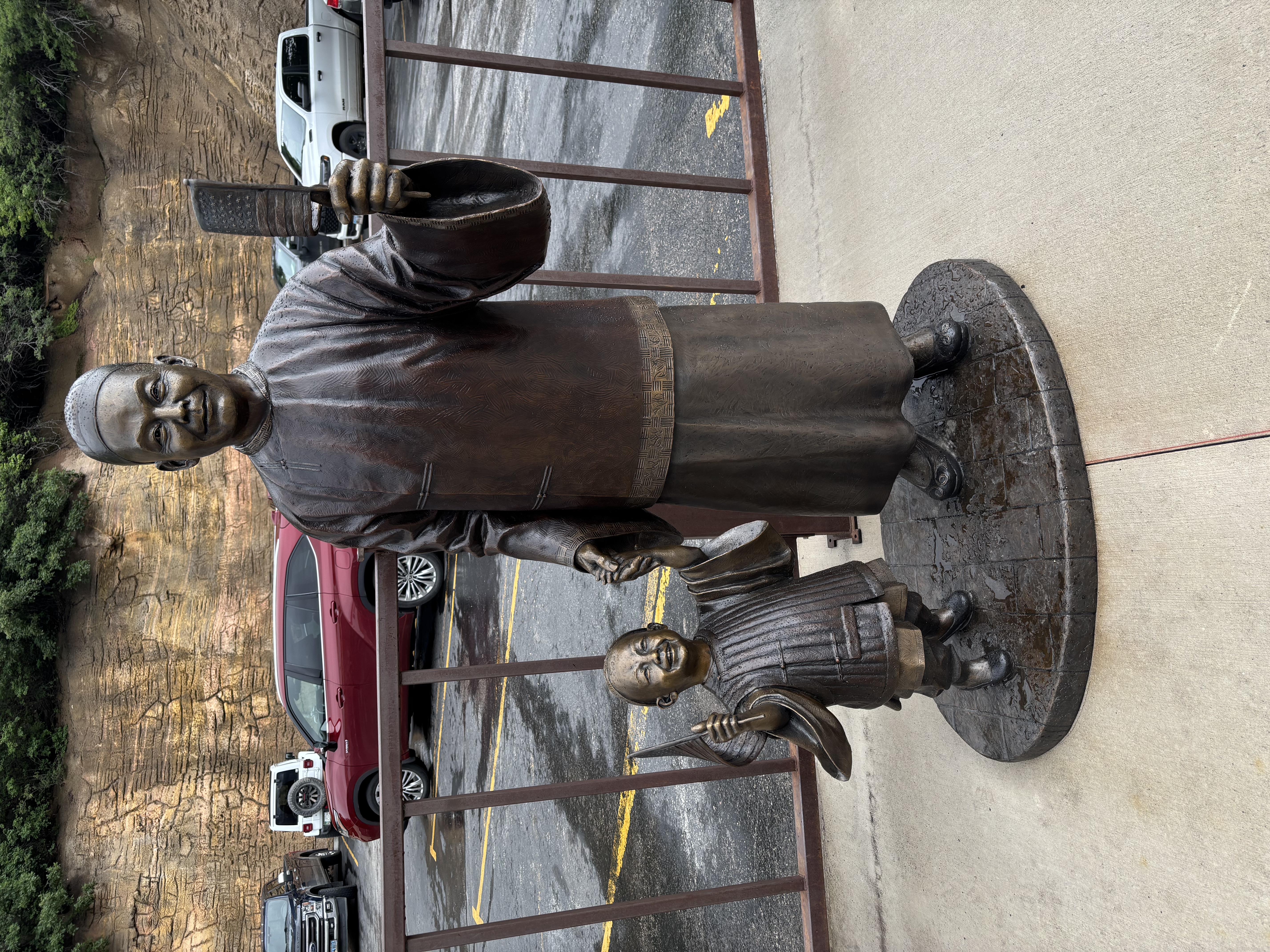
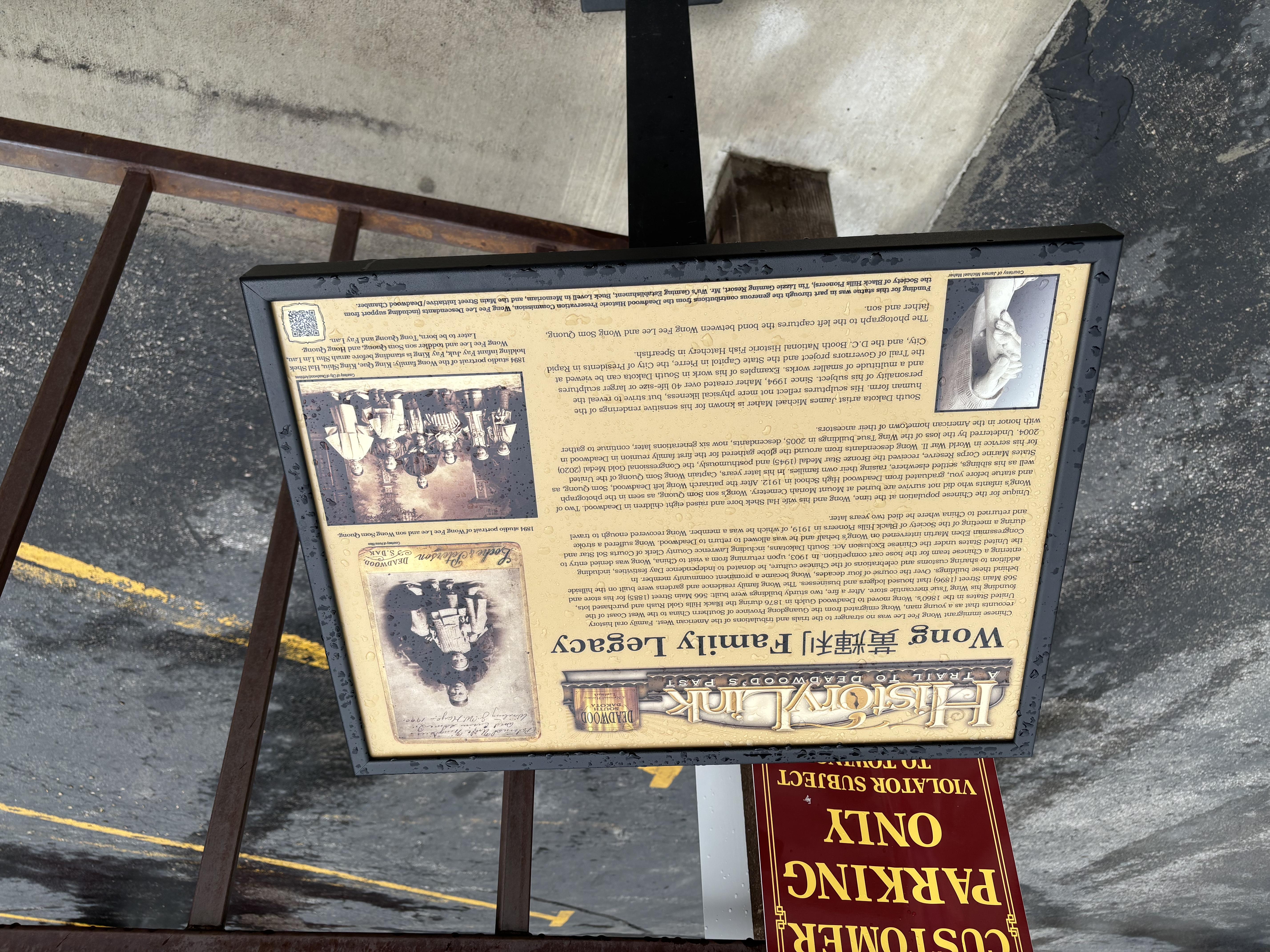
Walking back to the Land Cruiser, Mike and Bone learned that Deadwood had the largest Chinatown of any city east of San Francisco at the time. Notable figures of Deadwood's Chinatown include Fee Lee Wong, who made his way to the Black Hills during the 1870s for the Gold Rush. There are many cultural and economic differences that made the Chinese community distinct such as success with laundry establishments and the structure of Chinese families. Sadly, the Chinese community is no longer there like it was at the end of the 19th century, but the memories live on.
Next, Mike & Bone deal with the Devil!?!
Mike and Bone, having a Devil of a time in Wyoming!
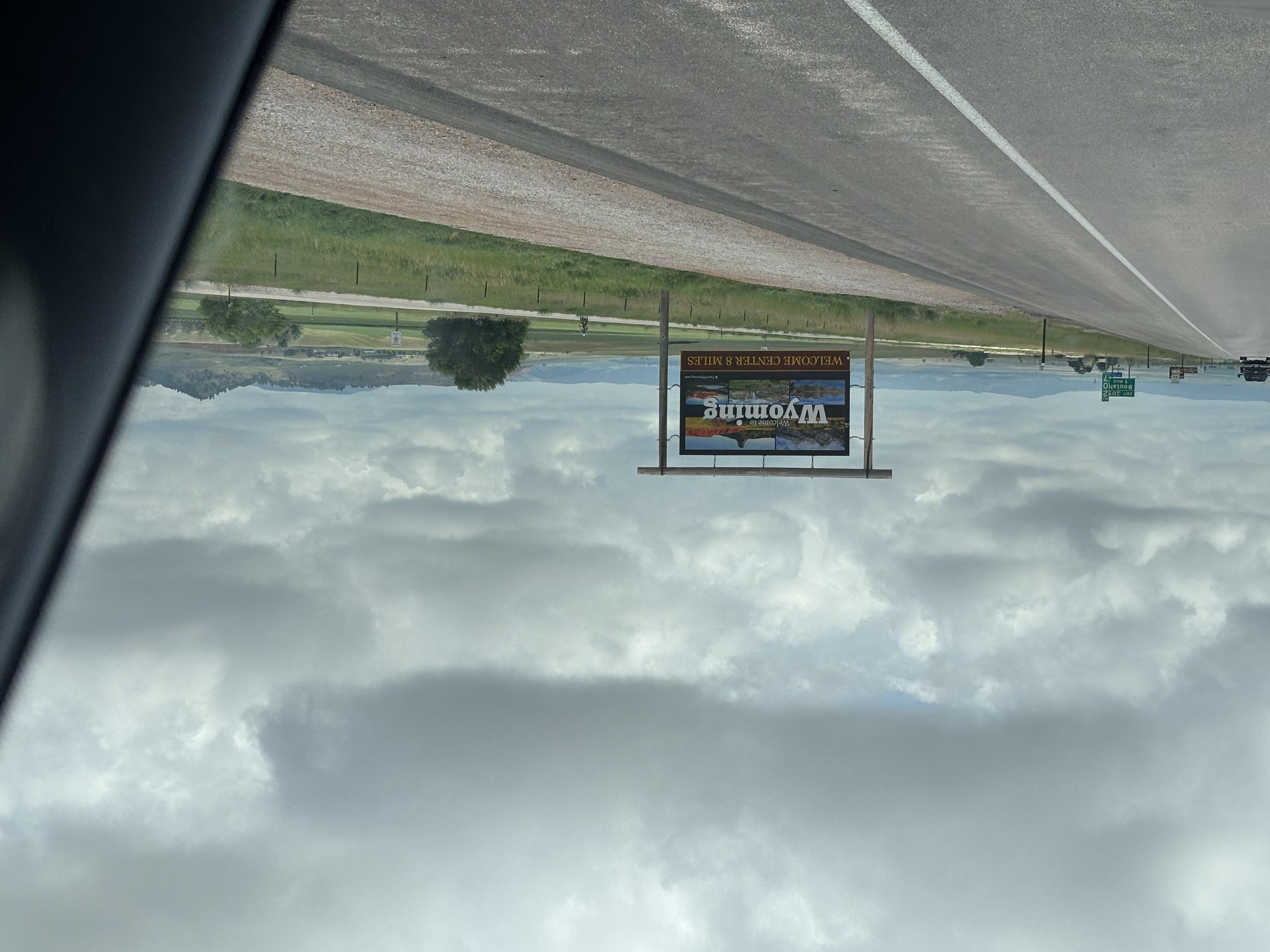
One of the very cool, iconic things to see out west is Devils Tower, know by the Lakota as Matȟó Thípila or Bear Lodge, and Mike and Bone were hell bent on getting there! It was an hour and twenty minutes from Deadwood to the monolith. and in transit, Bone found out that the Devils Tower National Monument was the first national monument in the US, established on September 24, 1906, by President Teddy Roosevelt. The Tower is a laccolithic butte, composed of igneous rock in the Bear Lodge Ranger District of the Black Hills, it rises 1,267 feet above the Belle Fourche River, standing 867 feet from summit to base.
The Wide, Wyoming Prarie!
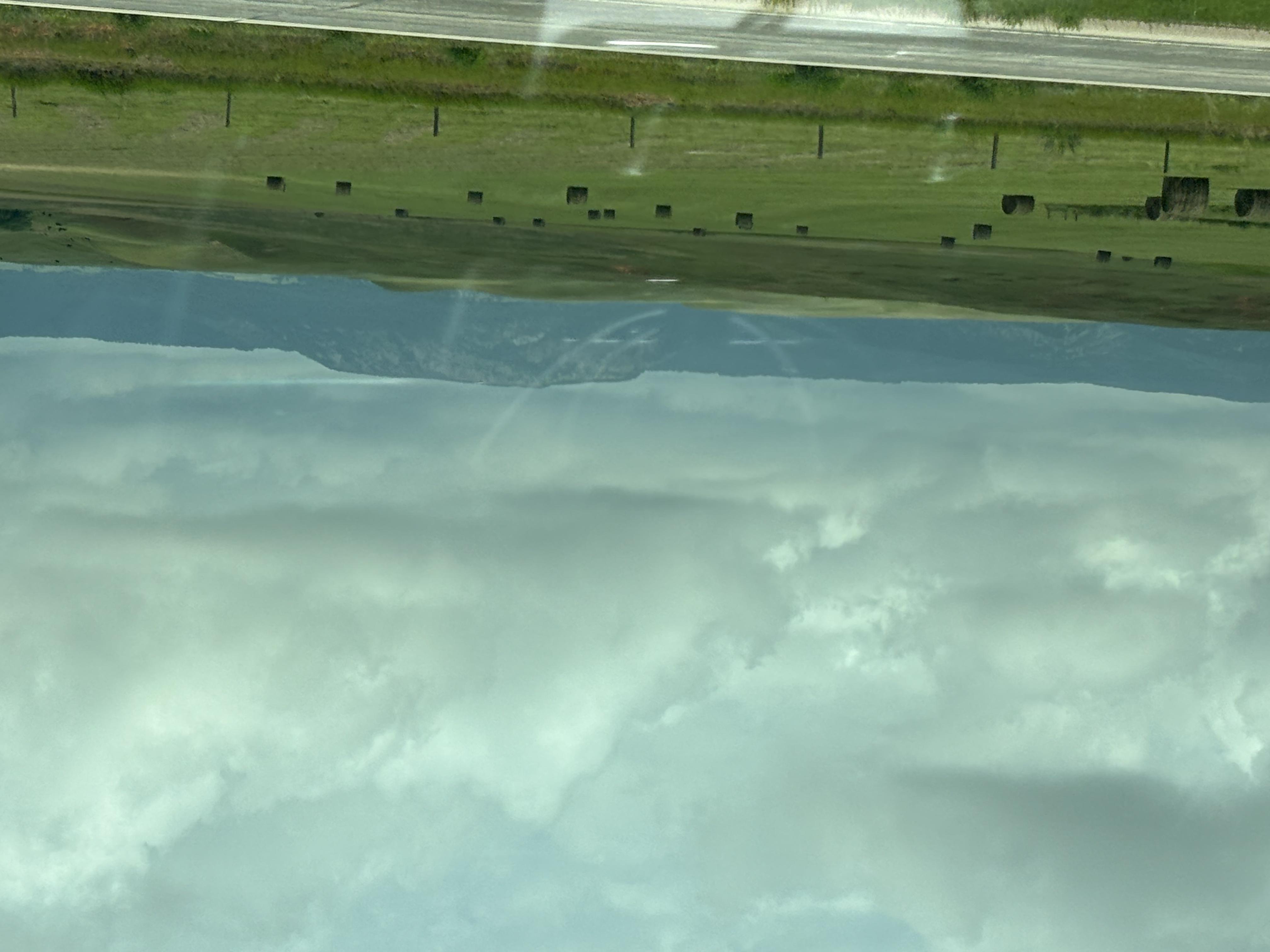
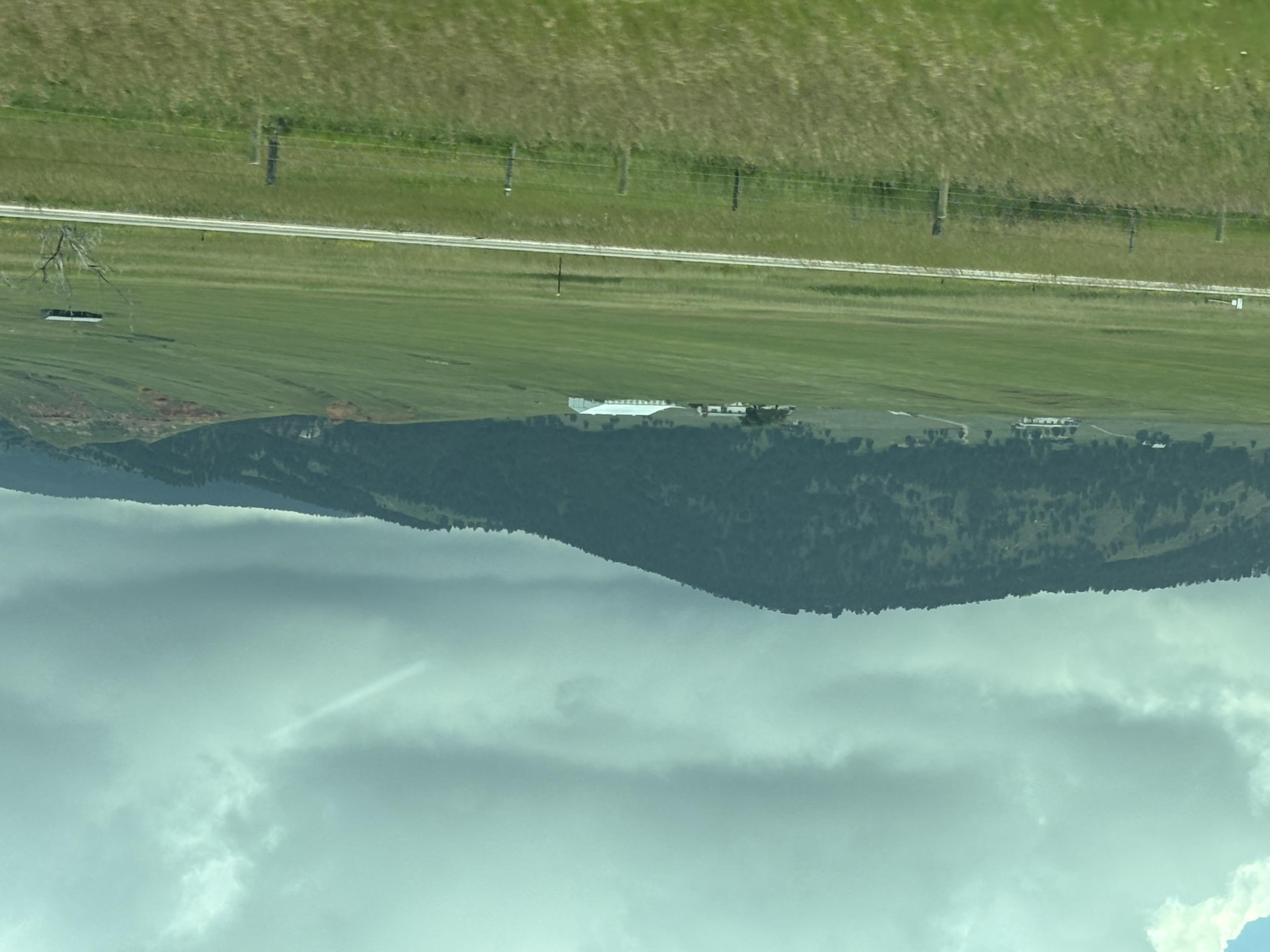
The name "Devil's Tower" has nothing to do with the Christian Devil, it originated in 1875 during an expedition led by Colonel Richard Irving Dodge, when his interpreter reportedly misinterpreted a native name to mean "Bad God's Tower". All information signs in that area use the name "Devils Tower", following a geographic naming standard whereby the apostrophe is omitted to ensure no thinks other wise! After reading about it, Mike and Bone could now see it! After an hour on the road, the Boys could see Devils Tower, but knew it was at least twenty minutes away!
Mike and Bone, having a Devil of a time in Wyoming!
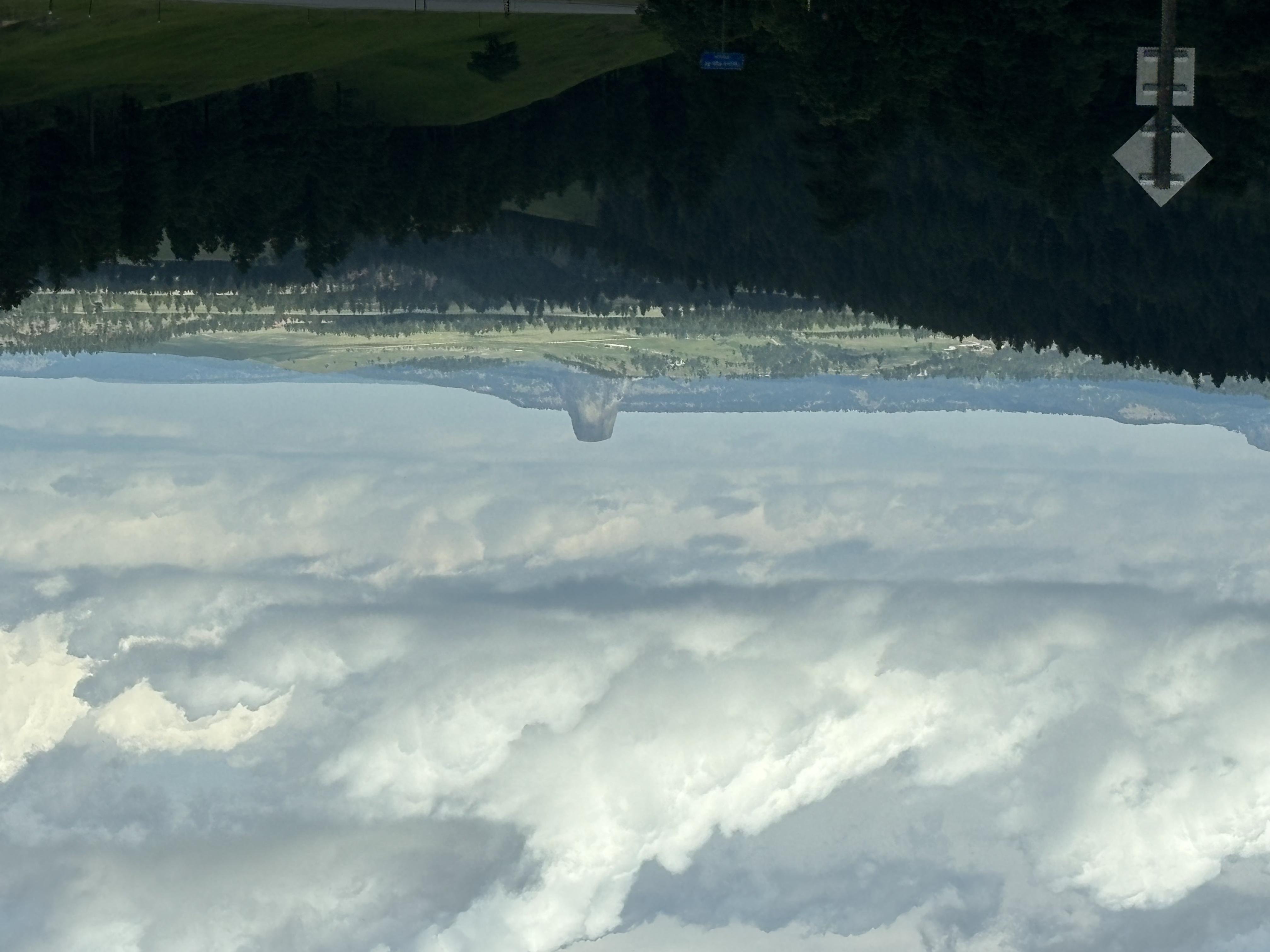
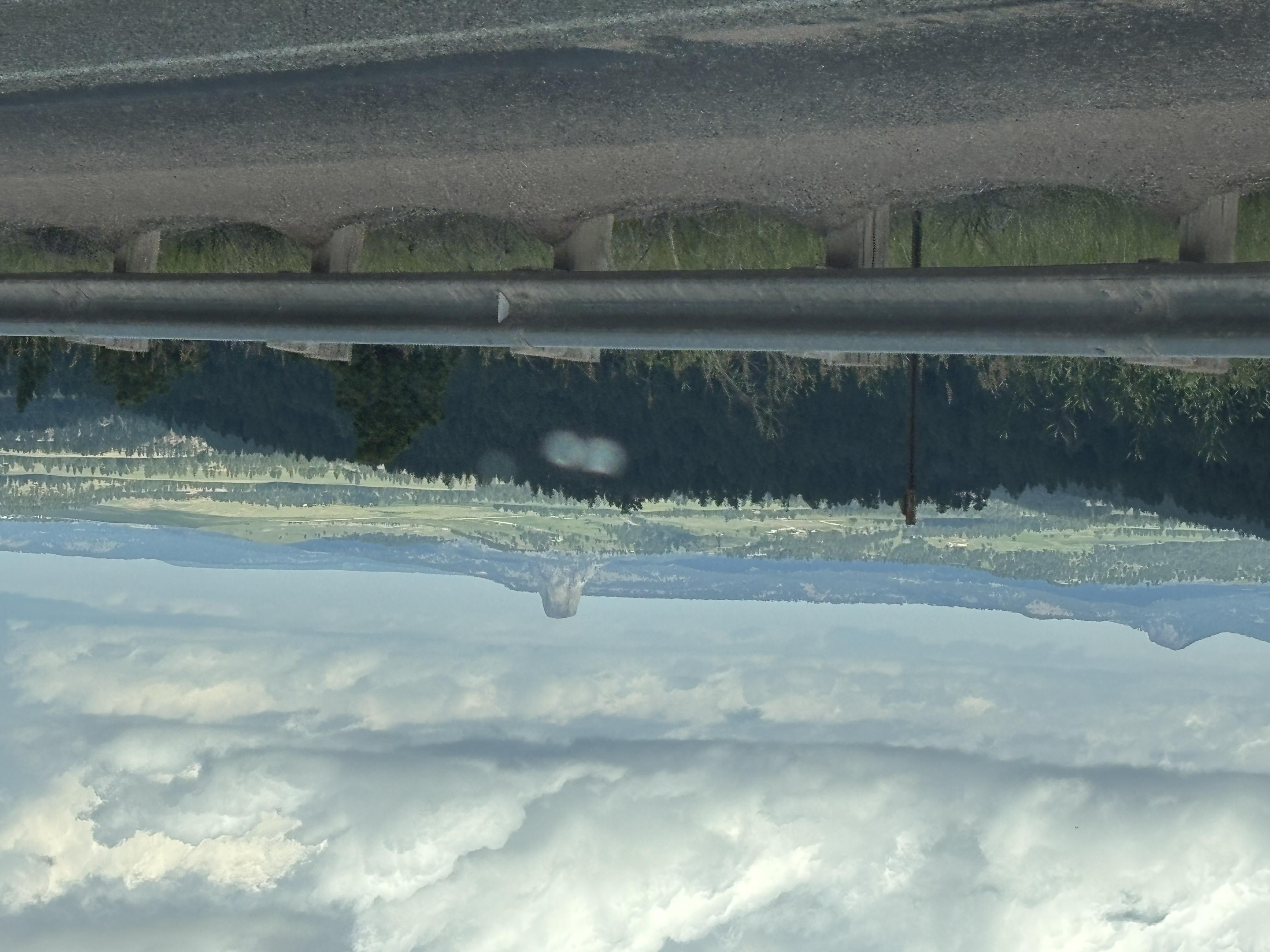
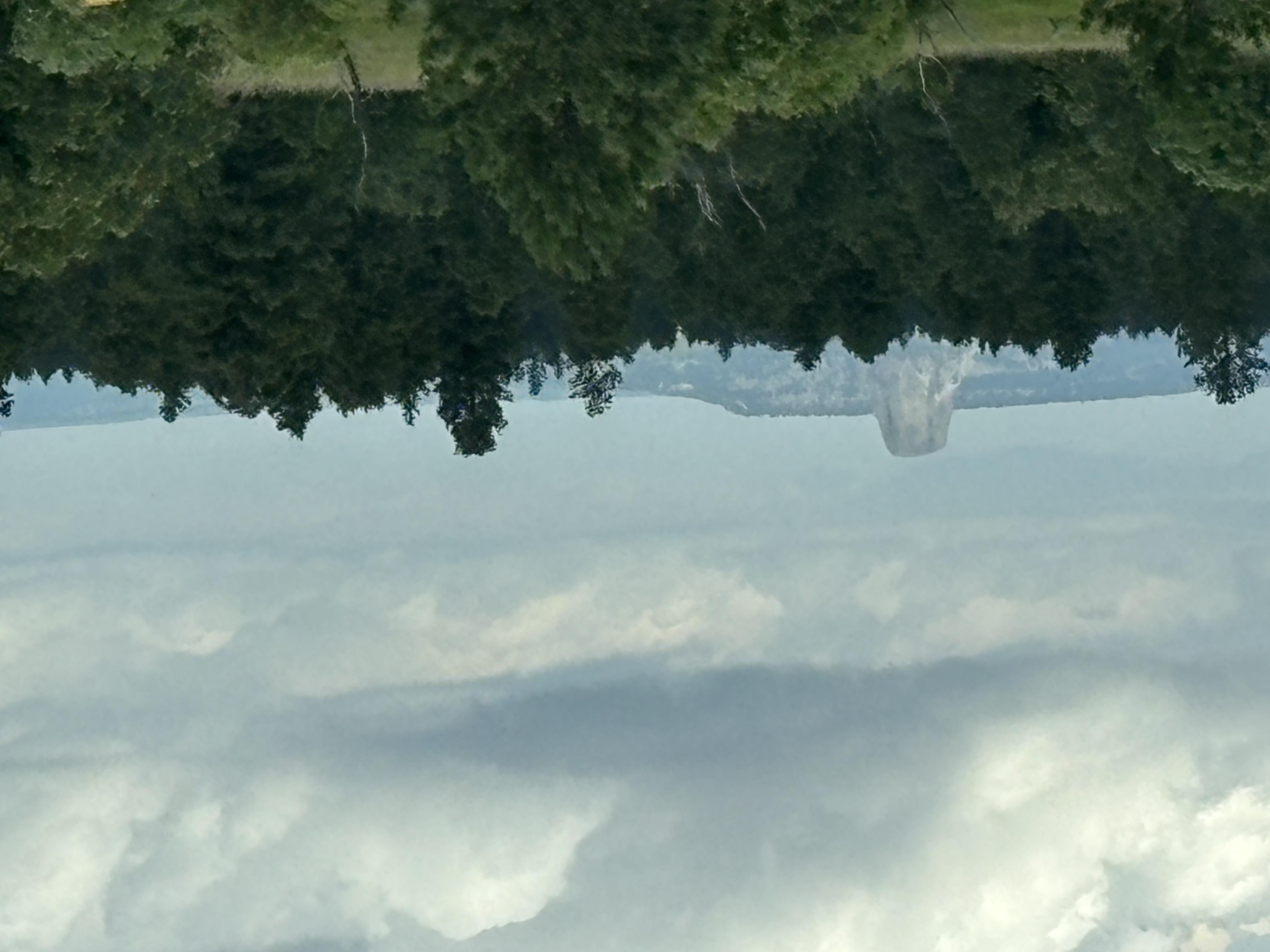
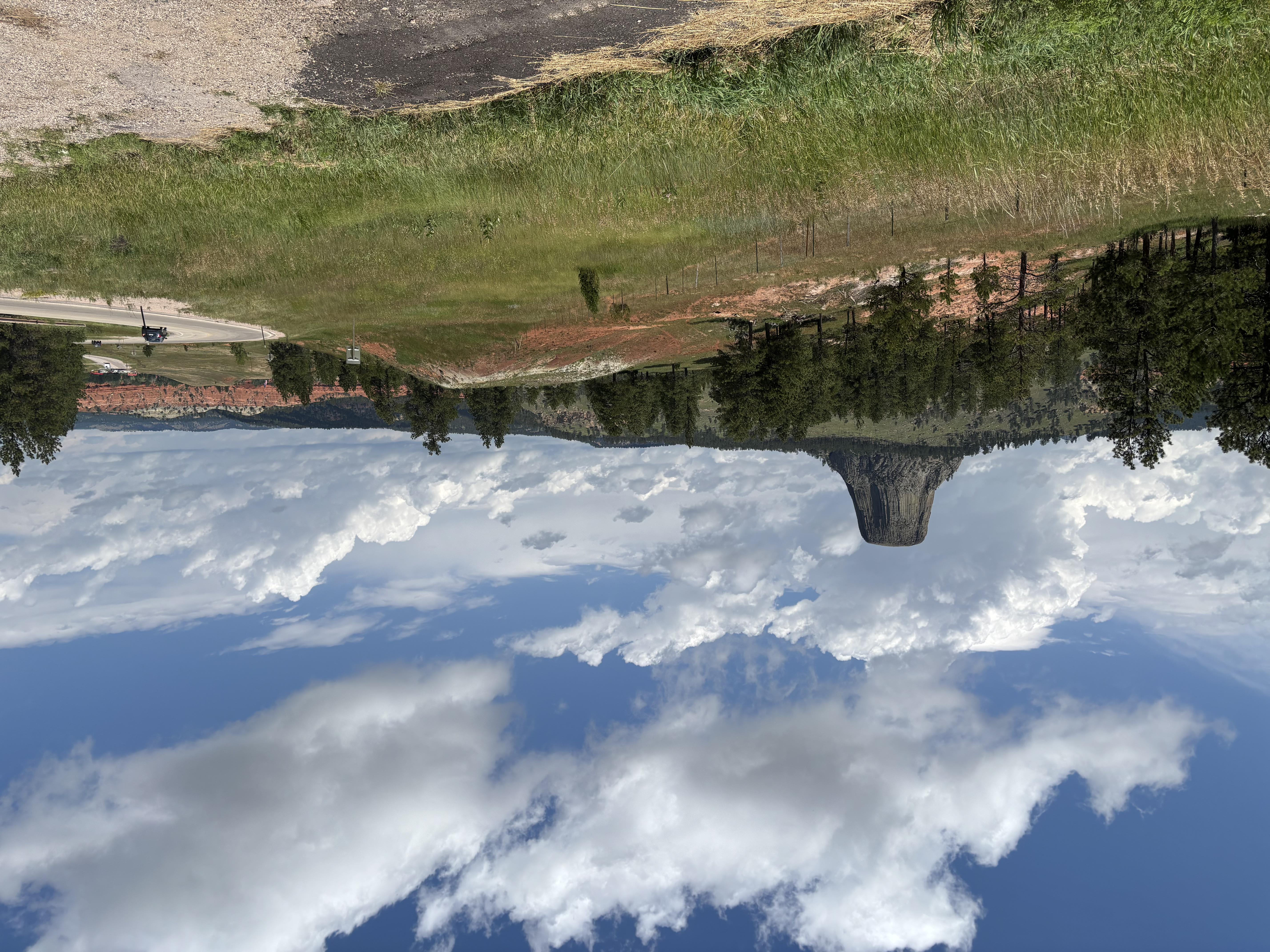
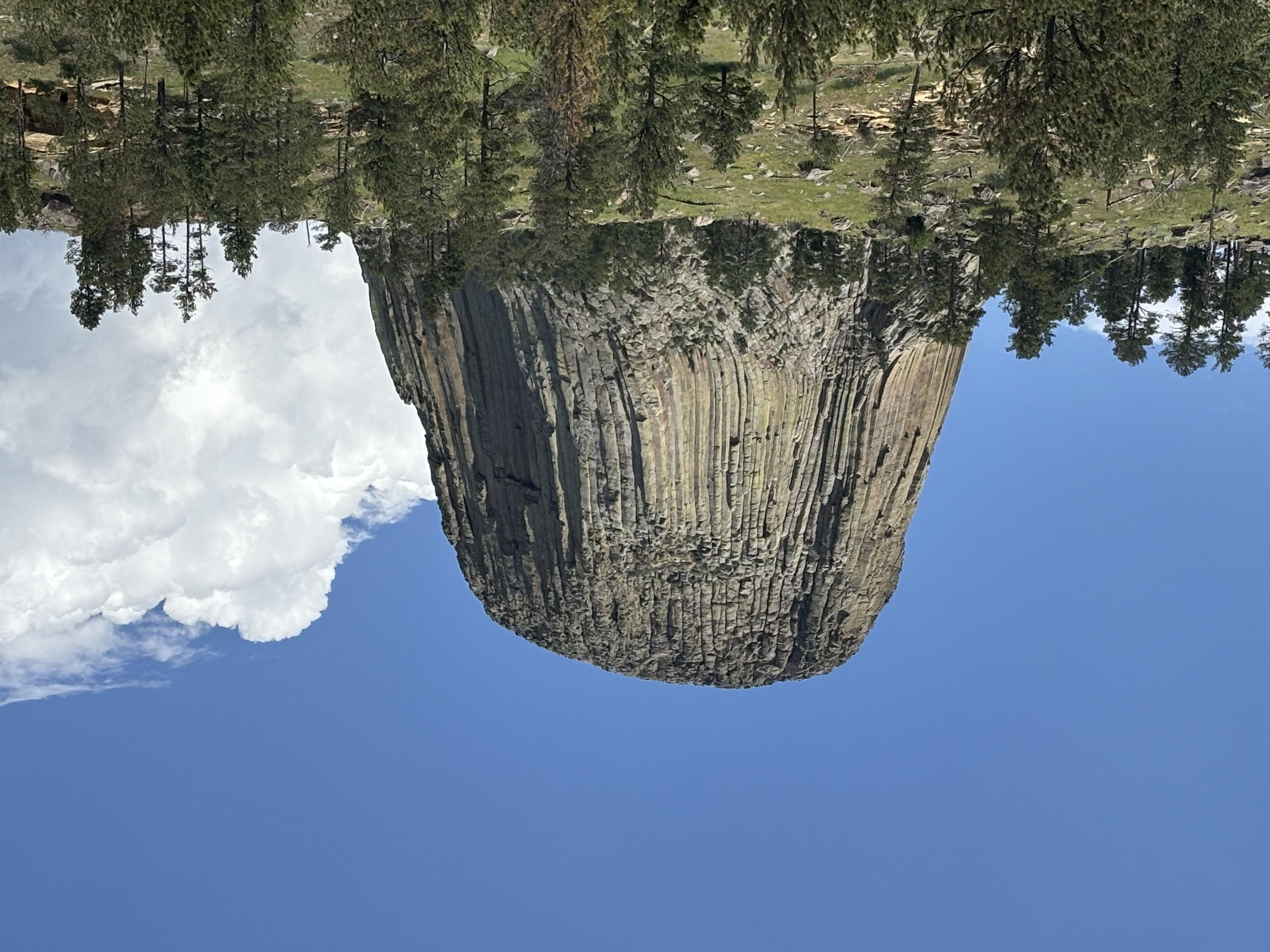
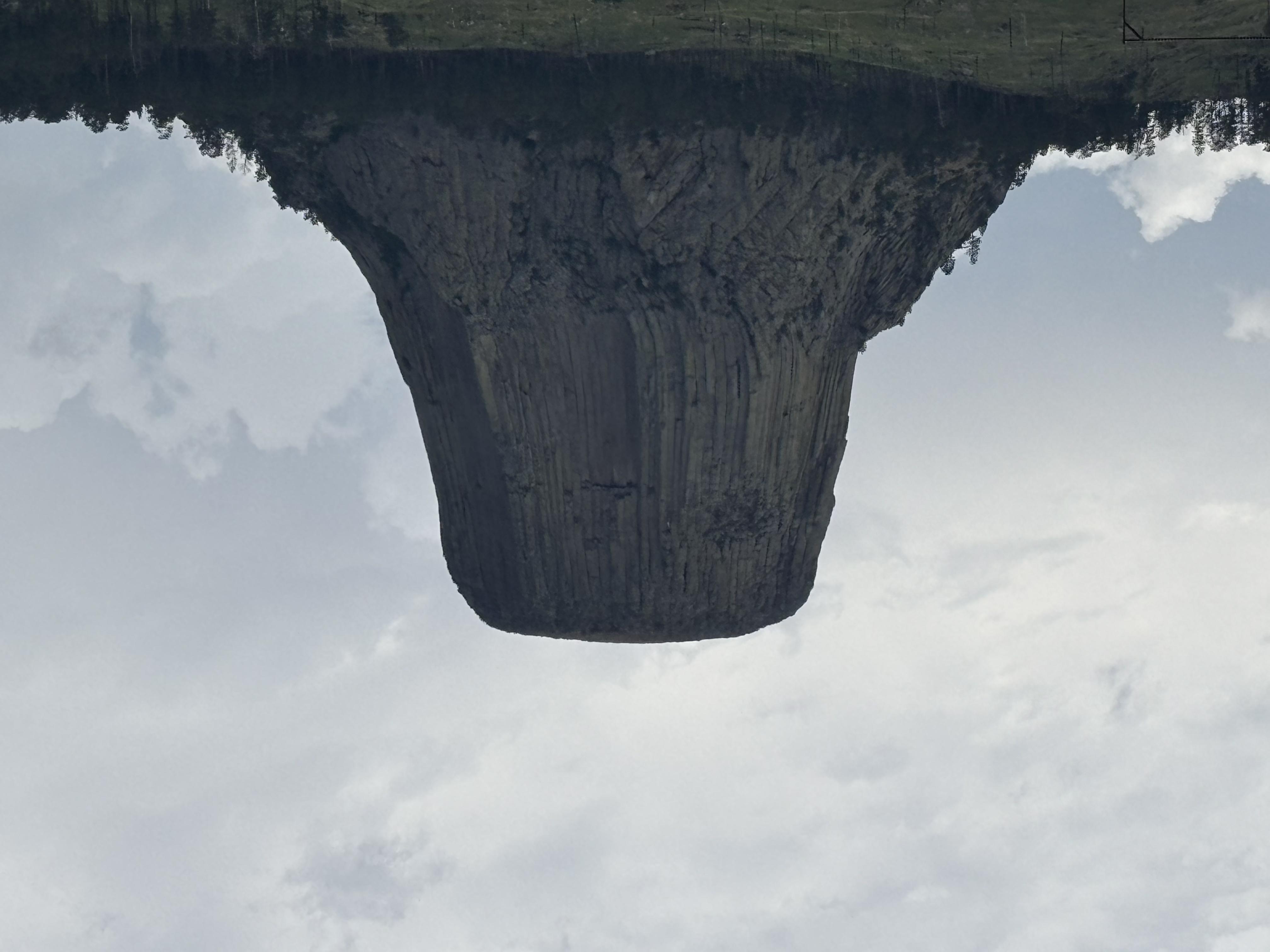
The Closer they got, the easier it was to understand what it was. The landscape surrounding Devils Tower is composed mostly of sedimentary rocks. The oldest rocks visible in Devils Tower National Monument were laid down in a shallow sea during the Triassic Period. This dark red sandstone and maroon siltstone, interbedded with shale, can be seen along the Belle Fourche River. Oxidation of iron minerals causes the redness of the rocks. This rock layer is known as the Spearfish Formation. Above the Spearfish Formation is a thin band of white gypsum, called the Gypsum Springs Formation, Jurassic in age. Overlying this formation is the Sundance Formation. During the Paleocene Epoch, 56 to 66 million years ago, the Rocky Mountains and the Black Hills were uplifted. Magma rose through the crust, intruding into the existing sedimentary rock layers.
The igneous material that forms the Tower is a phonolite porphyry intruded about 40.5 million years ago, a light to dark-gray or greenish-gray igneous rock with conspicuous crystals of white feldspar. As the magma cooled, hexagonal columns formed (though sometimes 4-, 5-, and 7-sided columns were possible), up to 20 feet wide and 600 feet tall.
As rain and snow continue to erode the sedimentary rocks surrounding the Tower's base, more of Devils Tower will be exposed. Nonetheless, the exposed portions of the Tower still experience certain amounts of erosion. Cracks along the columns are subject to water and ice erosion. Portions, or even entire columns, of rock at Devils Tower are continually breaking off and falling. Piles of broken columns, boulders, small rocks, and stones, called scree, lie at the base of the tower, indicating that it was once wider than it is today. Which the Boys never checked out, because ----------------------------------
Once in the Park, there was a one hour wait to get to the base!! Looking at the time, realizing trying climb it (it takes 4-6 hours) wasn't going to happen, the Boys pulled off the road, got some great pictures, and started back to there next stop in Lakota land, and a grand South Dakota Monument!
Hail Yes! This is a Storm!
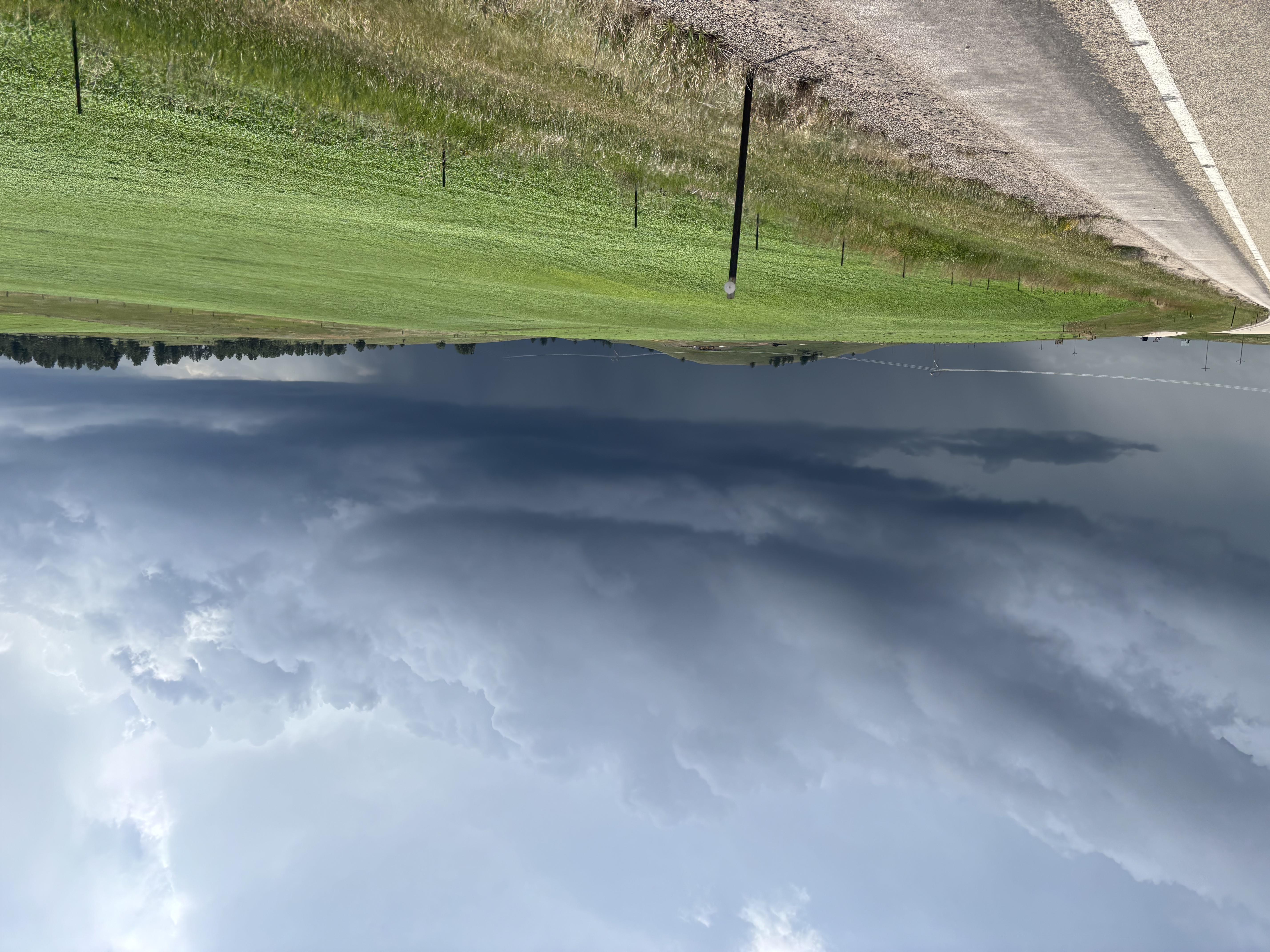
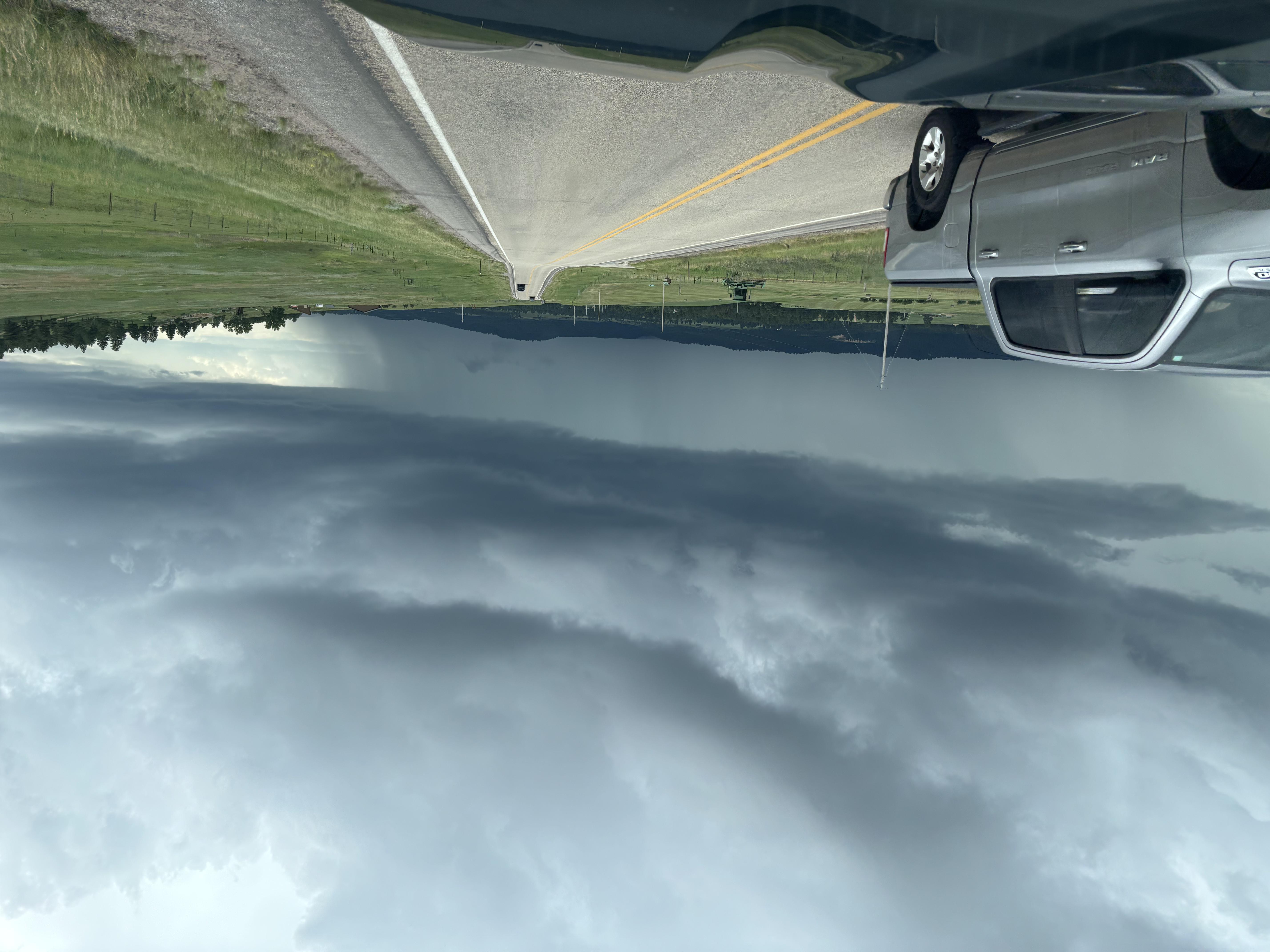
Heading back the storm that had been hovering in the area all day finally erupted like a burst pipe! Water everywhere, all at once! The Land Cruiser shook and shimmied, but Mike kept the Boys on the road and on track back into the state of South Dakota and the Black Hills.
Black Hills Back Country!
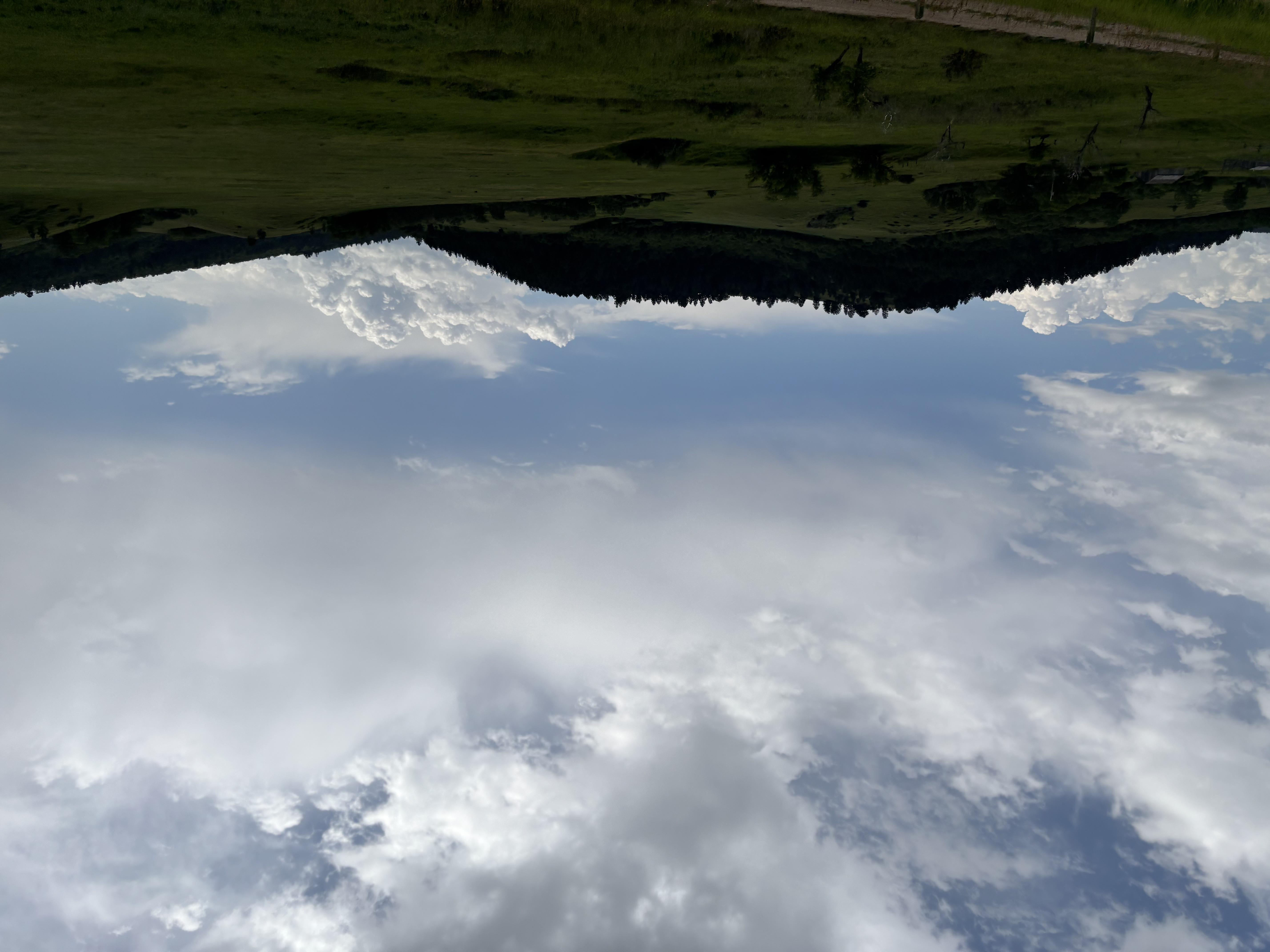
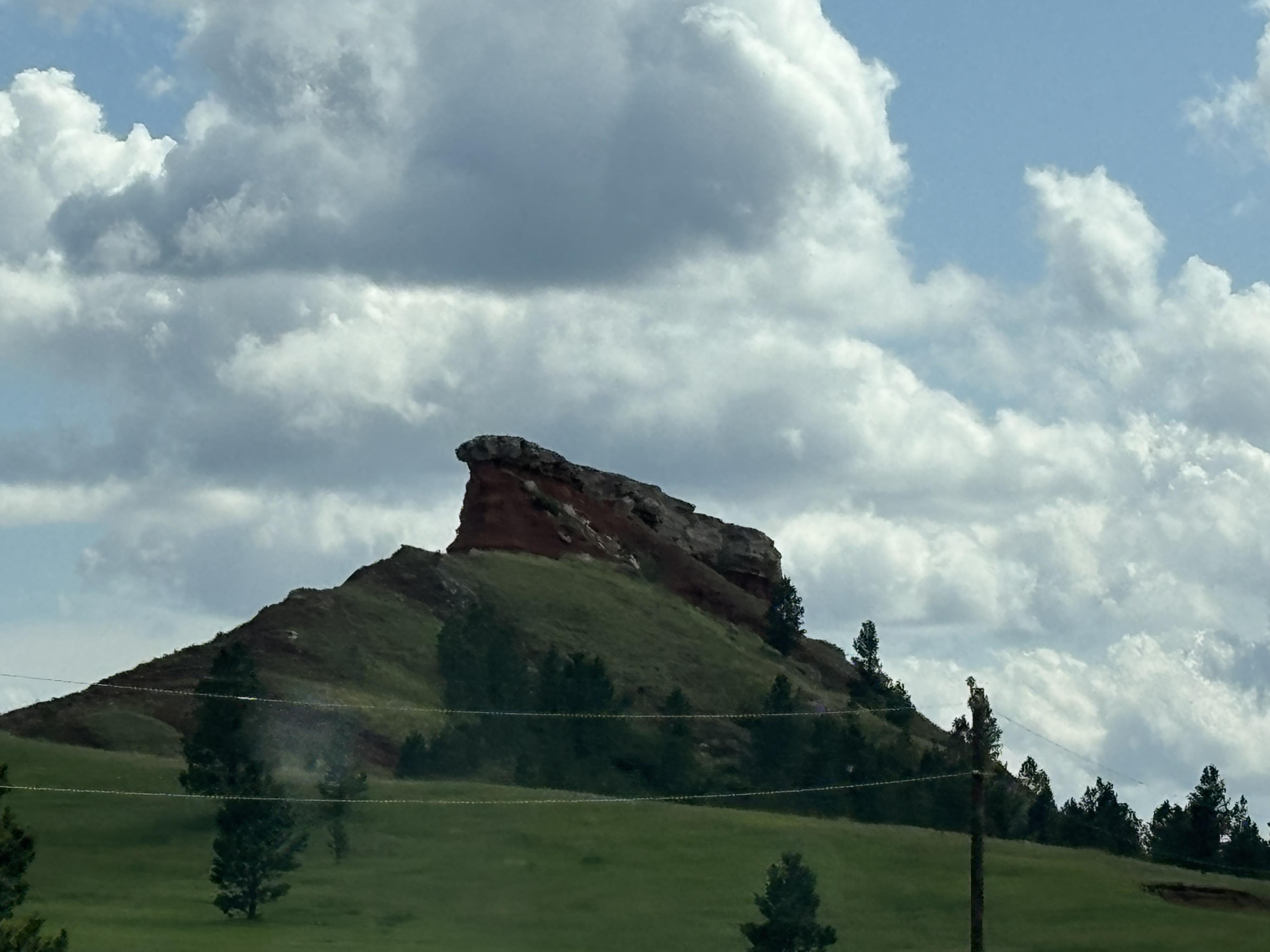
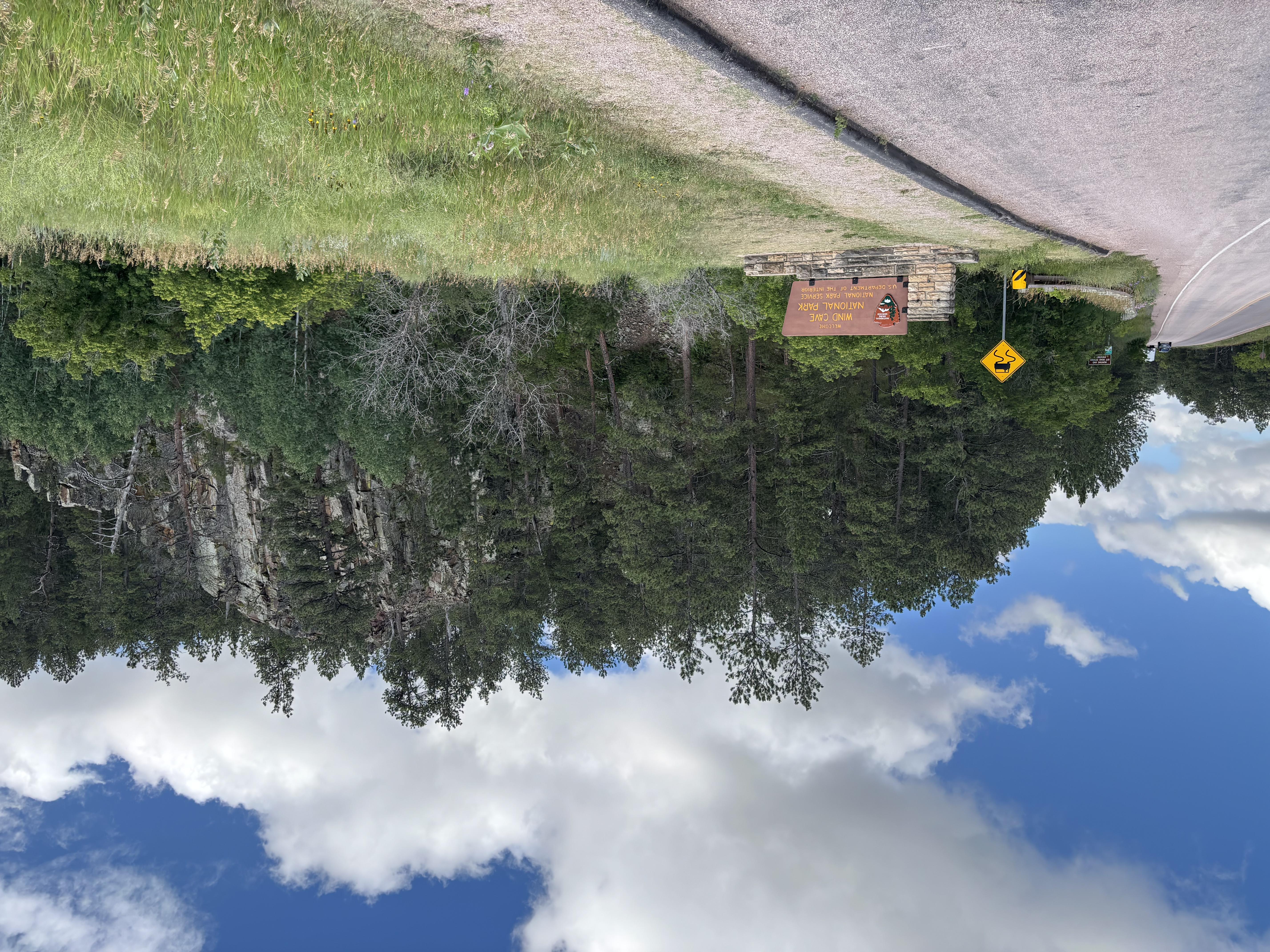
Shortly, Mike and Bone were at a sacred Lakota (per Tianna Yellowhair) site The Wind Cave National Momument. This is thee creation of story is of how the Lakota “emerged from the Earth”. The Boys were pushing up against 5:00 and wanted to get into the Visitor Center before it closed and hopefully get into the Cave!
In the Visitor Center they learned about the story which begins at a time when the plants and the animals were still being brought into existence, but there were no people or bison living on the earth. People at that time lived underground in the Tunkan Tipi — the spirit lodge — and were waiting as the earth was prepared for them to live upon it.
To get to the spirit lodge, one must take a passageway through what the ancestors referred to as Oniya Oshoka, where the earth “breathes inside.” This place is known today as Wind Cave, referred to in modern Lakota as Maka Oniye or “breathing earth.” Somewhere, hidden deep inside this passageway, is a portal to the spirit lodge and the spirit world.
There were two spirits who lived on the surface of the earth: Iktomi and Anog-Ite. Iktomi, the spider, was the trickster spirit. Before he was Iktomi, his name was Woksape — “Wisdom” — but lost his name and position when he helped the evil spirit Gnaskinyan play a trick on all the other spirits. Anog-Ite, the double face woman, had two faces on her head. On one side, she had a lovely face, rivaling the beauty of any other woman who existed. On the other, she had a horrible face, which was twisted and gnarled. To see this face would put chills down any person’s spine.
Anog-Ite was once Ite, the human wife of the wind spirit, Tate. She longed to be a spirit herself, so when the evil Gnaskinyan told her dressing up as the moon spirit, Hanwi, would grant her wish, she followed without question. Gnaskinyan used both Ite and Woksape as pawns in his trick on the other spirits. The Creator, Takuskanskan, decided not to punish Gnaskinyan for this trick, because evil does what’s in its nature. Woksape and Ite were both punished because they let their pride determine their actions and allowed themselves to be guided by evil, when both should have known better. Takuskanskan transformed the two into Iktomi and Anog-Ite, allowing Iktomi to play tricks forever and Anog Ite to be the spirit she desired to be. Both were banished to the surface of the earth.
Iktomi and Anog-Ite had only each other for company. Iktomi spent his time playing tricks on Anog-Ite, torturing her and never allowing her to live in peace, but this pastime soon bored him. He wanted new people to play tricks on, so he set his sights on the humans. He knew he needed help for this trick; he asked Anog-Ite, promising he’d never torment her again. She agreed to these terms and began loading a leather pack.
Anog-Ite filled this pack with buckskin clothing intricately decorated with porcupine quills, different types of berries, and dried meat. She then loaded the pack onto the back of her wolf companion, Sungmanitu Tanka. When the wolf was ready, Iktomi led him to a hole in the ground and sent the wolf inside Oniya Oshoka to find the humans. The wolf followed the passageways until it met the humans.
Winding into the Wind, Cave!!
Once there, he told the people about the wonders of the Earth’s surface, and showed them the pack on his back. One man took out the buckskin clothing and felt the soft leather. His wife tried on a dress and, when he looked at her, he thought the dress accentuated her beauty. Next they took out the meat, tasted it, and passed it around amongst some of the people. The meat intrigued them. They’d never hunted before, and had never tasted anything like meat. They wanted more.
The wolf told them if they followed him to the surface of the Earth, he’d show them where to find meat and all the other gifts he brought. The leader of the humans was a man named Tokahe — “The First One” — and he refused to go with the wolf. He objected, saying the Creator had instructed them to stay underground, and that’s what he’d do. Most of the people stayed with Tokahe, but all those who tried the meat followed the wolf to the surface.
The journey to the surface was long and perilous. When they reached the hole, the first thing the people saw was a giant blue sky above them. The surface of the earth was bright, and it was summertime, so all the plants were in bloom. The people looked around and thought the earth’s surface was the most gorgeous place they’d ever been before.
The wolf led the people to the lodge of Anog-Ite, who was in disguise; she had her sina — “shawl” — wrapped over her head, hiding her horrible face and revealing only her beautiful face. Anog-Ite invited the people inside, and they asked her about the clothes and the food. She promised to teach the people how to obtain those things, and soon she taught the people how to hunt and how to work and tan an animal hide.
This work was difficult, however. The people had never struggled like this in the spirit lodge. They grew tired easily and worked slowly. Time passed, and summer turned to fall, then to winter. The people knew nothing about the Earth’s seasons and had worked so slowly that, by the time the first snow came, they didn’t have enough clothes or food for everyone. They began to freeze and starve.
They returned to the lodge of Anog- Ite to beg for help, but it was then that she revealed her true intentions. She ripped the shawl from her head, revealing her horrible face, and with both faces — beautiful and horrible — laughed at the people.
The people recoiled in terror and ran away, so she sent her wolf after them to chase and snap at their heels. They ran back to the site of the hole from which they’d emerged, only to find that it had been covered, leaving them trapped on the surface.
The people didn’t know what to do nor where to go, so they simply sat down on the ground and cried. At this time the Creator heard them, and asked why they were there. They explained the story of the wolf and Anog-Ite, but the Creator was upset.
The Creator said, “You should not have disobeyed me; now I have to punish you.” The way the Creator did that was by transforming them — turning them from people into these great, wild beasts. This was the first bison herd.
Time passed, and the earth was finally ready for people to live upon it. The Creator instructed Tokahe to lead the people through the passageway in the cave and onto the surface. On the way, they stopped to pray four times, stopping last at the entrance.
On the surface, the people saw the hoof prints of a bison. The Creator instructed them to follow that bison. From the bison, they could get food, tools, clothes, and shelter. The bison would lead them to water. Everything they needed to survive on the earth could come from the bison.
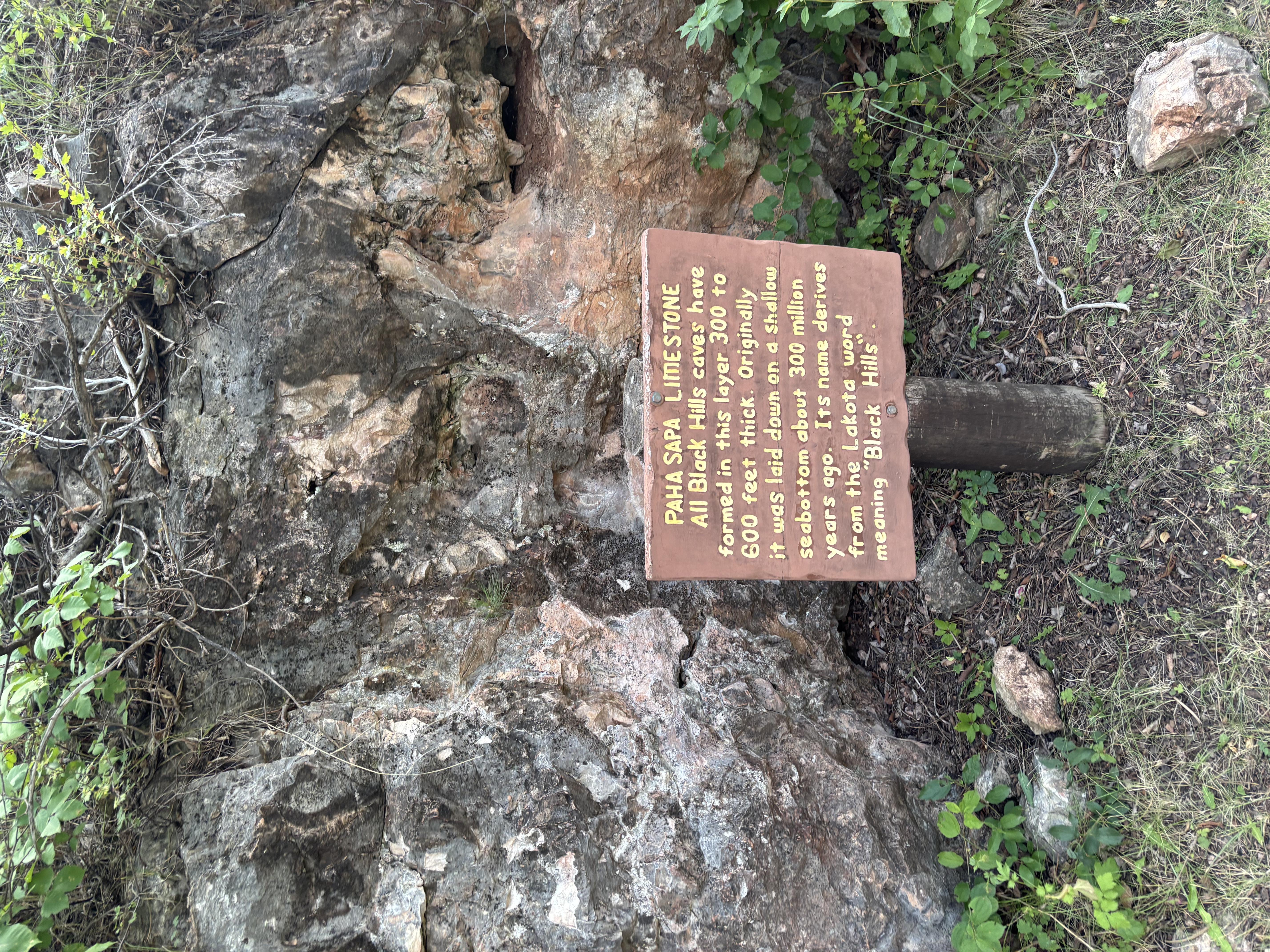
When they left the cave, the Creator shrunk the hole from the size of a man to the size it is now, too small for most people to enter, to serve as a reminder so the people would never forget from where they had come. The Boys pressed for time shot out of the Visitor Center and hit a path, in a rush, following people in front, they past some signs because they want to get to the Wind Cave and at least walk in the entrance!
Mike and Bone, NOT reading!
Mike and Bone walked briskly for at least 20 minutes (including a Bone tumble!) when they realized that the hills were going way and there weren't no cave entrance in sight! Crestfallen they backtracked to find the Cave entrance, they sure were not gonna be climbing into the Wind Cave!
The Miniscule Wind Cave Entrance!
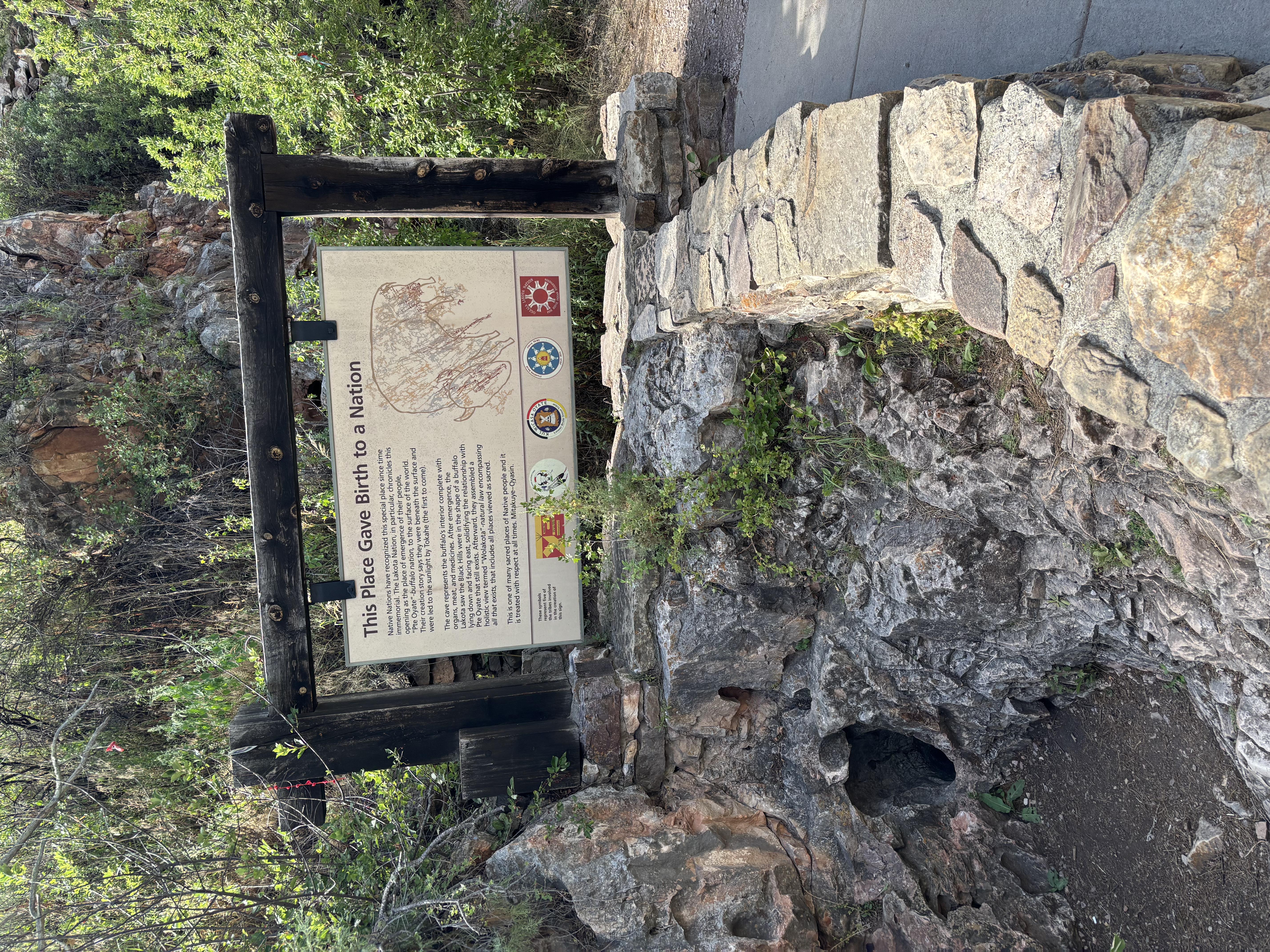
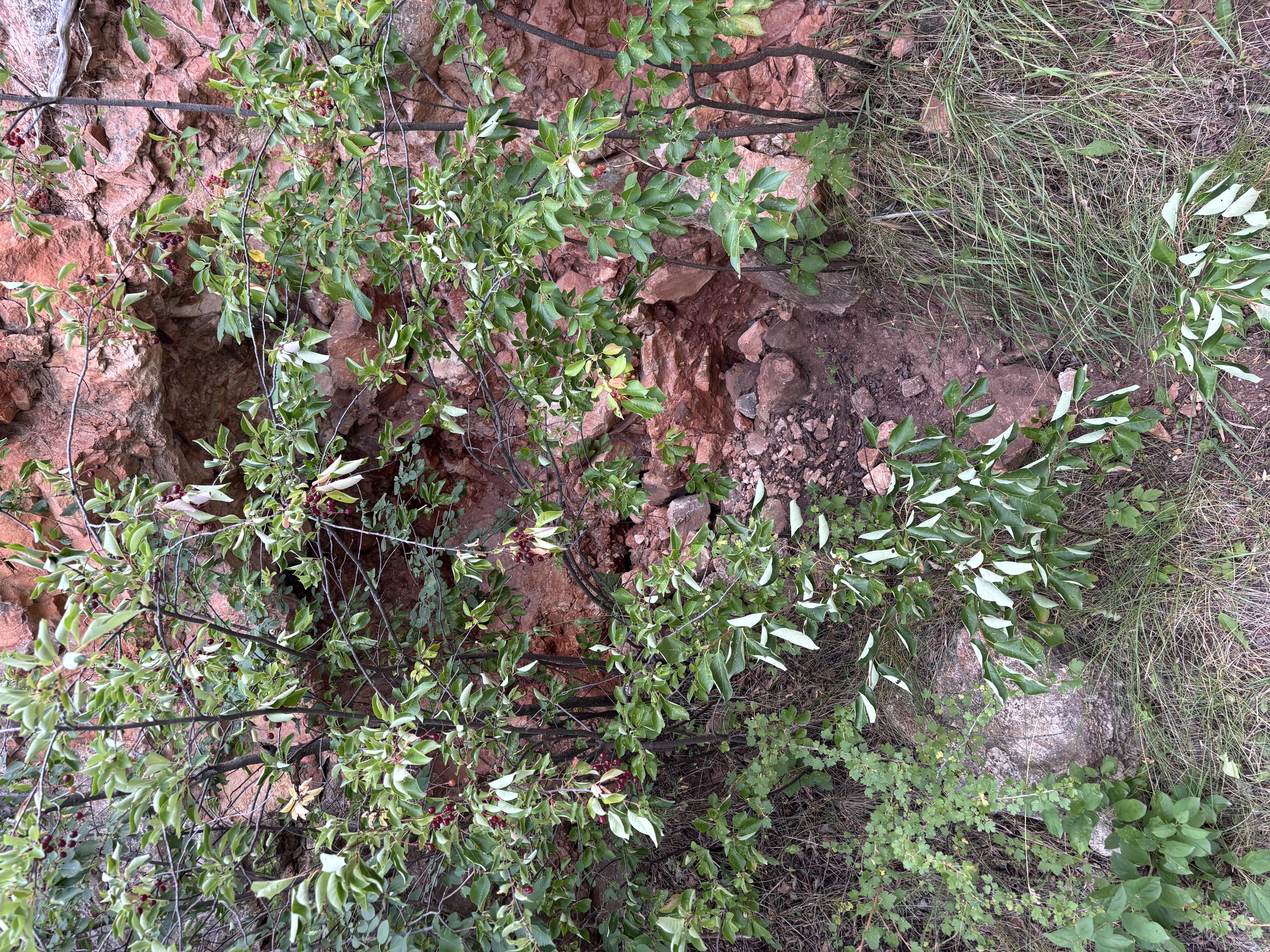
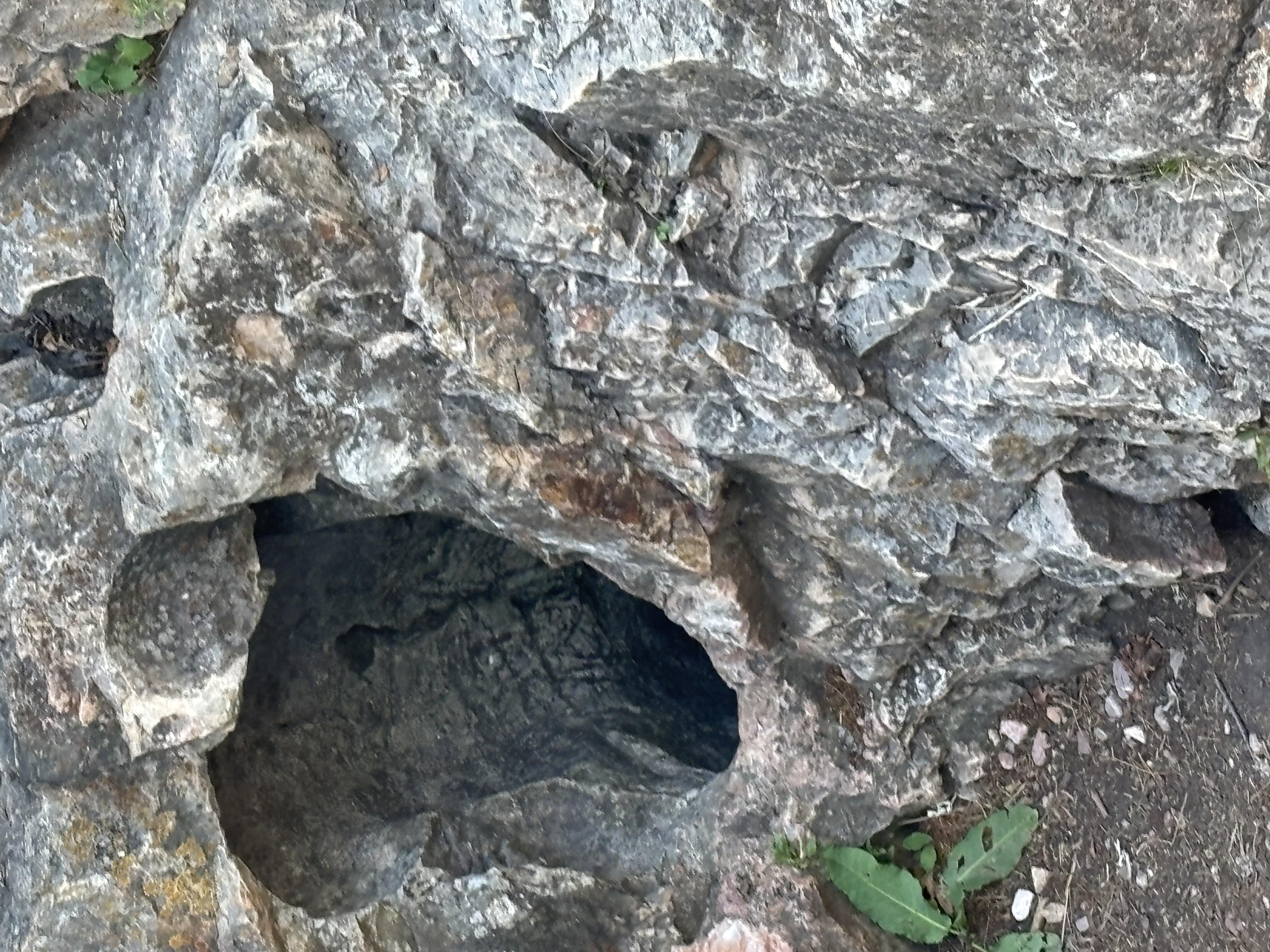
The Boys missed the part of the story where creator shrunk the hole, so no go for Mike and Bone for that entrance.
The Now Closed National Park Ranger Cave Entrance!!
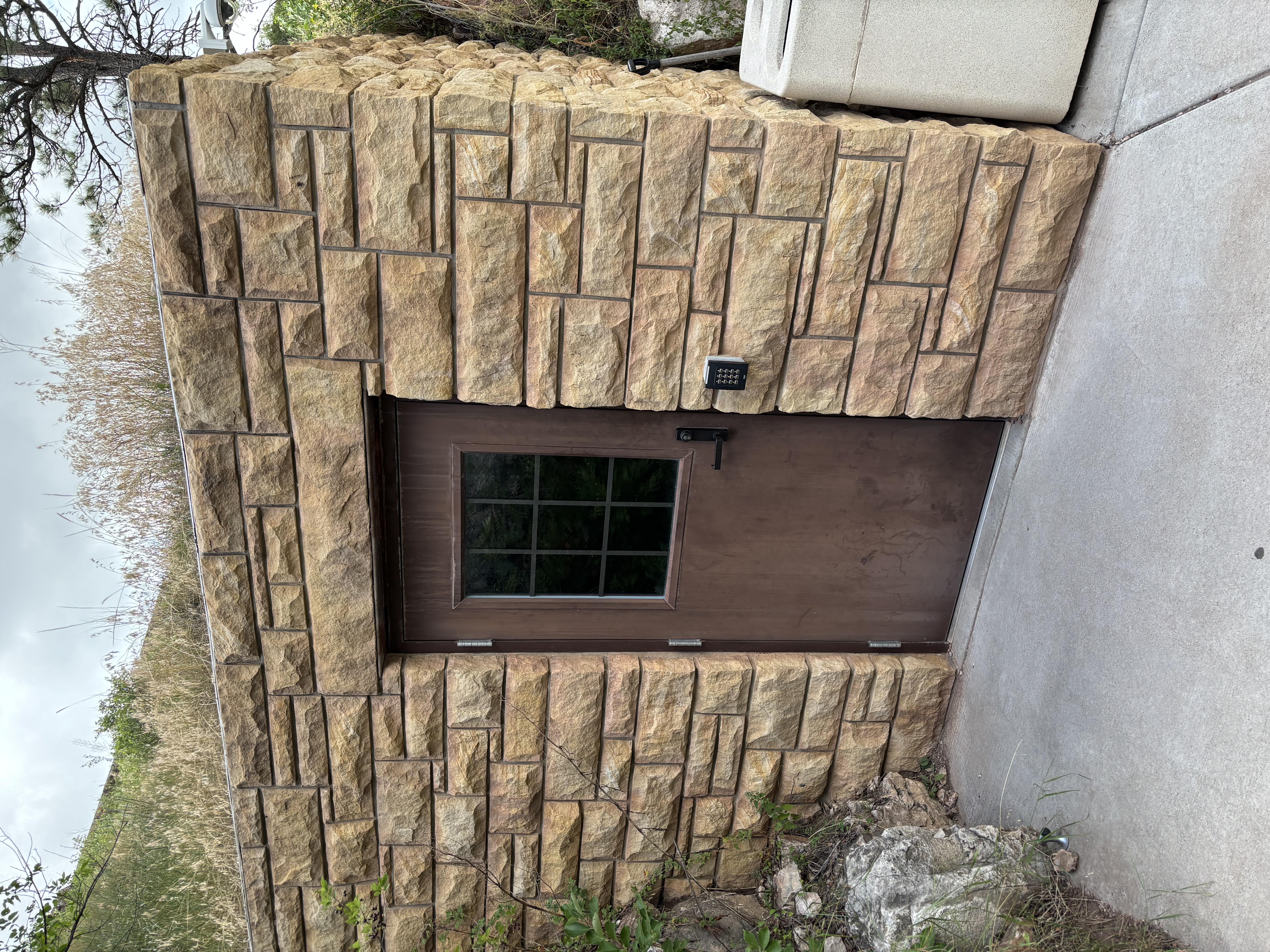
Then they noticed the actual entrance for the National Park Rangers below was closed for the evening, so their Wind Cave visit was completed! Despite a busy day, Mike and Bone were still crazy for a massive monument, nope not Mount Rushmore, but the Crazy Horse Memorial! Jumping into the Land Cruiser, the early storm in Wyoming, now pummeled the Boys again in South Dakota!
The Crazy Horse Memorial !

The Crazy Horse Memorial is a mountain monument complex under construction on privately held land in the Black Hills. It has Crazy Horse, riding a horse and pointing to the Lakota tribal land. The memorial was commissioned by Henry Standing Bear, a Lakota elder, to be sculpted by Korczak Ziolkowski. It is operated by the Crazy Horse Memorial Foundation, a nonprofit organization. As the Boys pulled in to the complex, the deluge began again, so they dashed into the Indian Museum of North America, which is home to a large collection of art and artifacts reflecting the diverse histories and cultures of over 300 Native Nations.
Inside the Crazy Horse Memorial Museum
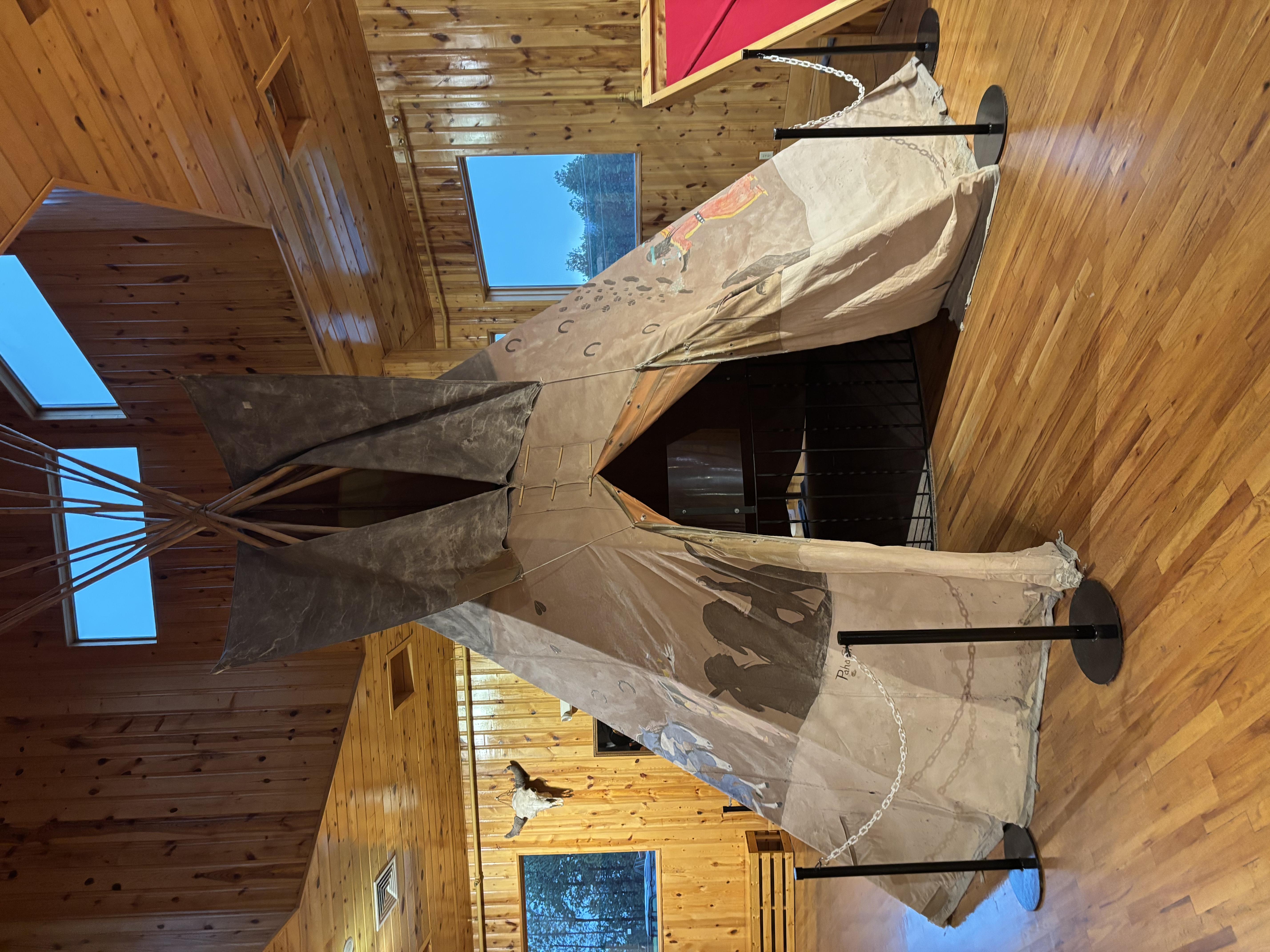
Wandering around Mike and Bone checked out the exhibits and experiences of the heritage of the North American Indians. This includes an extremely interesting video about the lives of the Ziolkowski family. The Video provided a history on how did massive undertaking started.
Well it started with Henry Standing Bear, an Oglala Lakota chief, and well-known statesman and elder in the Native American community, recruited and commissioned Polish-American sculptor Korczak Ziolkowski to build the Crazy Horse Memorial in the Black Hills of South Dakota. In October 1931, Luther Standing Bear, Henry's older brother, wrote to sculptor Gutzon Borglum, who was carving the heads of four American presidents at Mount Rushmore. Luther suggested that it would be "most fitting to have the face of Crazy Horse sculpted there. Crazy Horse is the real patriot of the Sioux tribe and the only one worthy to place by the side of Washington and Lincoln." Borglum never replied.[9] Thereafter, Henry Standing Bear began a campaign to have Borglum carve an image of Crazy Horse on Mount Rushmore. In summer of 1935, Standing Bear, frustrated over the stalled Crazy Horse project, wrote to James H. Cook, a long time friend of Chief Red Cloud's, "I am struggling hopelessly with this because I am without funds, no employment and no assistance from any Indian or White.”
On November 7, 1939, Henry Standing Bear wrote to the Polish-American sculptor Korczak Ziolkowski, who worked on Mount Rushmore under Gutzon Borglum. He informed the sculptor, "My fellow chiefs and I would like the white man to know that the red man has great heroes, too." Standing Bear also wrote a letter to Undersecretary Oscar Chapman of the Department of the Interior, offering all his own fertile 900 acres in exchange for the barren mountain for the purpose of paying honor to Crazy Horse. The government responded positively, and the U.S. Forest Service, responsible for the land, agreed to grant a permit for the use of the land, with a commission to oversee the project. Standing Bear chose not to seek government funds and relied instead upon influential Americans interested in the welfare of the American Indian to privately fund the project.
In the spring of 1940, Ziolkowski spent three weeks with Standing Bear at Pine Ridge, South Dakota, discussing land ownership issues and learning about Crazy Horse and the Lakota way of life. According to Ziolkowski, "Standing Bear grew very angry when he spoke of the broken Treaty of Fort Laramie of 1868. That was the one I'd read about in which the President promised the Black Hills would belong to the Indians forever. I remember how his old eyes flashed out of that dark mahogany face, then he would shake his head and fall silent for a long while." Zilkowski did not know it at the time, but the rest of his and much of his families lives were going to be dedicated to Henry Standing Bears Vision!
On June 3, 1948, Ziolkowski detonated the first blast on the mountain, and the memorial was dedicated to the Native American people. Work continued slowly over the next few decades since Ziolkowski refused to accept government grants. Instead, as he stated on a 1961 guest appearance on the TV show To Tell the Truth, he raised money for the project by charging seventy-five cents admission to the monument work area.
The Crazy Horse Memorial Model
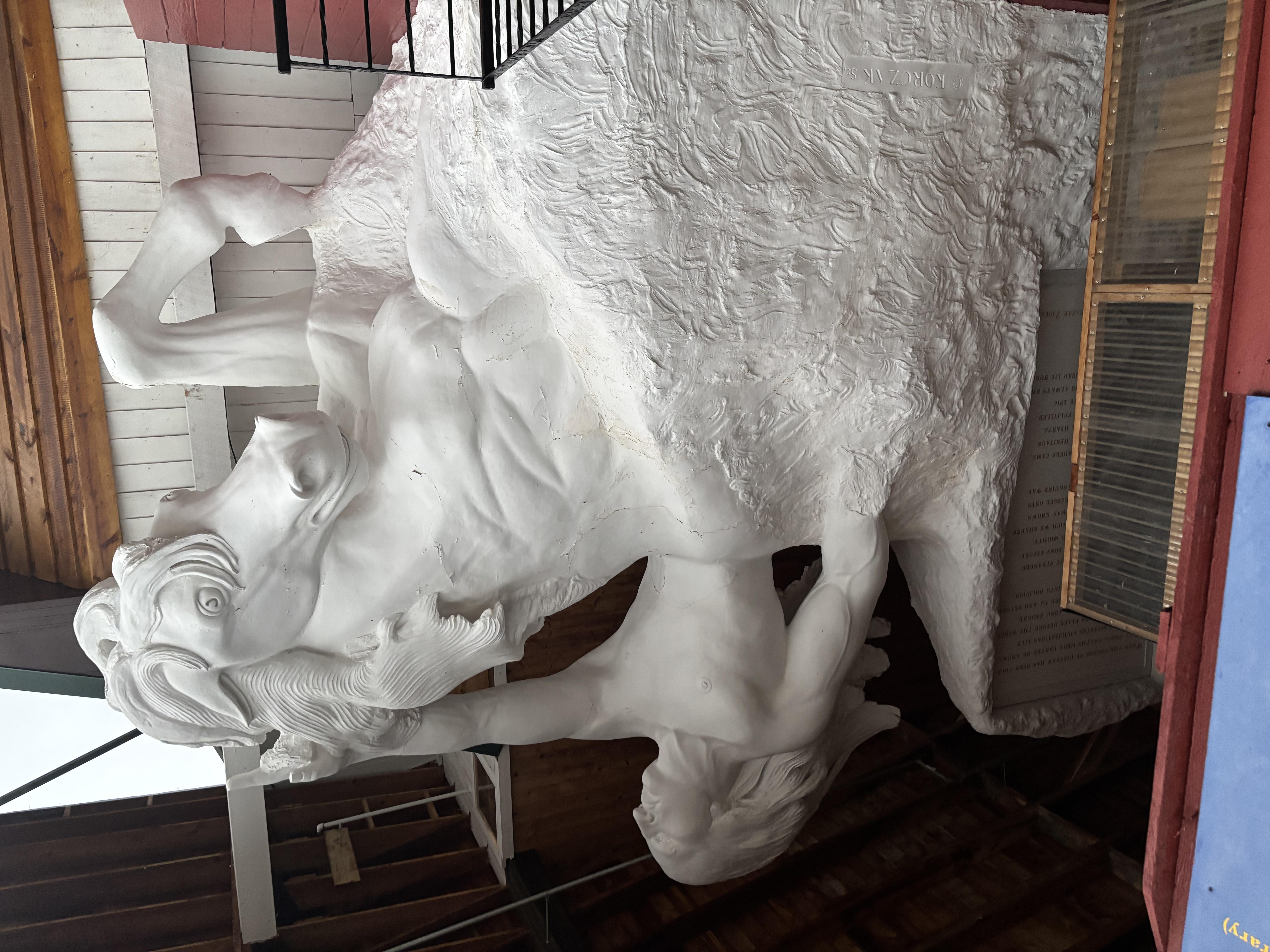
After Ziolkowski died in 1982 at age 74, his widow Ruth Ziolkowski took charge of the sculpture, overseeing work on the project as CEO from the 1980s to the 2010s. Ruth Ziolkowski focused on the completion of Crazy Horse's face first, instead of the horse as her husband had originally planned. She believed that Crazy Horse's face, once completed, would increase the sculpture's draw as a tourist attraction, which would provide additional funding. She also oversaw the staff, which included seven of her children.
Sixteen years later, in 1998, the head and face of Crazy Horse were completed and dedicated; Crazy Horse's eyes are 17 feet wide, while his head is 87 feet high. Ruth Ziolkowski and seven of the Ziolkowskis' 10 children carried on work at the memorial. Daughter Monique Ziolkowski, herself a sculptor, modified some of her father's plans to ensure that the weight of the outstretched arm was supported sufficiently. The foundation commissioned reports from two engineering firms in 2009 to help guide completion of the project. Work commenced on the horse after two years of careful planning and measurements. Since the completion of the head and face, much of the monument's sculpting work has been dedicated to the much larger horse portion.
Ruth Ziolkowski, who start only as Korczak’s secretary died on May 21, 2014, at the age of 87. Monique Ziolkowski became CEO and three of her siblings continued to work on the project, as well as three of the Ziolkowskis' grandsons, including Caleb, who has gone on to become the "chief mountain officer".
With Monique Ziolkowski as CEO, work focused on finishing the outstretched left arm of Crazy Horse, in addition to expanding the on-site Indian University of North America, a joint-venture with Black Hills State University that has offered summer programs for university students of Native American descent since 2011. Monique Ziolkowski stepped down as CEO in 2021 to focus on artwork and other aspects of the memorial site, with the foundation eventually naming Whitney A. Rencountre II, who had held various education-based positions including associate director of the Indian University, as its new CEO in August 2022.
The memorial celebrated its 75th anniversary in 2023. Crazy Horse's left hand was finished by 2024, with finishing work commencing in summer 2024 on the backside of his arm to make way for a new tower crane designed to reach all parts of the carving. The crane, with an estimated cost of $5.2 million, was made possible by several anonymous donations and was procured in 2023, with all parts weighing 25,000 pounds combined, and was shipped to the mountain on 17 truck beds. The crane was assembled by the summer of 2025 and has been used by the crew to remove granite cutout blocks and move equipment in dramatically reduced time. This in turn has allowed for more focus on carving, which has moved on to the horse's mane and Crazy Horse's right shoulder.
Mike and Bone were quite taken with the Ziolkowski Families (three generations!) with the project! After the video, it finally stopped raining enough for the Boys to check out the Monument!
Inside the Crazy Horse Memorial Museum
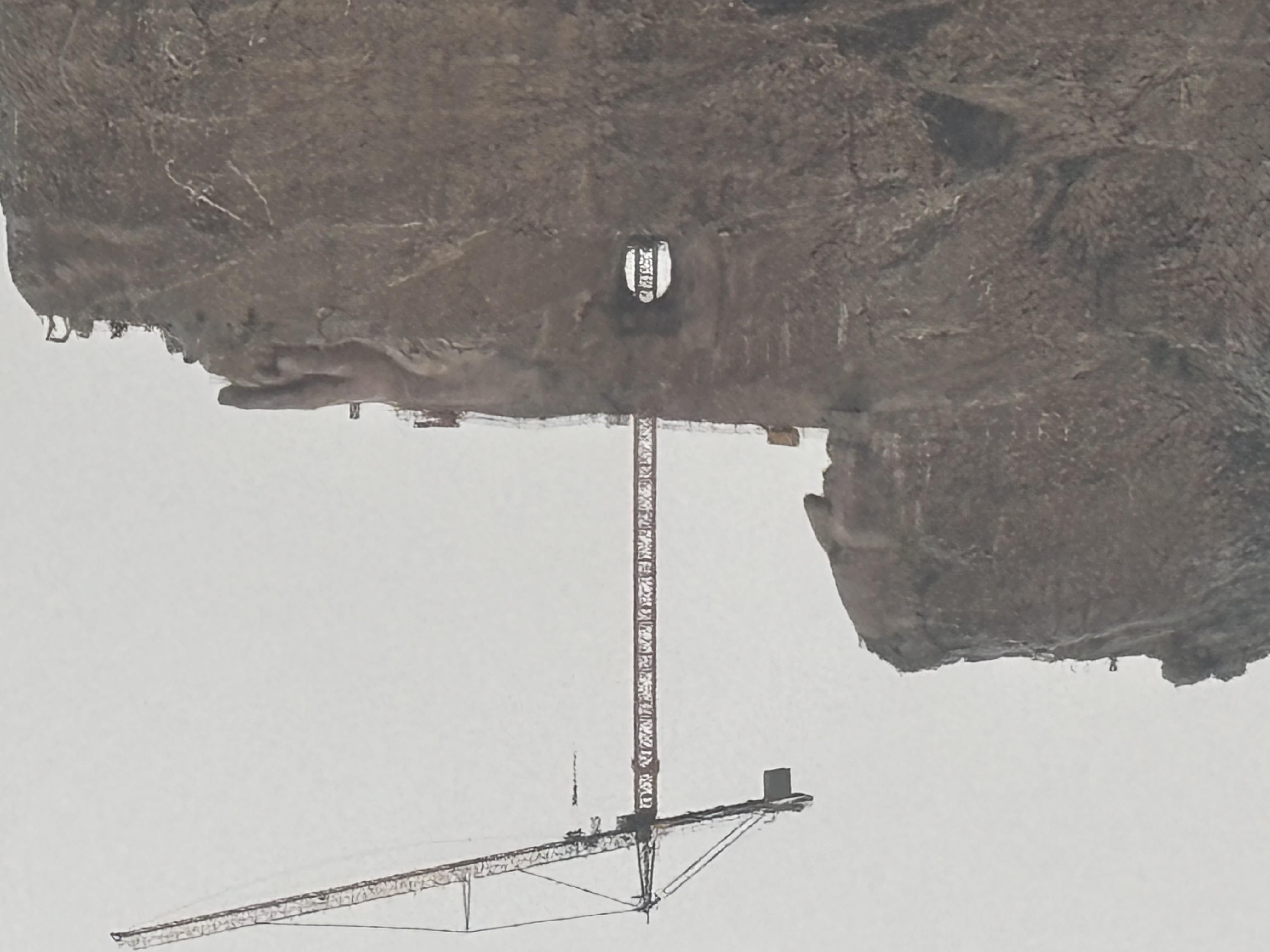
Despite seeing the Model in the Museum, seeing the actual Monument, even in its unfinished state is simply awestriking! How it was starting to rain again so the Boys boogied, looking for somewhere (other than Kadoka!) for dinner and found a number of places in an ironically named city fairly close to the Crazy Horse Monument, Custer South Dakota!
Custer's Last Stand (Ice Cream Stand that it!)
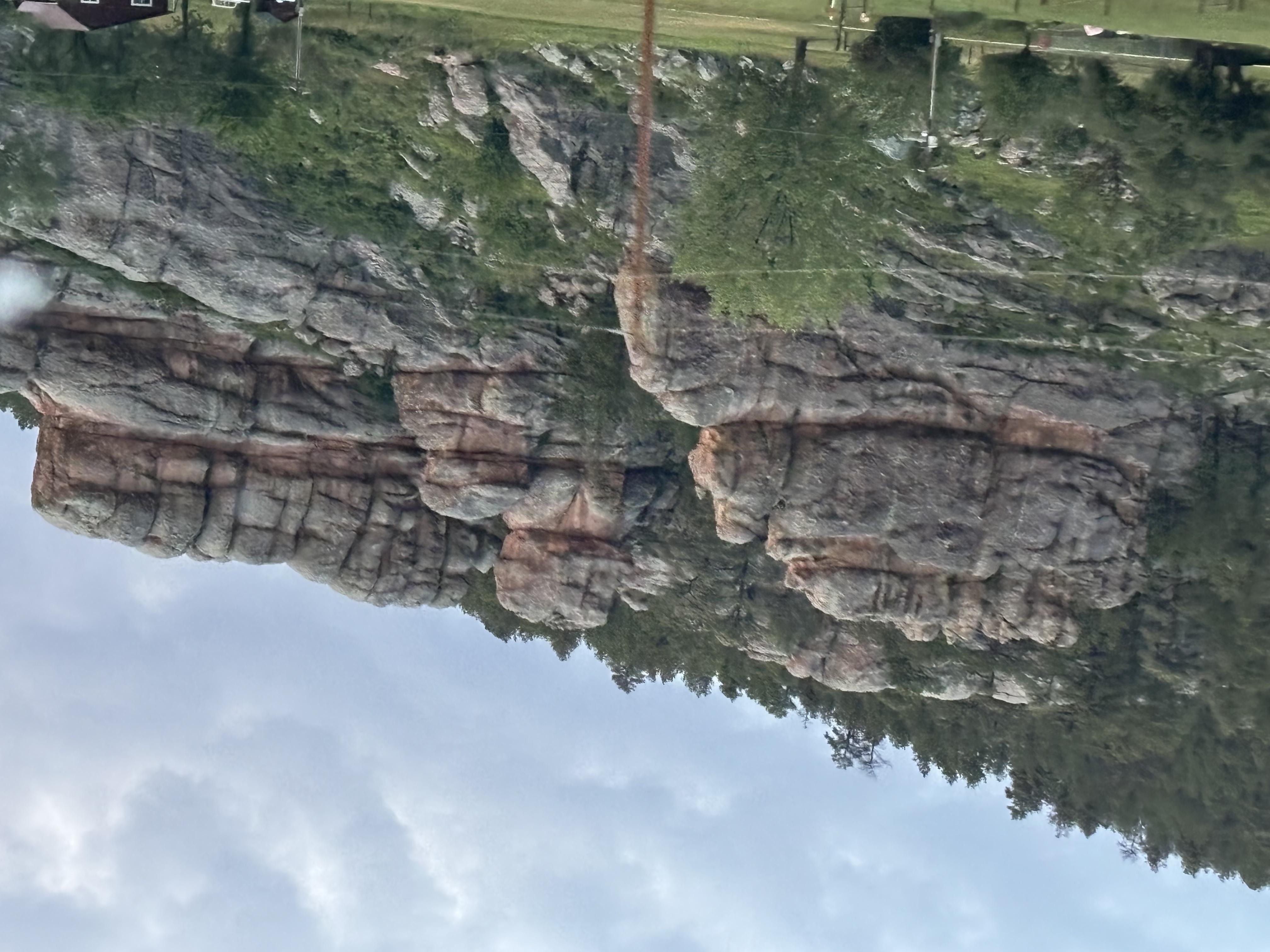
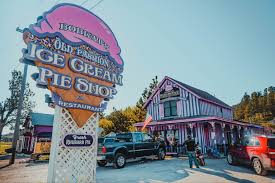
Custer, named after George, is a tourist city in the foothills of the Black Hill and is close to both Mount Rushmore and the Crazy Horse Monument, and unlike most Indian Towns, it had a lot of restaurants! Now
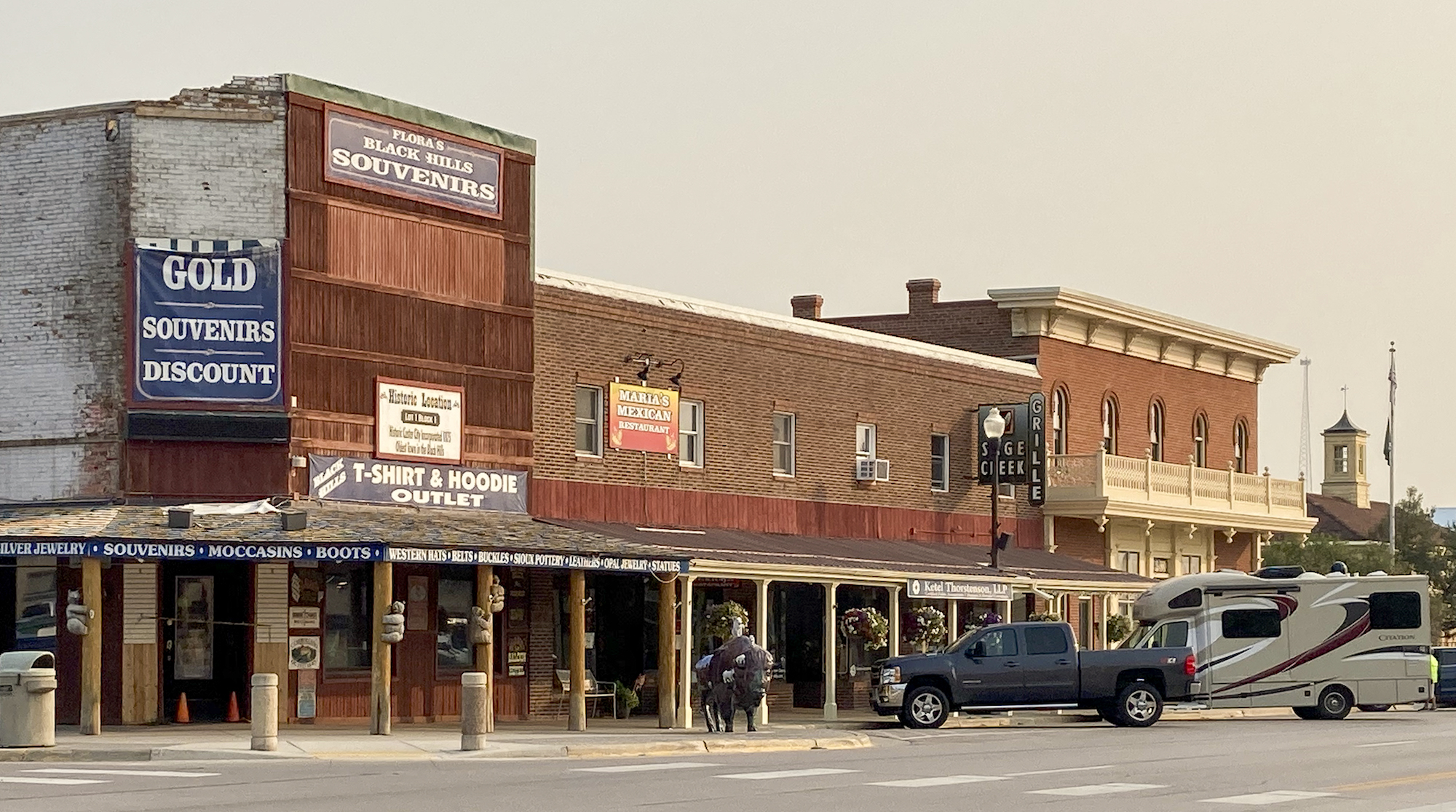
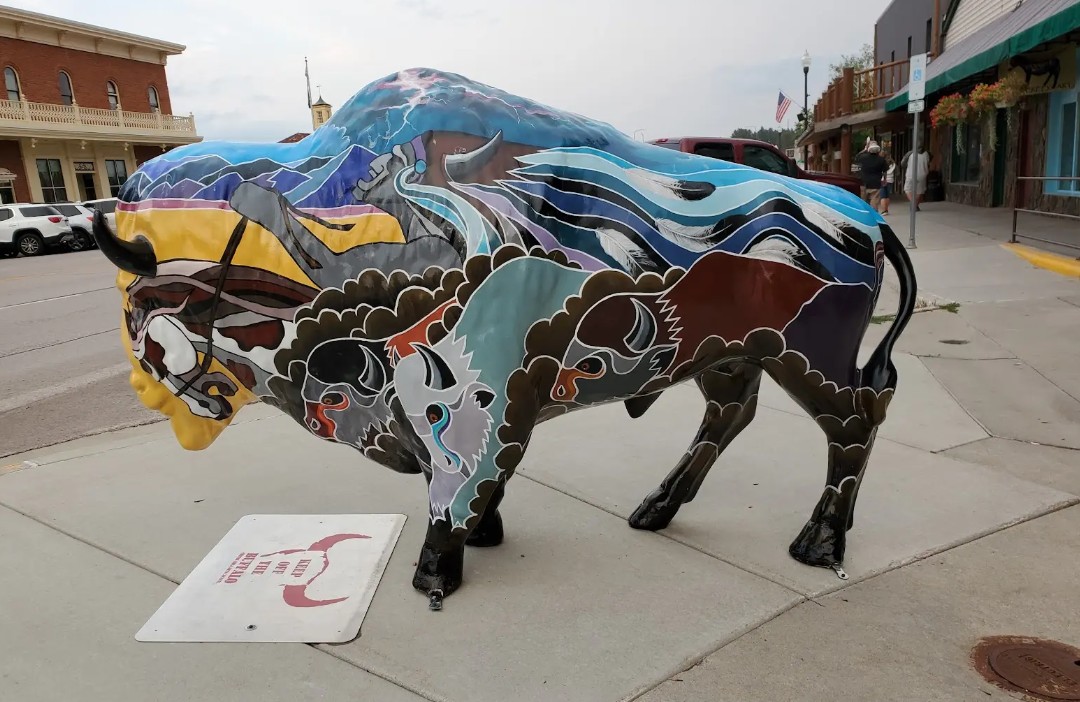
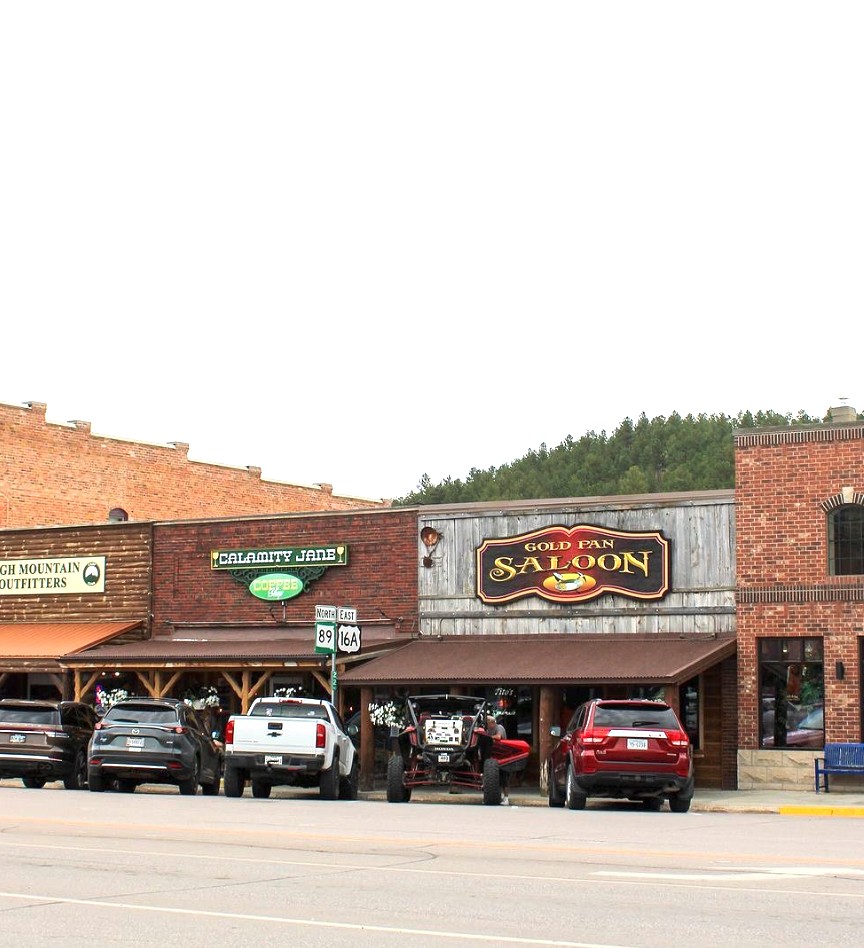
The Boys checked out a few places (one was way to fancy!) and found a great little sports bar with good Mexican. With their bellies full, the Boys booked back to Kadoka.