Day 2: Carthage in a Day!
Main Page > 2026 Roamin' the Roman Lake! >
There was no moaning on that Monday morning! Mike and Bone rose eager and chipper to check out the reason why they flew across the pond for 16 hours!
First, why start in Tunesia? Because this is where the Roman Empire started! When Rome and Carthage first met in 509 BC, Carthage was actually the bigger and older of the two, with Carthage being founded in 814 BC by Phoenician settlers from Tyre, and Rome being founded in 753 BC. Carthage developed from a Phoenician colony into the capital of a Punic empire which dominated large parts of the Southwest Mediterranean including Spain, and Sicily. The legendary Queen Alyssa, originally from Tyre is regarded as the founder of the city, even though it is mostly regarded as a myth. In the story Dido asked for land from a local tribe, which told her that she could get as much land as an oxhide could cover. She cut the oxhide into strips and laid out the perimeter of the new city. As Carthage prospered at home, Carthage sent colonists abroad as well as magistrates to rule new colonies. It all worked out well until they met these upstart, irate, Italians, calling themselves Romans in Sicily!
With that in mind, the Boys headed out in the steamy morning (already 100!) around 8:00 AM jumped on the A1 freeway, drove through Tunis and south towards their first site to check out.
Dodging the Tunisian Drivers Southbound on the A1!
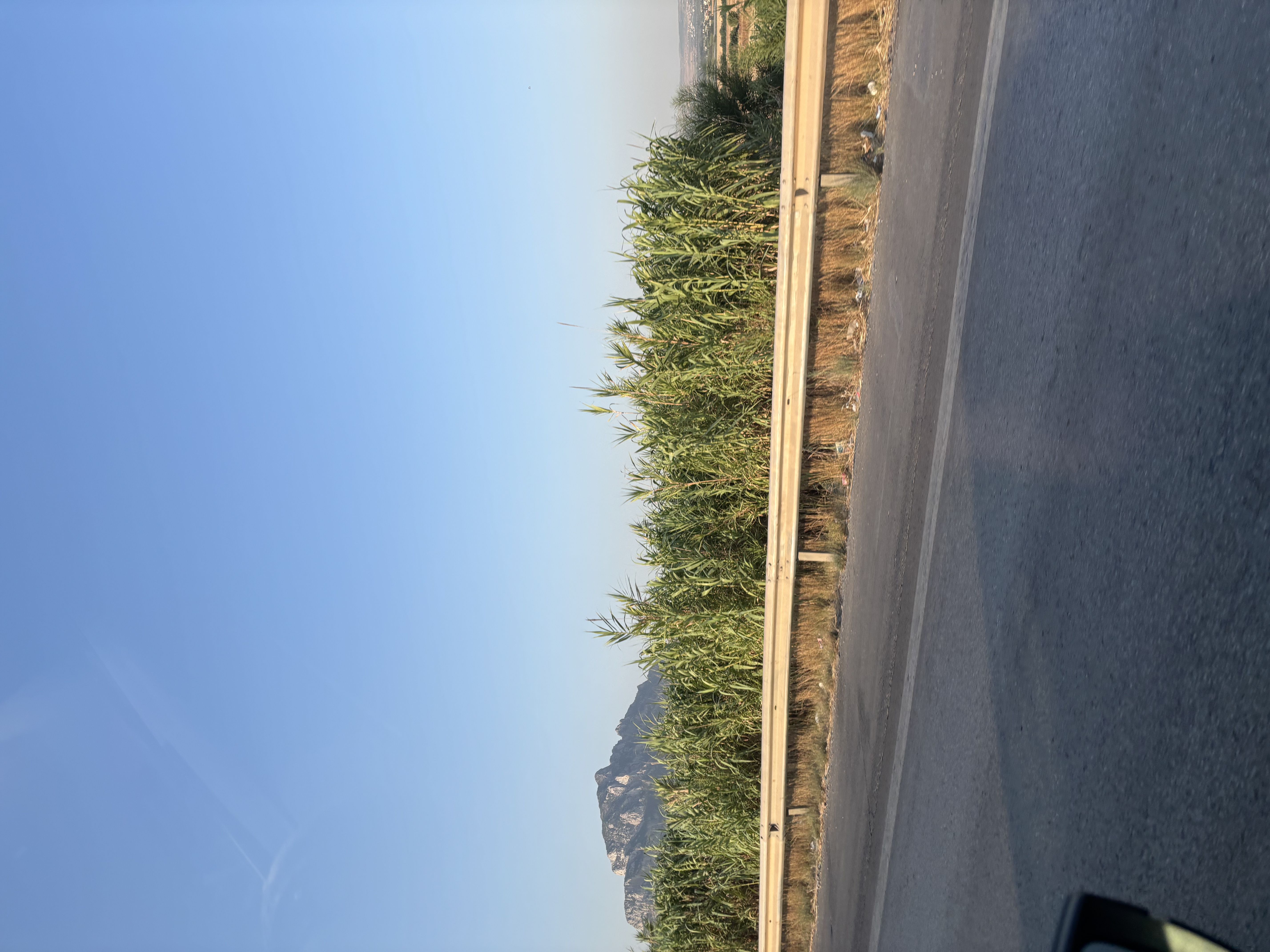
The drive down was interesting where the Boys had to drive through several cash only toll booths, and gas stations were Mike and Bone stopped to buy some waters for the Road. They ogled at the locals trying to sell nuts that were on the ground to passing motorists! Another thing that made the drive interesting was the Tunisian drivers didn't really understand that the lines on the road were more than suggestions to stay in that lane! Which provided Mike and Bone the exhilarating opportunity to bob and weave with the locals as well!
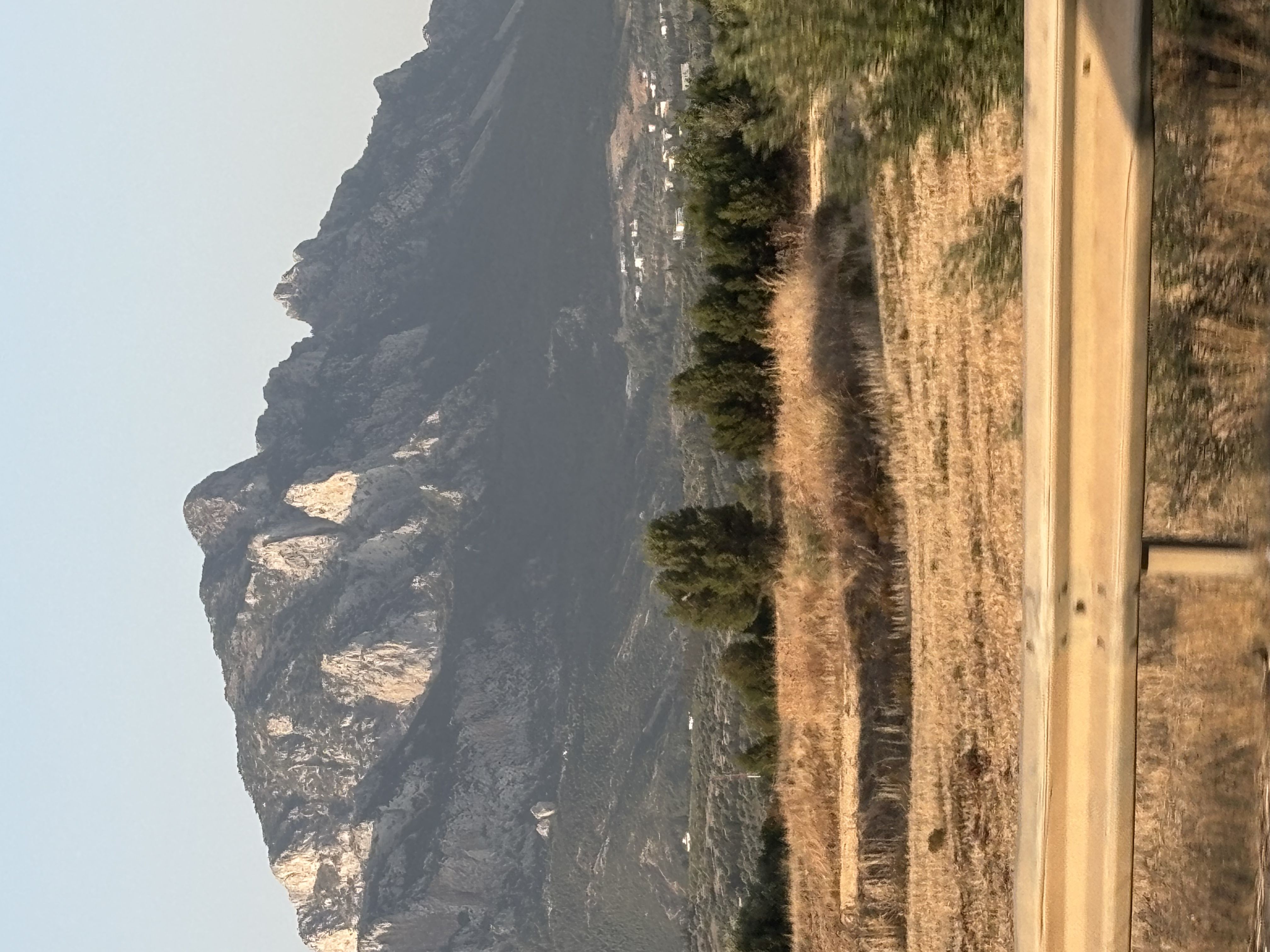
Finally with no dings or dents they reach their first goal of the morning was to check out the renowned El Jem Amphitheatre, a UNESCO World Heritage site, in well El Jem!
Today, El Jem is a small town with a population 21,544, but in its prime it was close to 60,000. El Jem was not a Punic town that became Roman, it was built by the Romans based on that ubiquitous Emperor Hadrian! That dude literally planted a whole bunch (15,000 hectares!) of olive trees in the area, that over 2,000 years later is still providing the agricultural basis for the city!
Back in the day of Hadrian the town was called Thysdrus, and in a less arid climate than today's, Thysdrus prospered as an important center of olive oil production and export.
By the early 3rd century, when the amphitheatre was built, Thysdrus rivaled Hadrumetum (modern Sousse) as the second city of Roman North Africa after Carthage. However, following the abortive revolt that began there in AD 238 and Gordian's suicide in his villa near Carthage, Roman troops loyal to the emperor Maximinus Thrax sacked the city. The prosperity of Thysdrus in Roman times, despite the challenges posed by its hostile geographical environment reveals a diversity of economic and craft activities far richer than initially thought.
Today, what is left is the amphitheatre, El Jem and a section of the Roman middle class housing, and the Boys weren't really sure if they would ever find it!!
These days El Jem is a poor Arab villages with roads going every which way in the village. Mike and Bone to bobbed and weaved through streets with camels, carts, and cars zipping and stopping helter skelter everywhere. After 20 tense moments, up to and including considering giving up the iconic Amphitheater was before them!
"Man! I really cant stand the smell of Coffee!!"
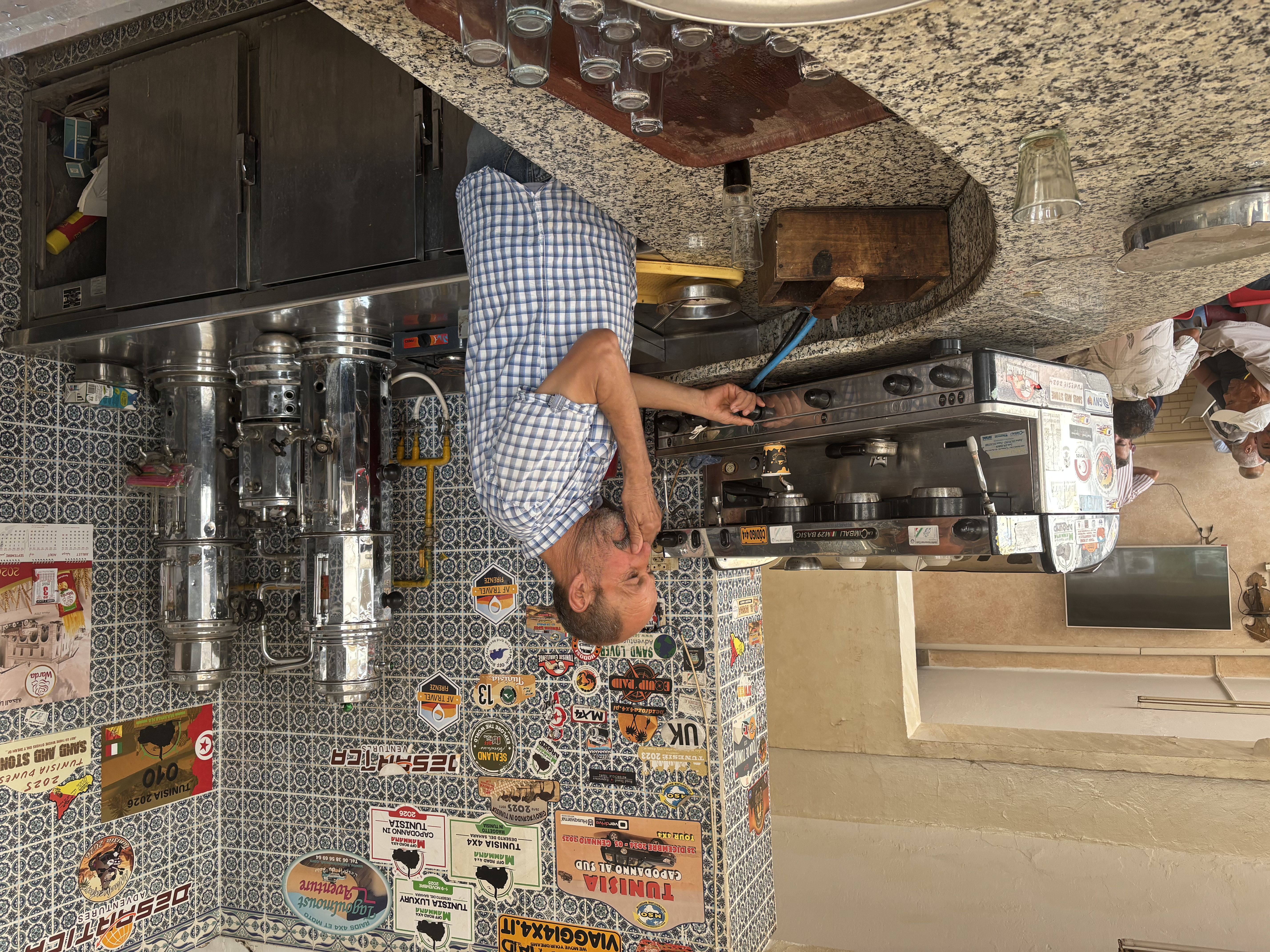
The Boys scammed the crowded streets and found a parking spot literally across the street from El Jem. Parking, Bone had to take the opportunity to have an Arabic espresso from a local restaurant! Refreshed, the Boys headed into El Jem, as they bought their tickets, they were offered a tour guide named Sajid. Walking in, they started their tour.
El Jem is the Pitts (Olive)!!
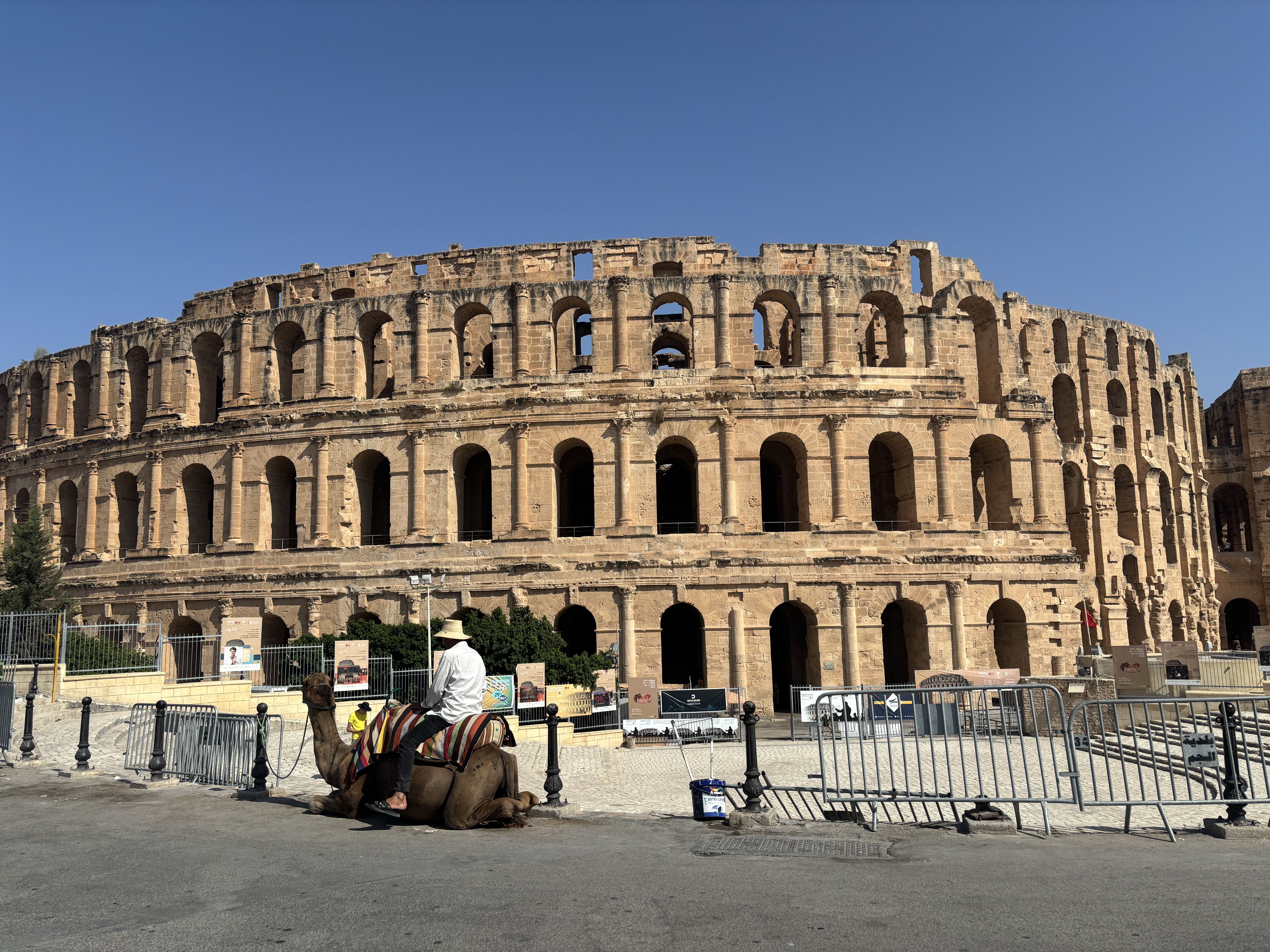
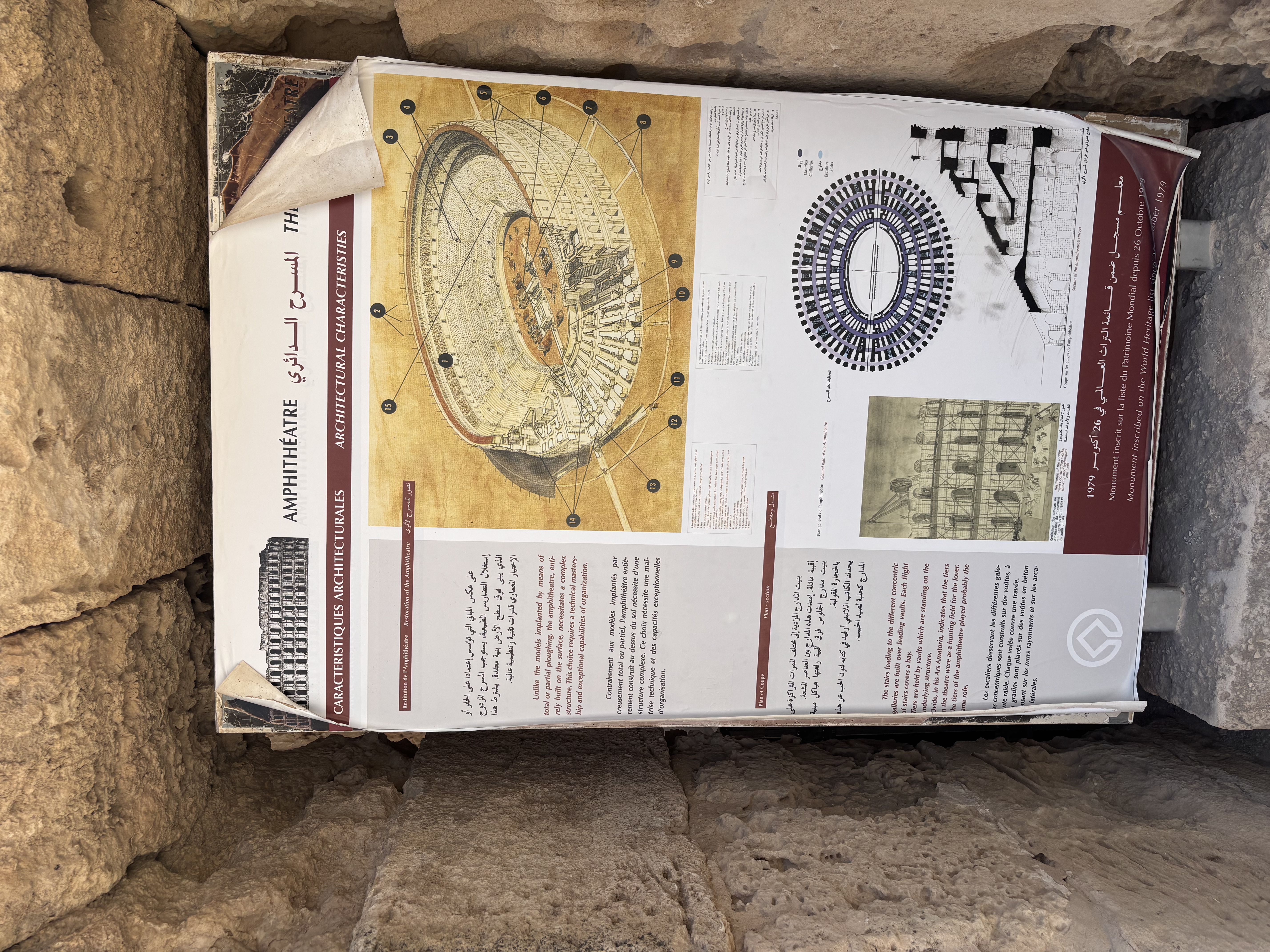
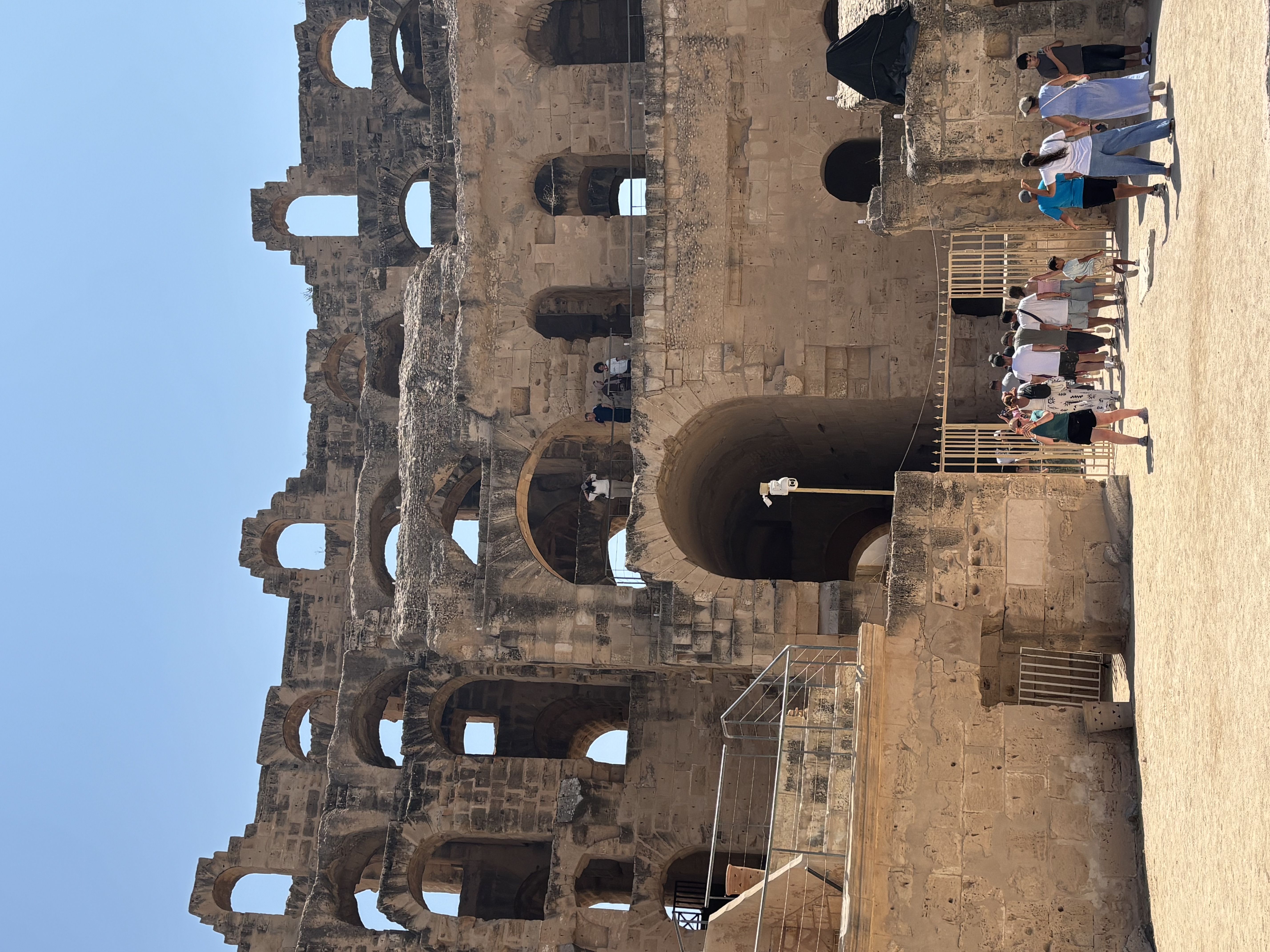
Sajid told the Boys that the Amphitheatre of El Jem bears outstanding witness to Roman architecture, notably monuments built for spectator events in Africa. The amphitheatre is built entirely of stone blocks, with no foundations and free-standing.
El Sajid in the Amphitheater!
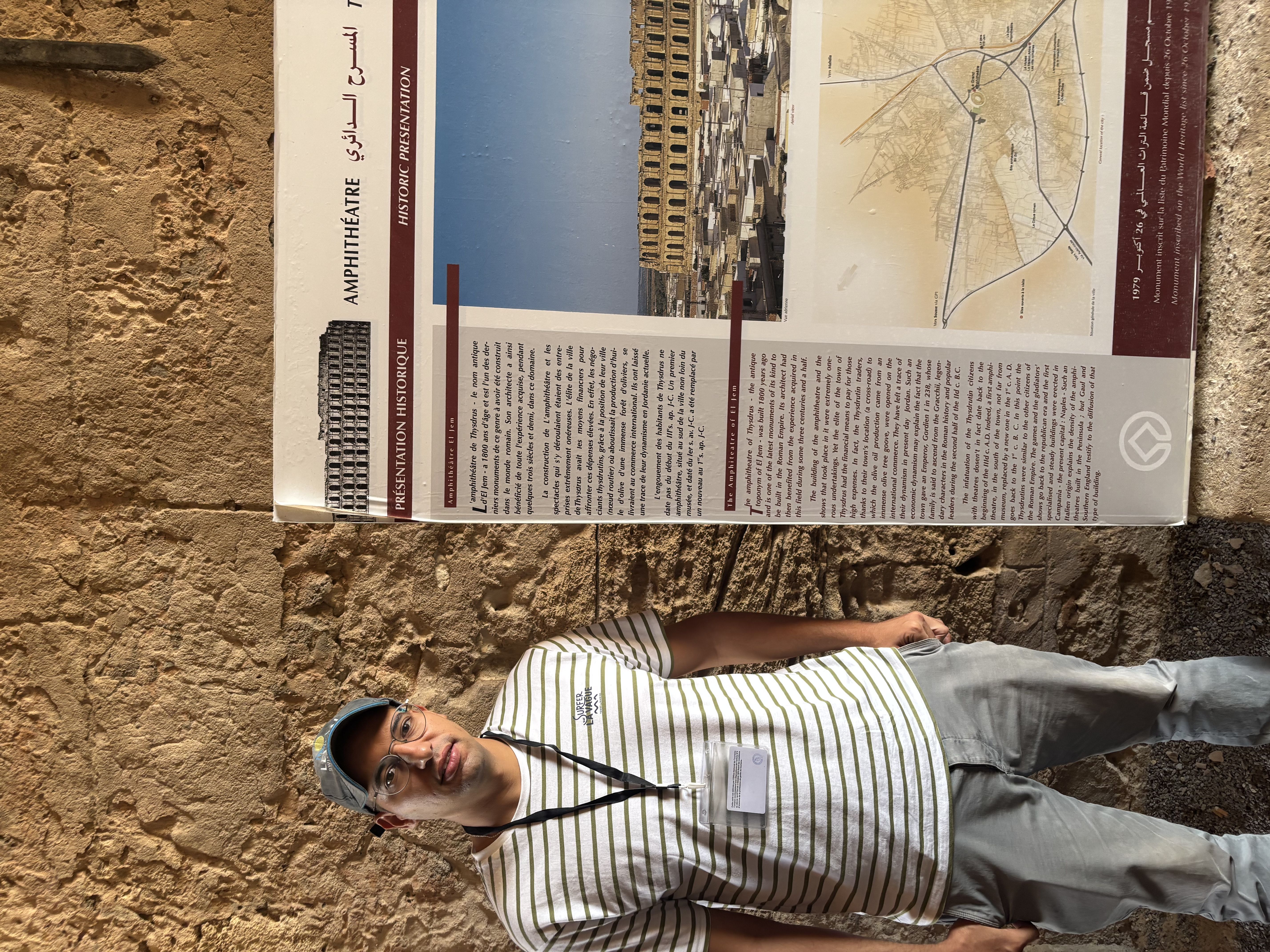
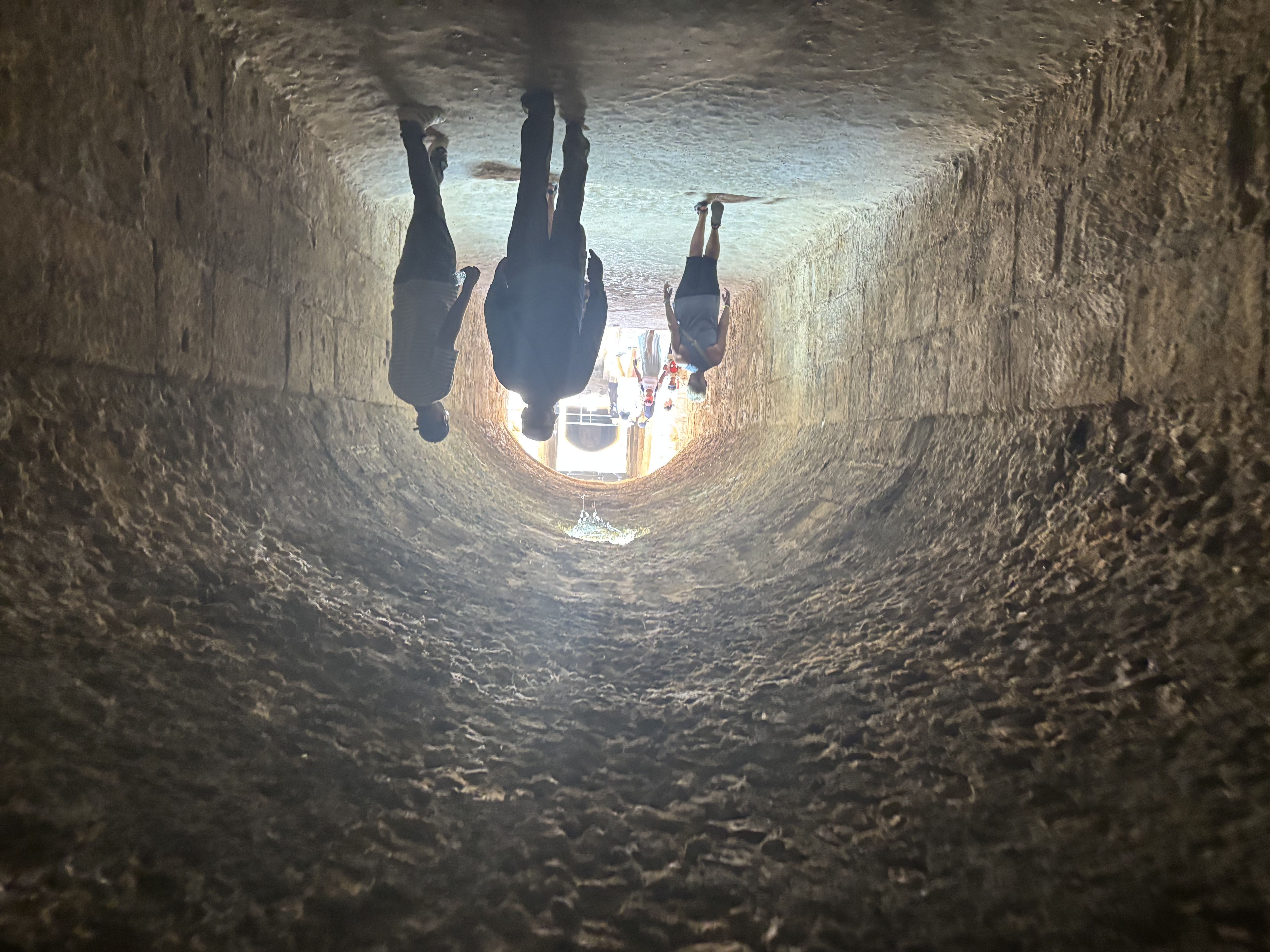
In this respect it is modeled on the Coliseum of Rome without being an exact copy of the Flavian construction in Roman. Its size (big axis of 485 feet and small axis 400 feet) and its capacity up to 35,000, made it without a doubt among the largest amphitheatres in the world. Its facade comprises three levels of arcades of Corinthian or composite style. Inside, the monument has conserved most of the supporting infrastructure for the tiered seating. The wall of the podium, the arena and the underground passages are practically intact. This architectural and artistic creation built around 238 AD, constitutes an important milestone in the comprehension of the history of Roman Africa. The Amphitheatre of El Jem also bears witness to the prosperity of the small city of Thysdrus (current El Jem) at the time of the Roman Empire.
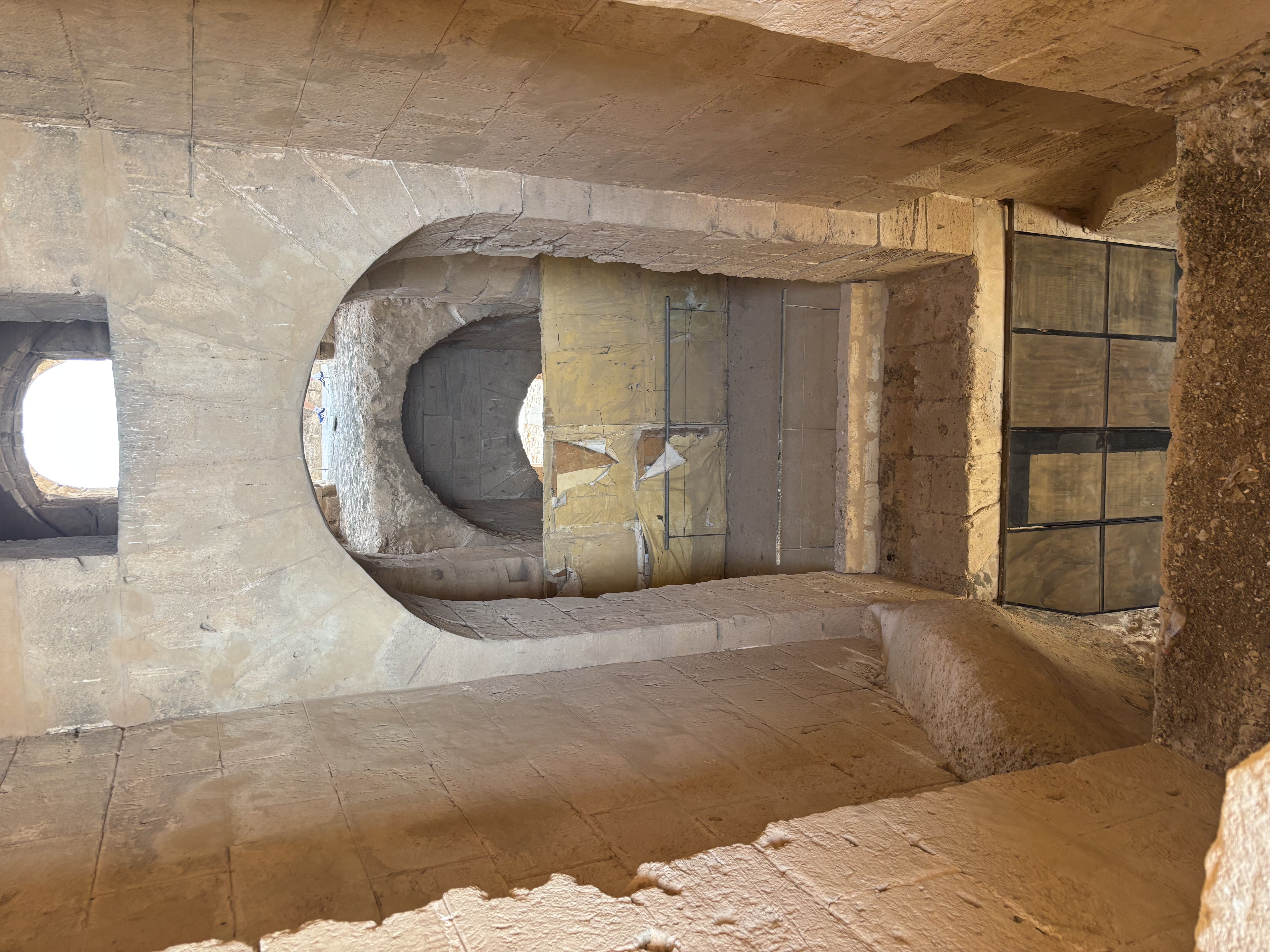
Waiting Rooms for Gladiators and Lions!
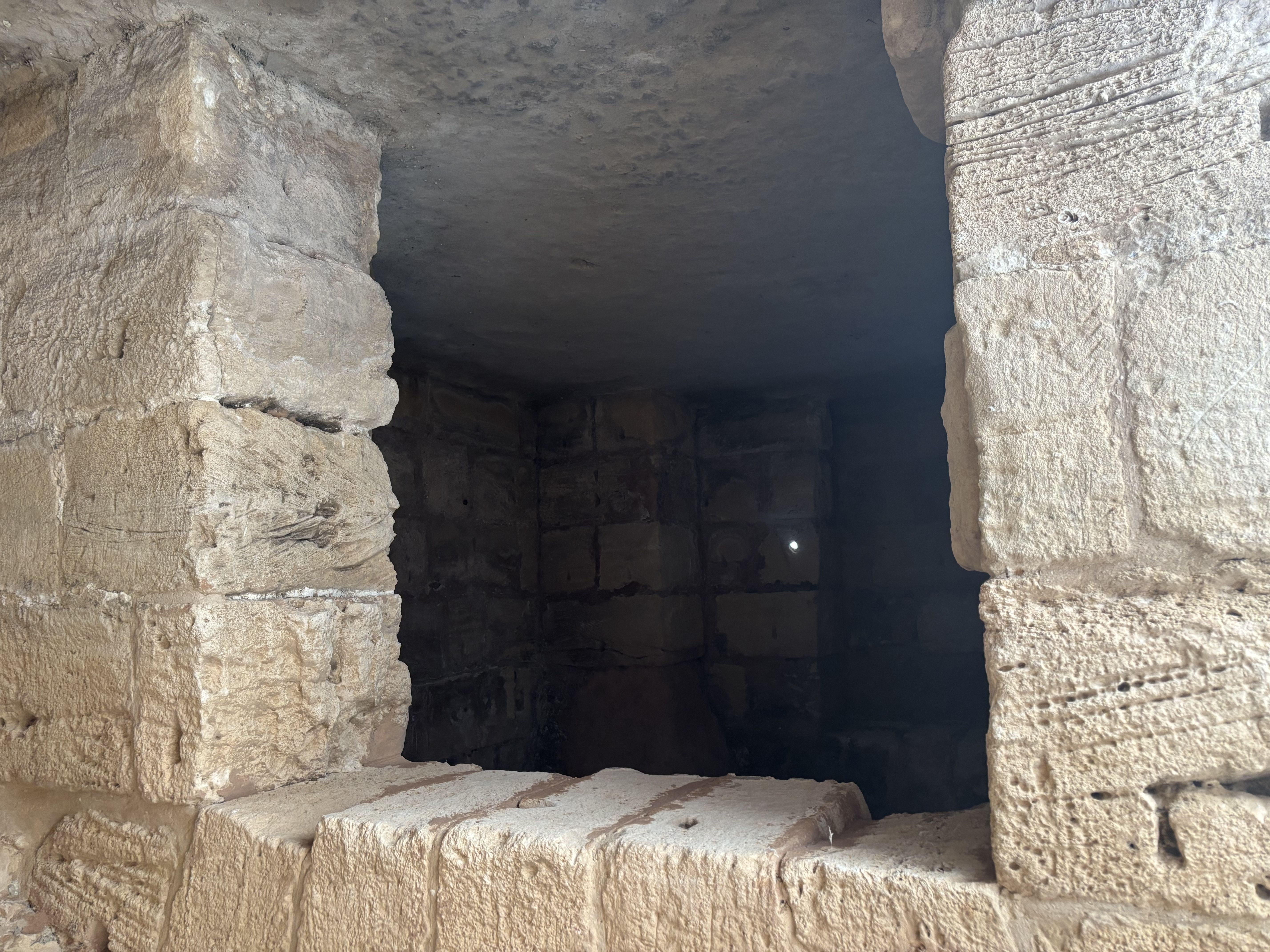
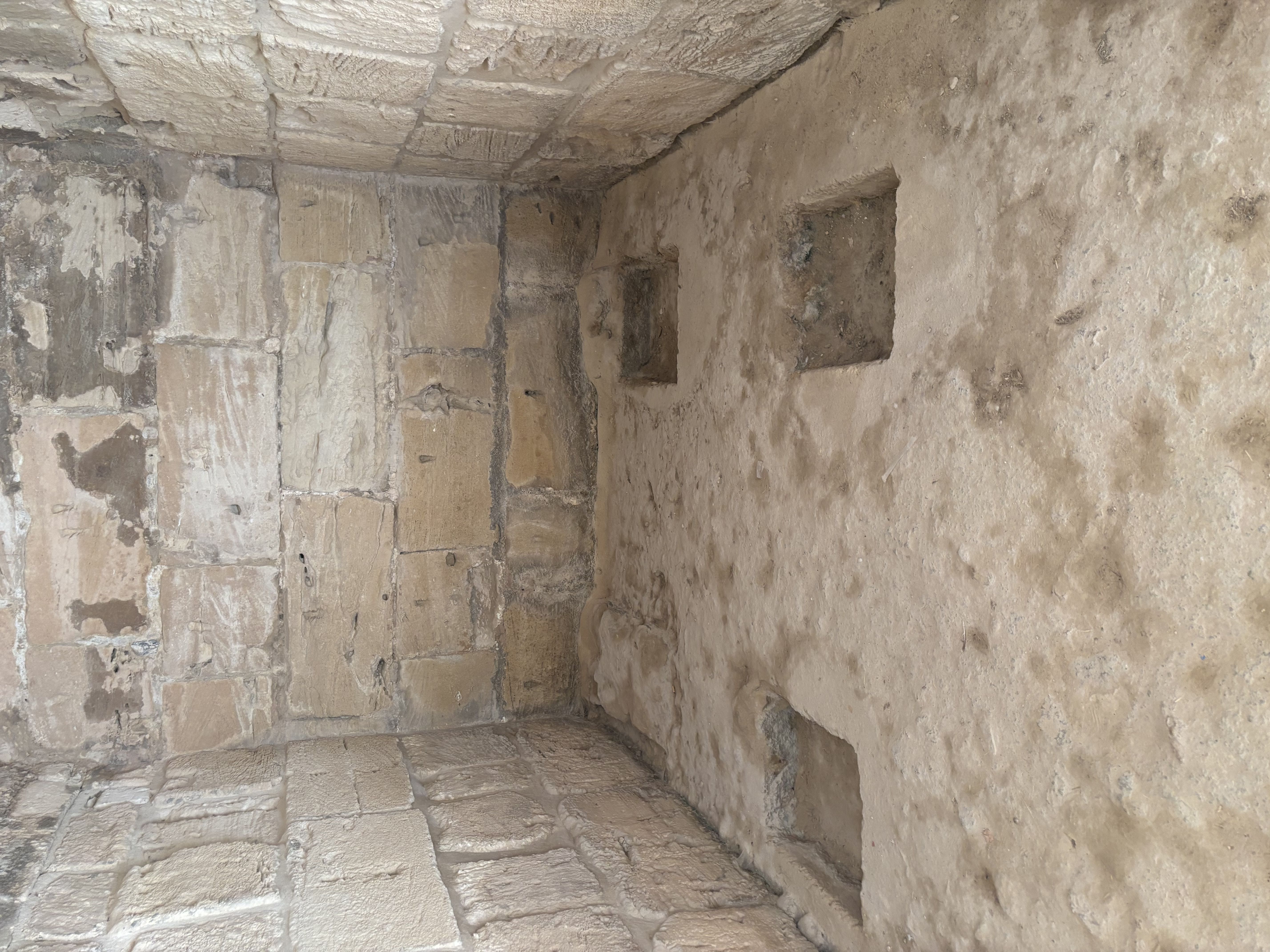
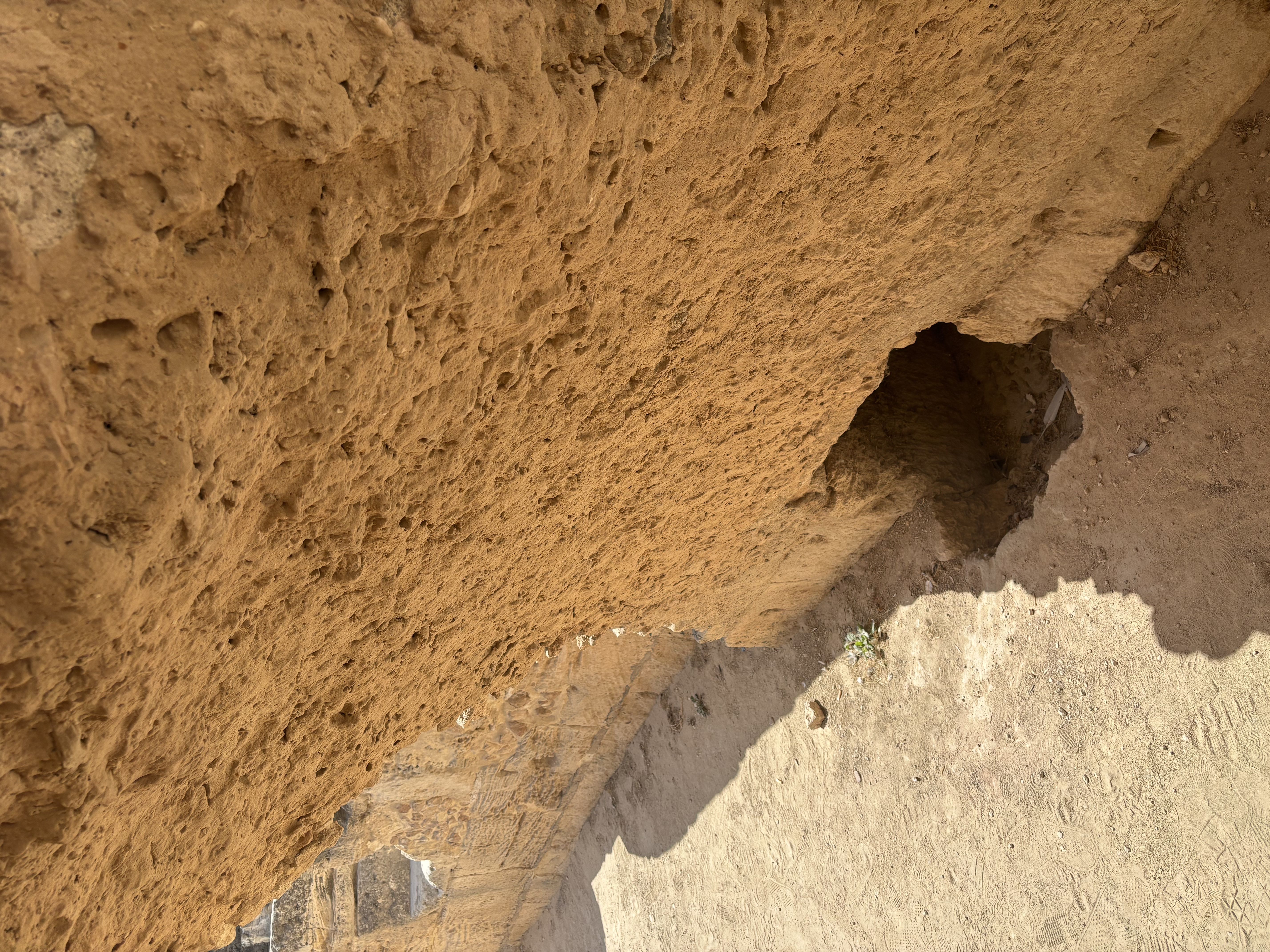
Similar to the Coliseum in Rome, El Jem kept its "entertainment" under wraps and under ground in waiting rooms for both humans and animals. Notice in the bottom picture the watering and feeding holes for animals (or humans?).
"Well, it is just a well!"
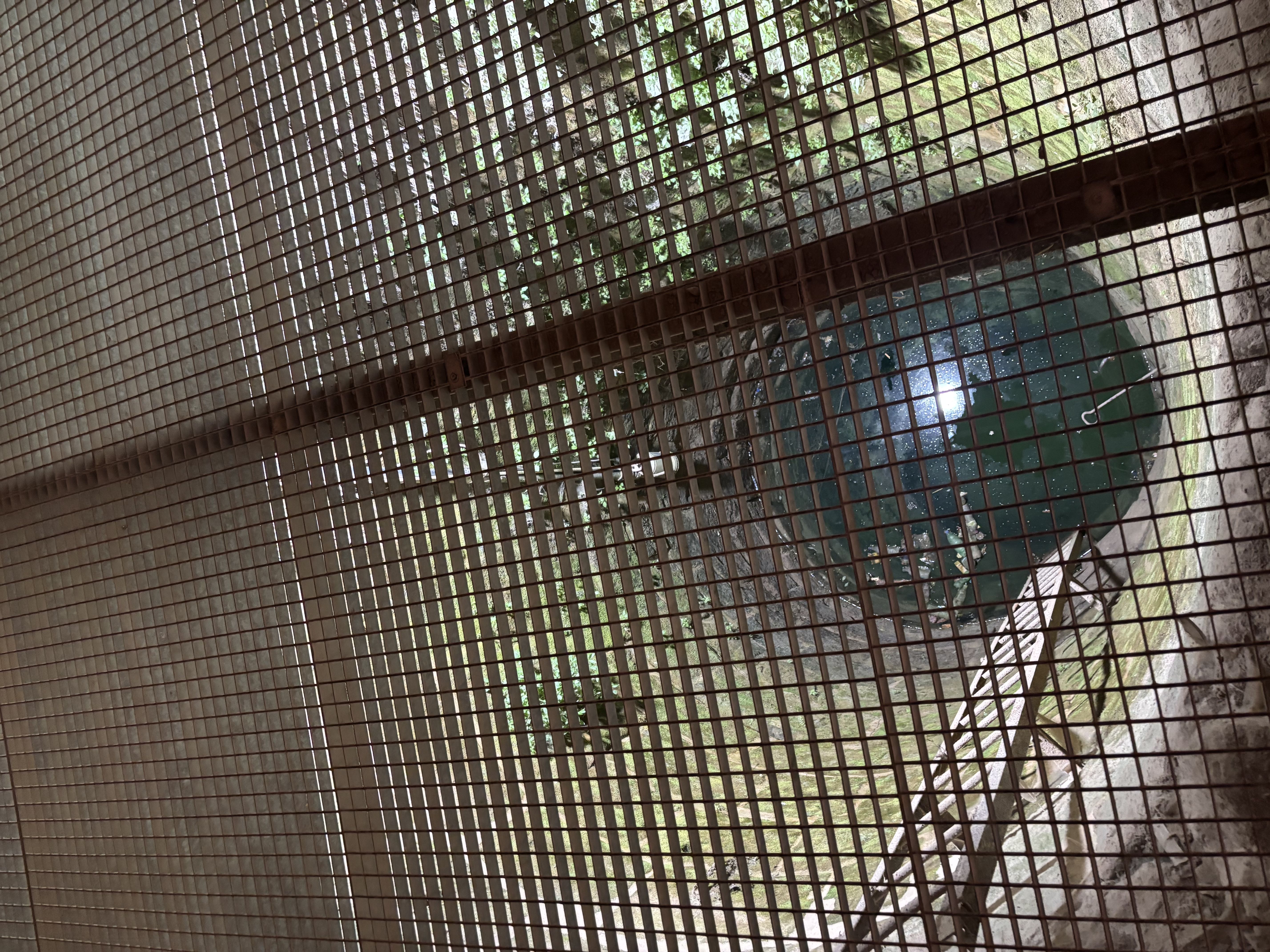
While the climate back in the Roman times were a little milder, water in this region has always been a concern, the Roman's built cisterns and drainage paths to collect as much water as possible into El Jem.
"Mike and Bone,,,,Gladiators!!!?!!!
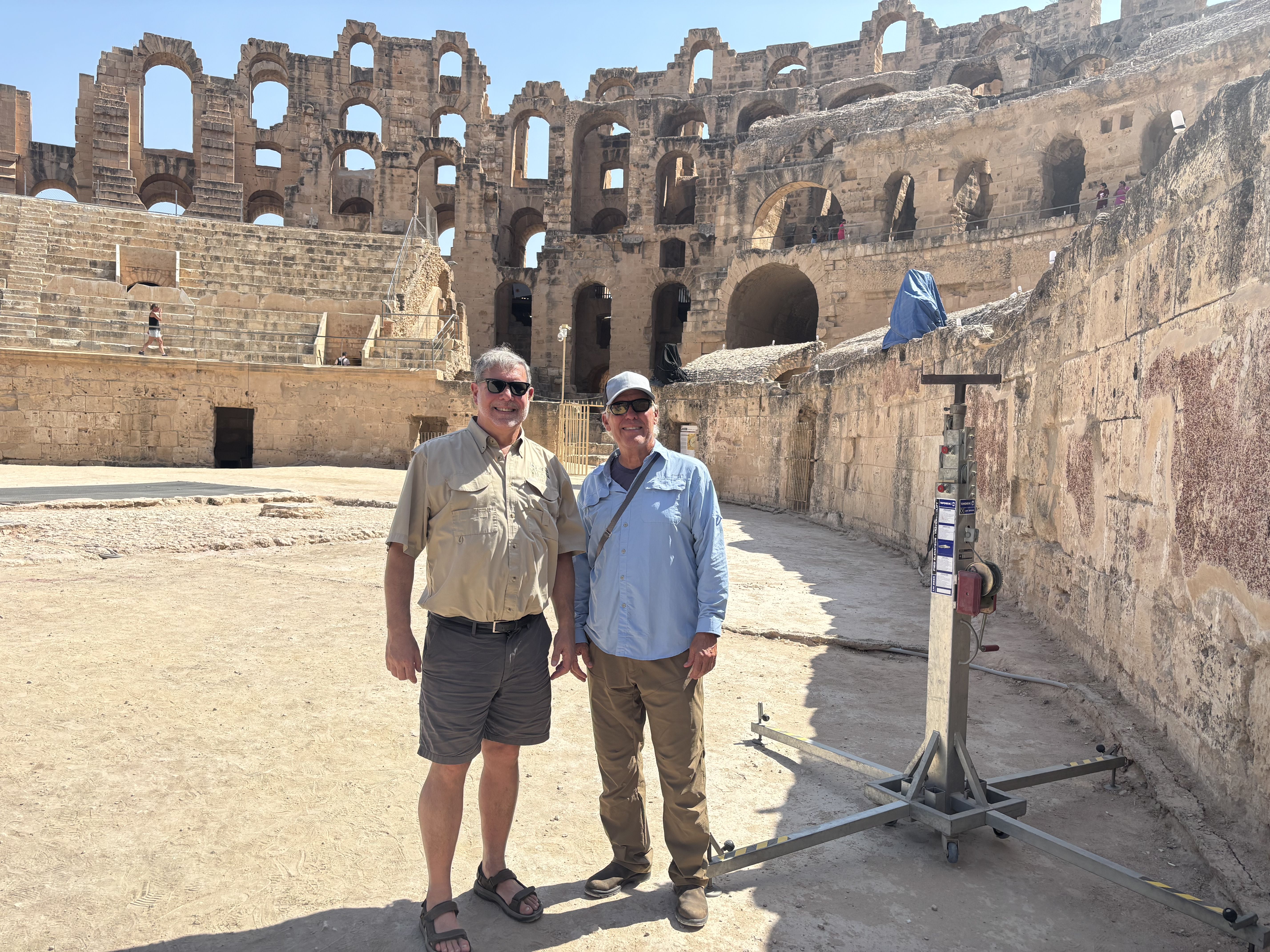
Sajid took the Boys down to the floor level to get a view from the inside, El Jem is much bigger that it looks, they designed it to have 4 full floors and have engineered it very sturdy stone stairs that are in remarkably good shape for being 2,000 years old.
"Absolutely Elegantly Designed Archways!
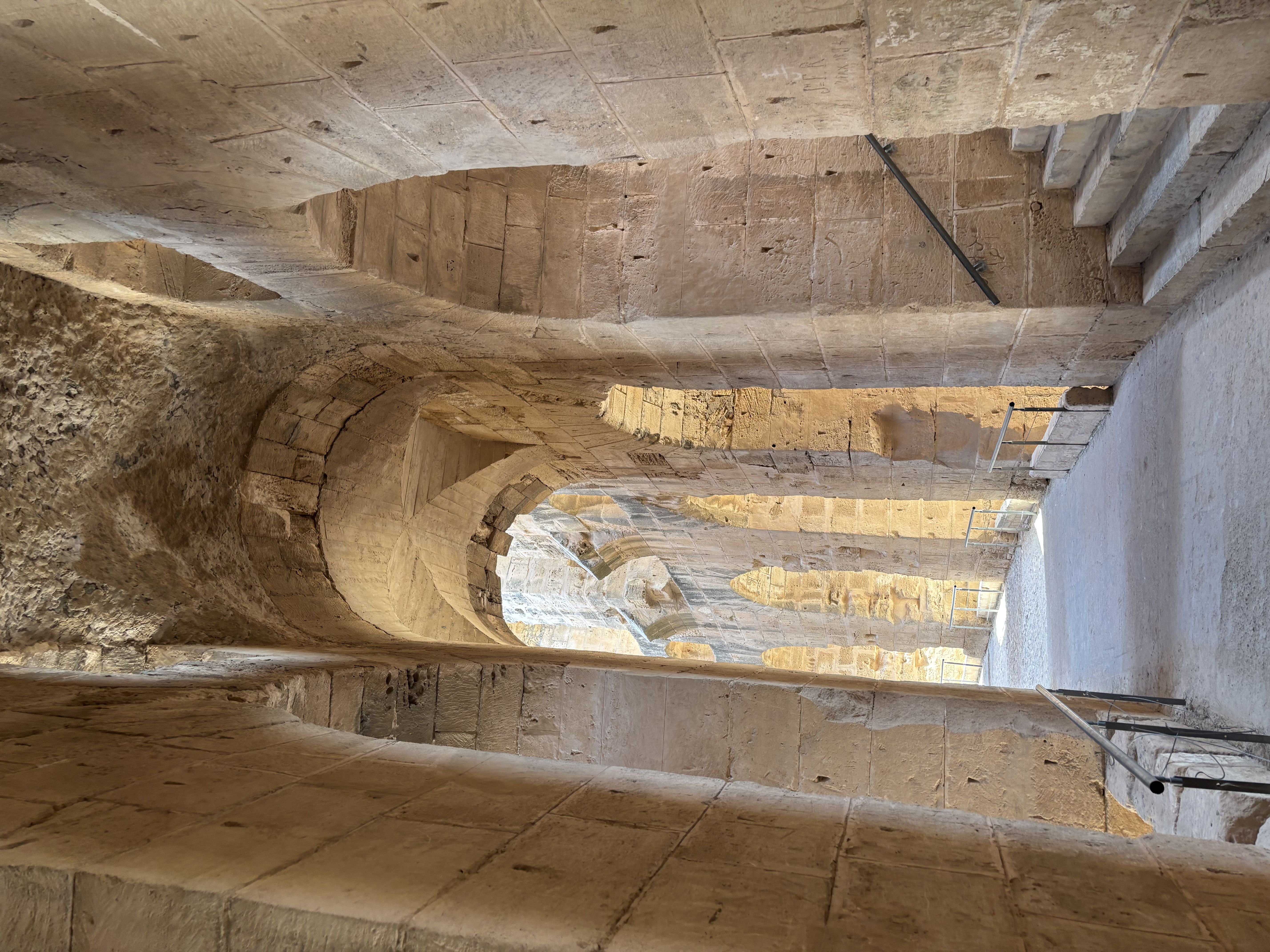
While the climate back in the Roman times were a little milder, water in this region has always been a concern, the Roman's built cisterns and drainage paths to collect as much water as possible into El Jem.
Looking down on El Jem's Plaza and Downtown area.
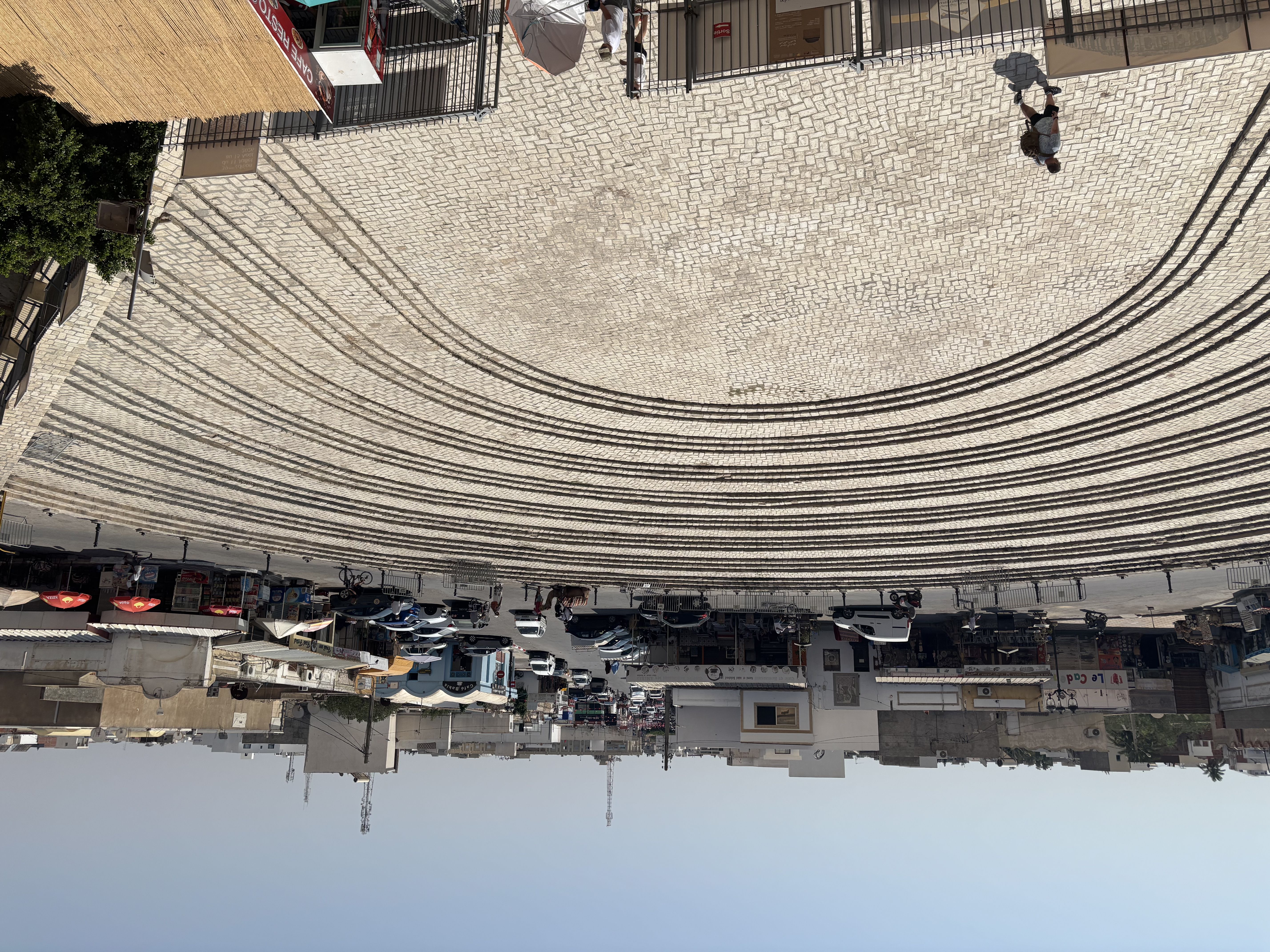
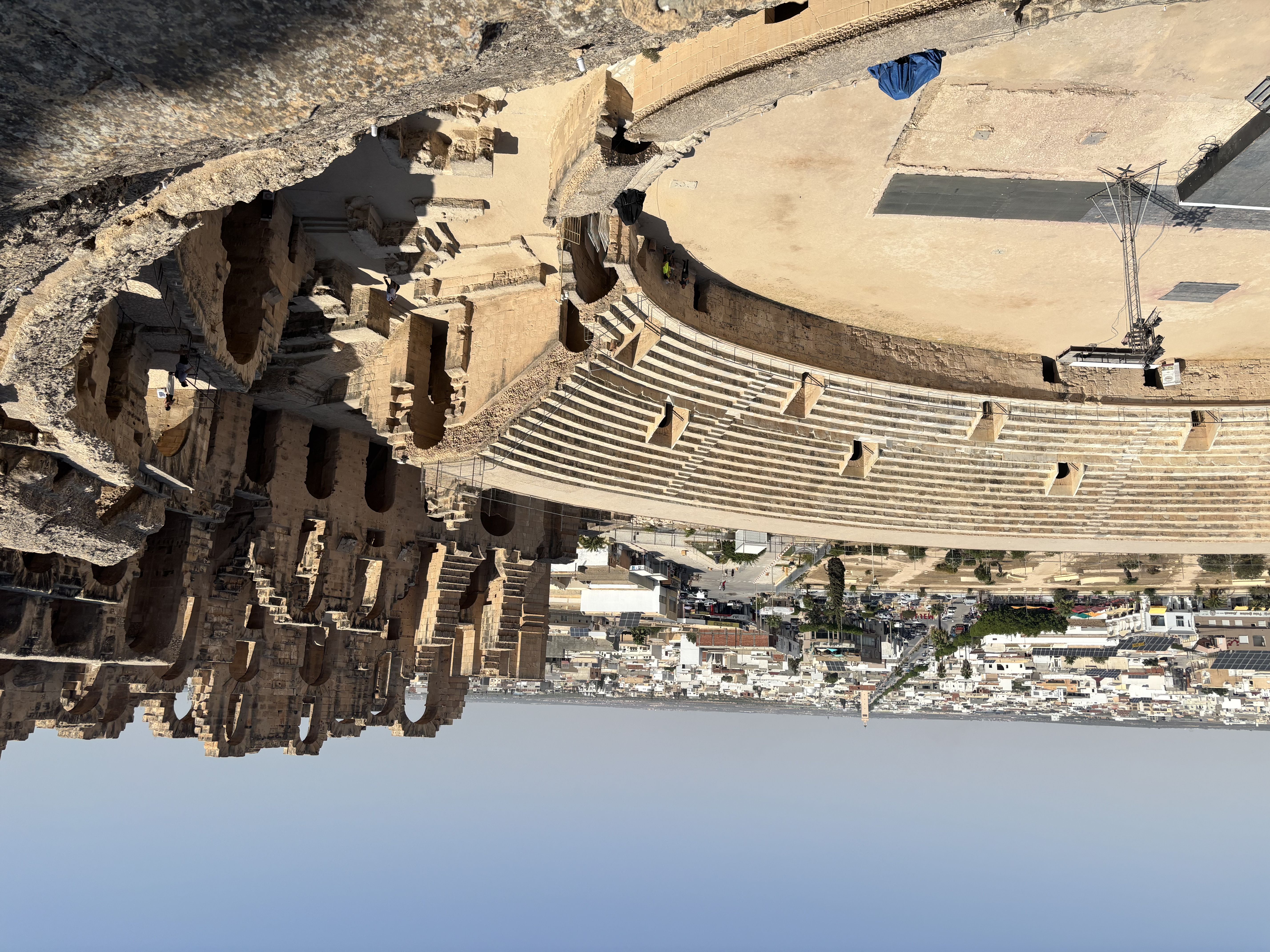
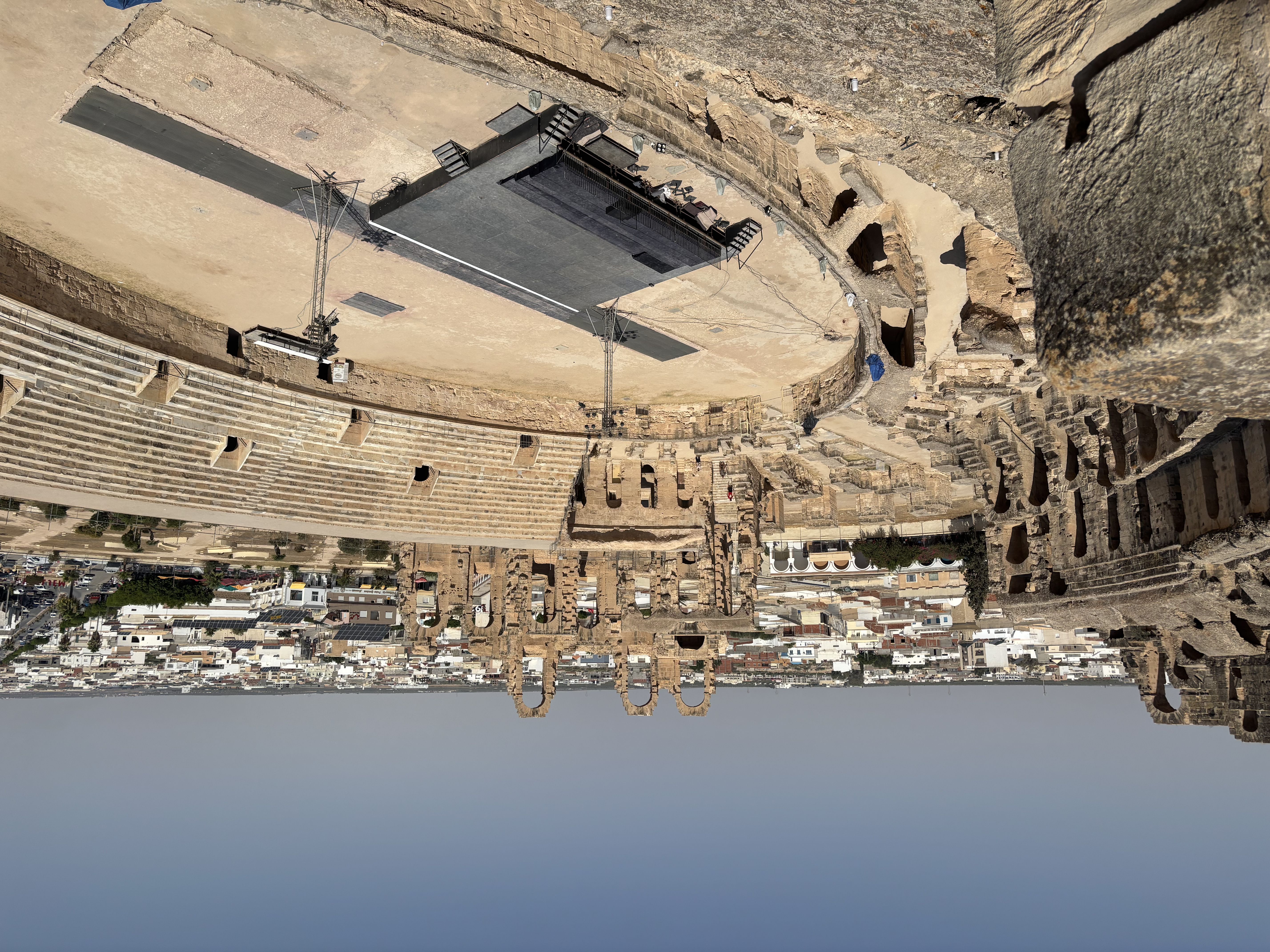
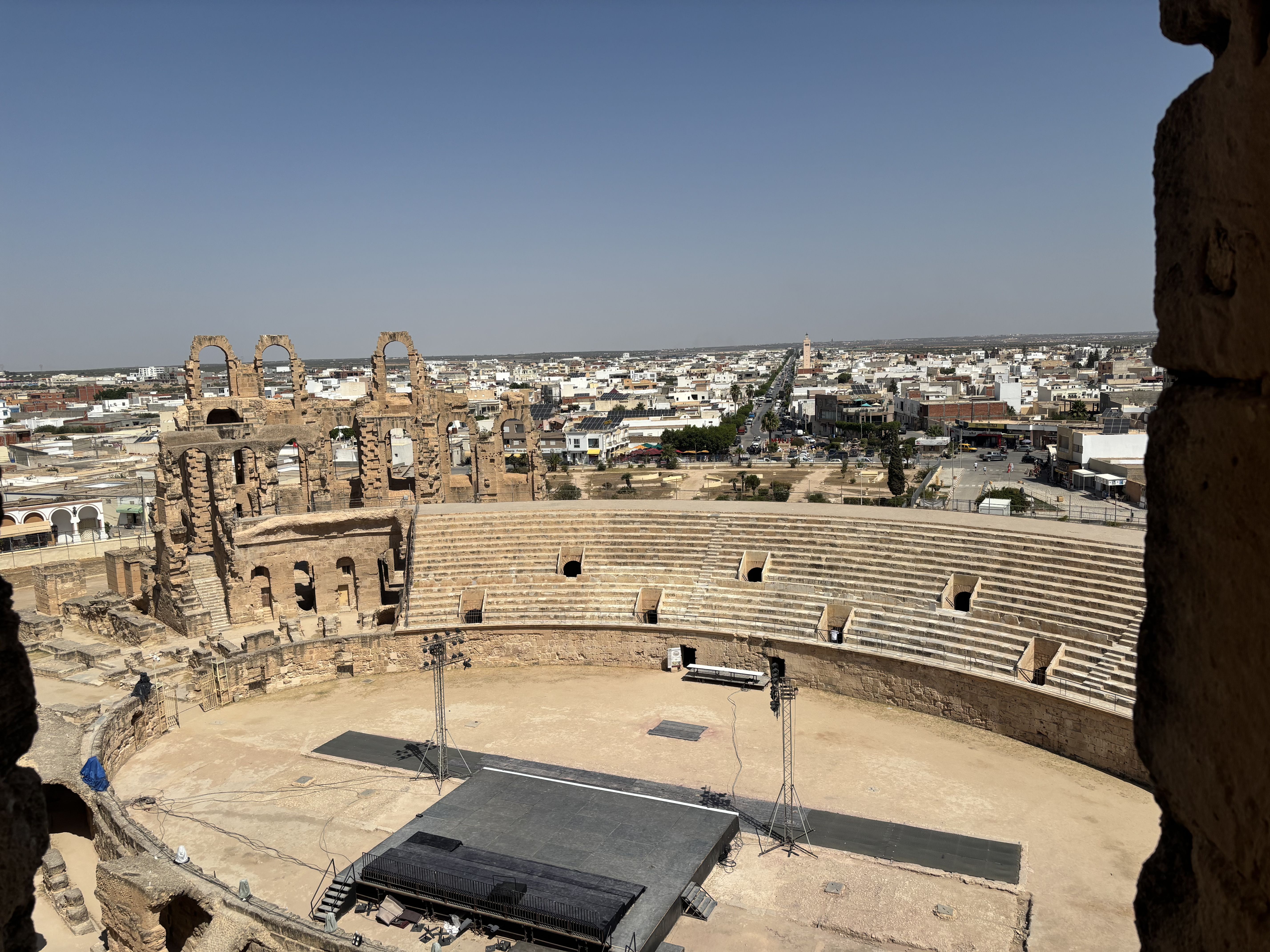
El Jem, from the Emperors Box!
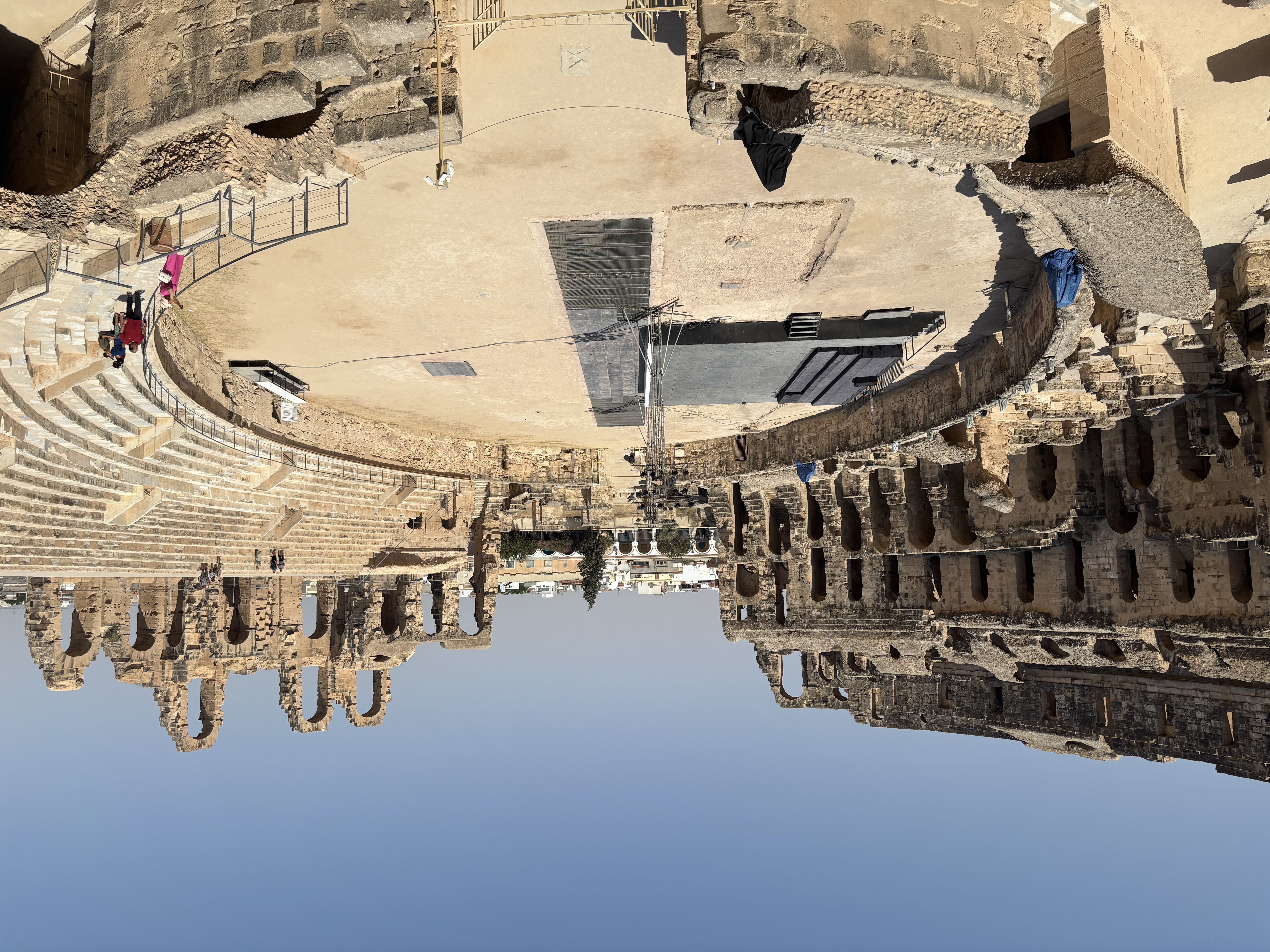
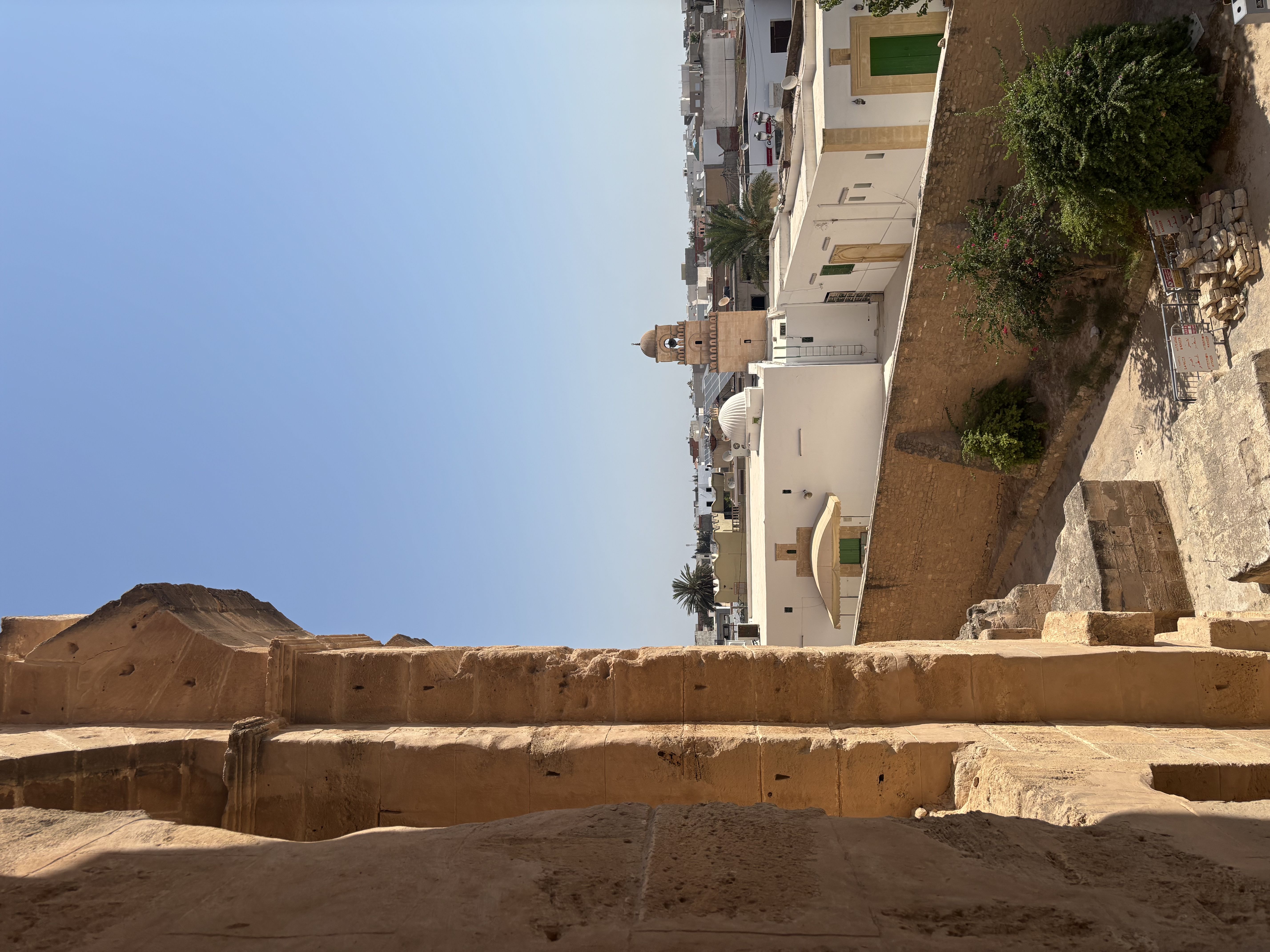
Wandering around El Jem the Boys checked out the view from the Emperor's Box. The ragged north end of the Amphitheater reflects its “hard life” since the time of the Romans. In the Middle Ages, it served as a fortress, and the population sought shelter here during the attacks of Vandals in 430 and Arabs in 647. In 1695, during the Revolutions of Tunis, Mohamed Bey El Mouradi made an opening in one of the walls to stop the resistance of the followers of his brother Ali Bey al-Muradi, who gathered inside the amphitheater.
It is believed that the amphitheatre was used as a saltpetre factory at the end of the 18th and in the 19th century. Around 1850, the breach in the wall was enlarged by Ahmad I ibn Mustafa in an attack on locals hiding in El Jem, to approximately 98 feet. In the second half of the 19th century, the structure was used for shops, dwellings, and even grain storage!
Amazing Stone Block Construction
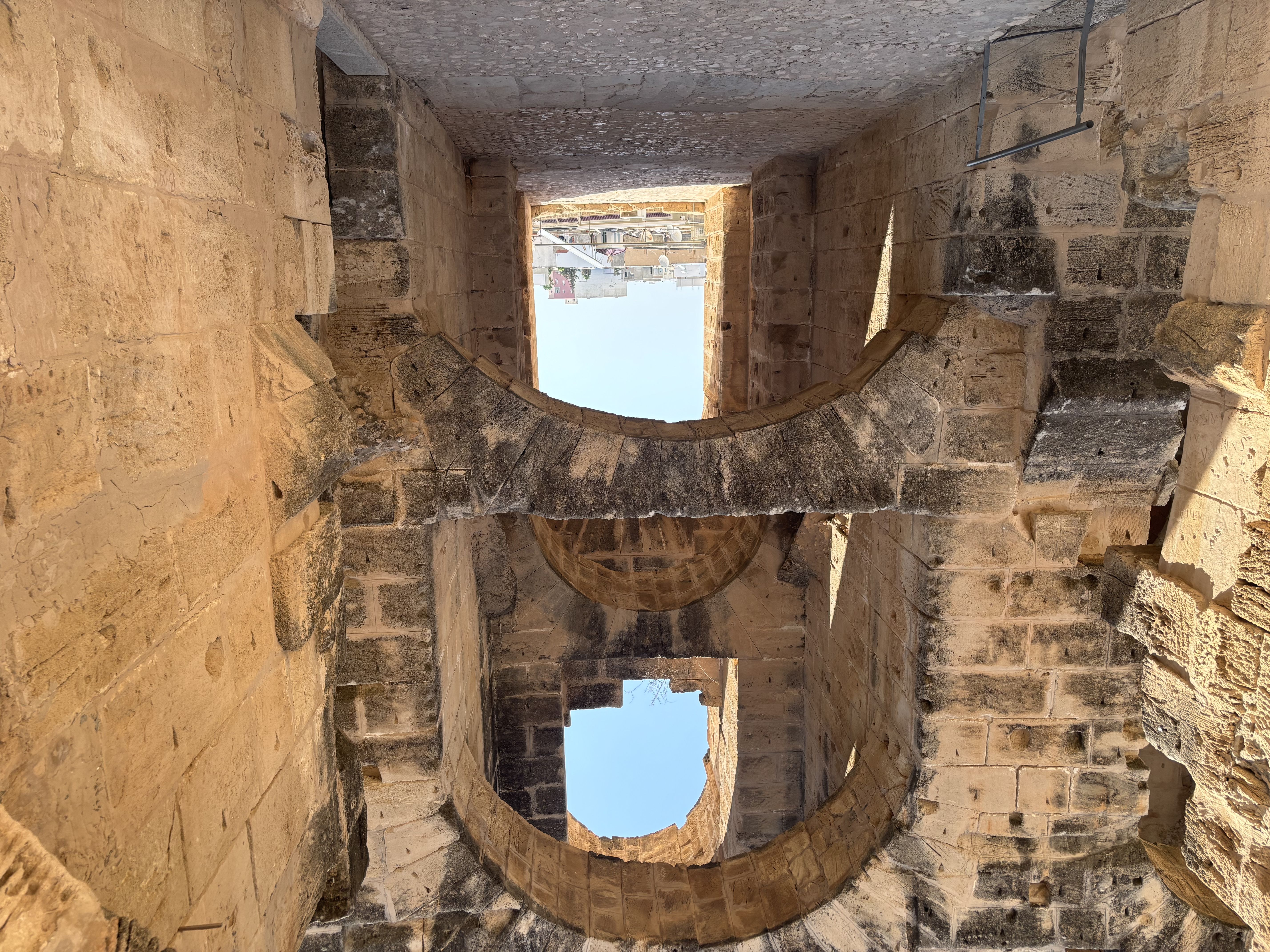
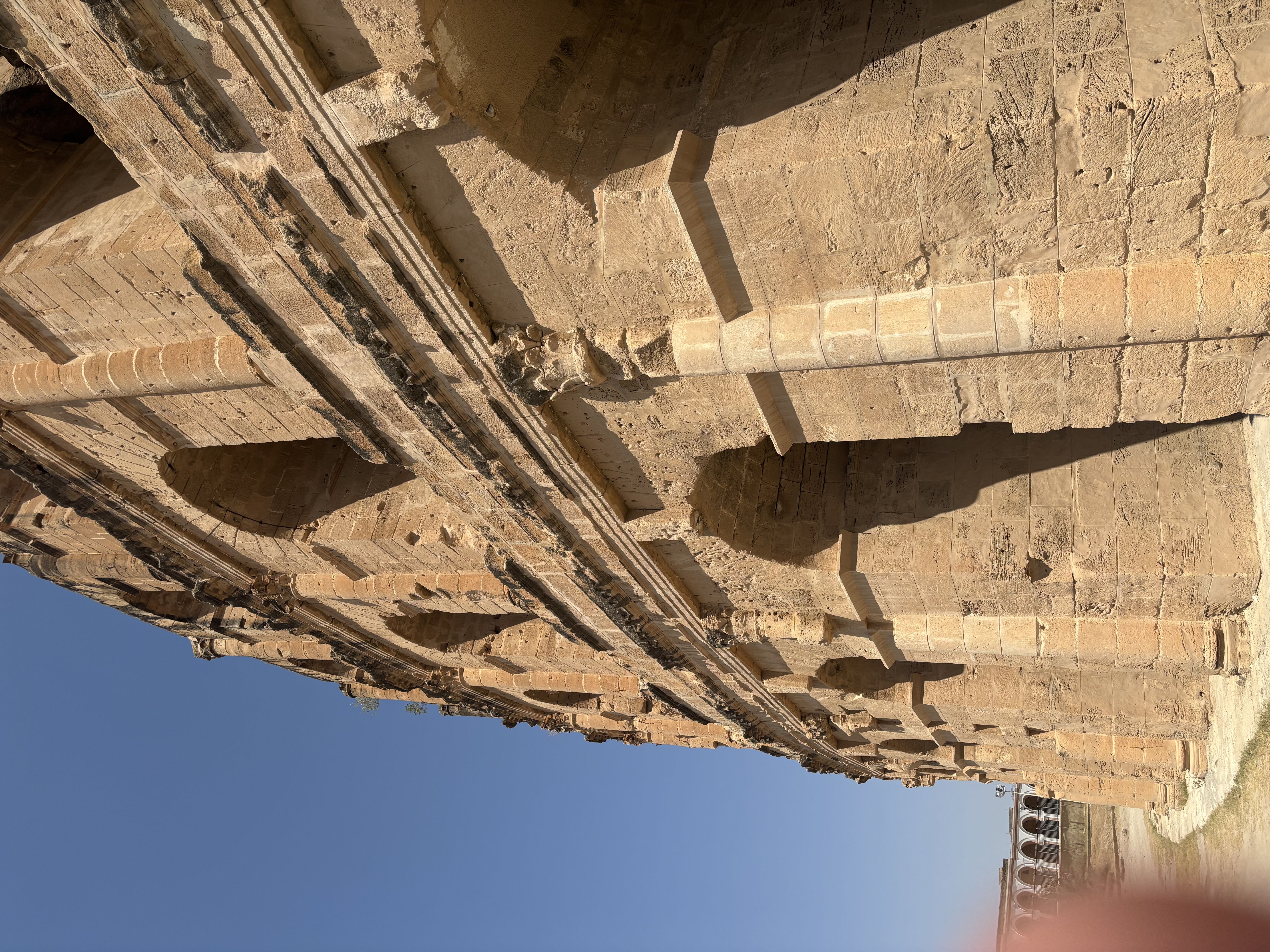
Having checked out the entire structure the heat of the morning was driving the Boys to head out and check out the rest of the Town. Mike and Bone
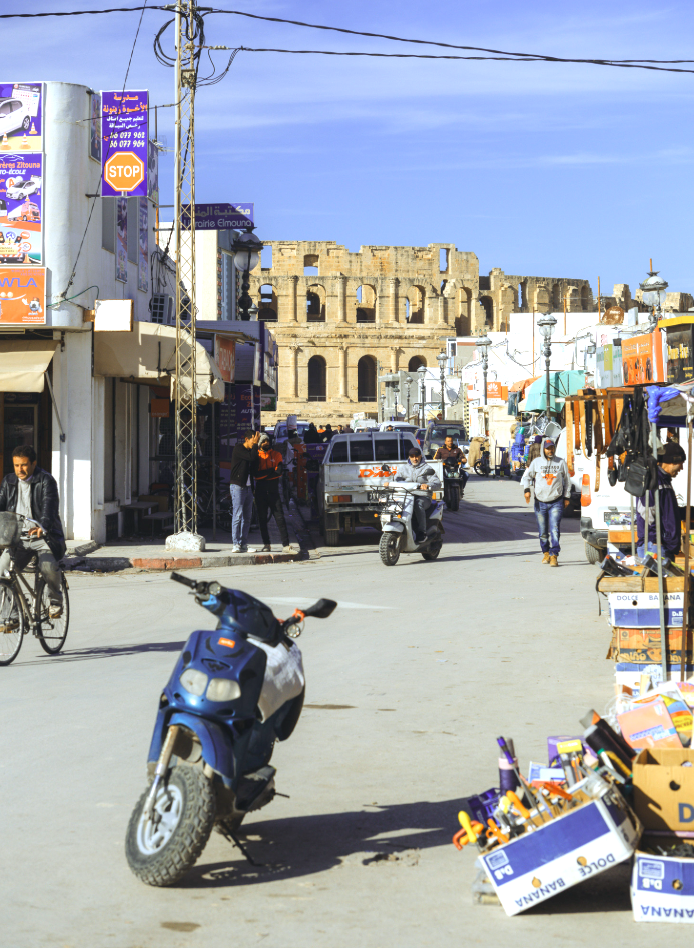
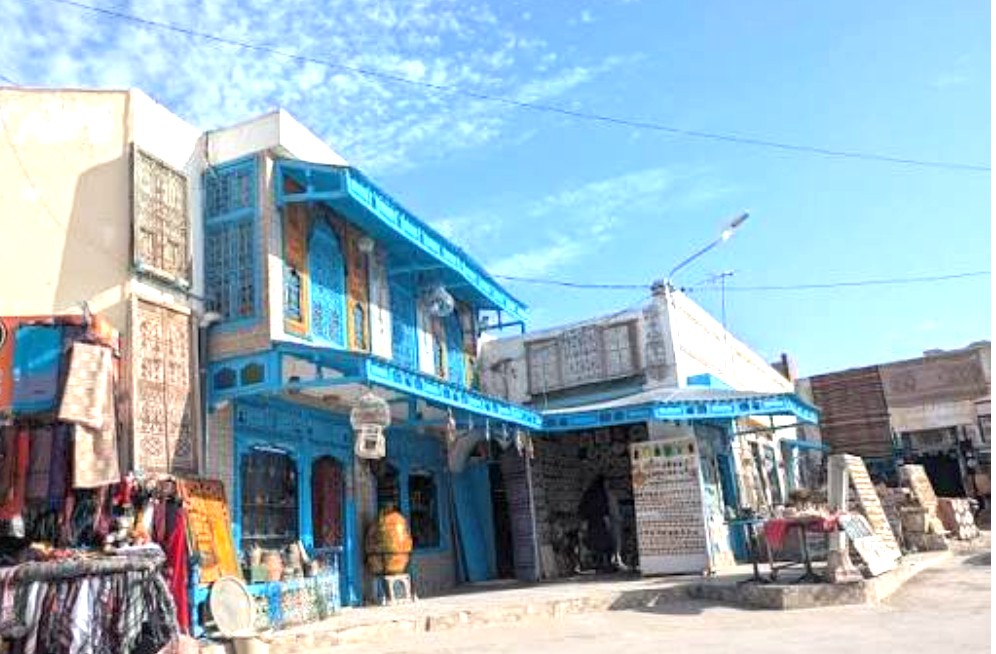
Now, the sign said that the Museum is right down the road here (the street above), but walking over 8 blocks in 110 degrees at 11:00 AM makes one wonder is it really this way and the locals weren't really friendly on directions! The Google Maps wasn't really helpful either, so using the "Force," stubbornness, and some hope they trudged on in the withering heat. Finally, they saw a Bus and realized they were close!
A Really Bad Version of Augustus!
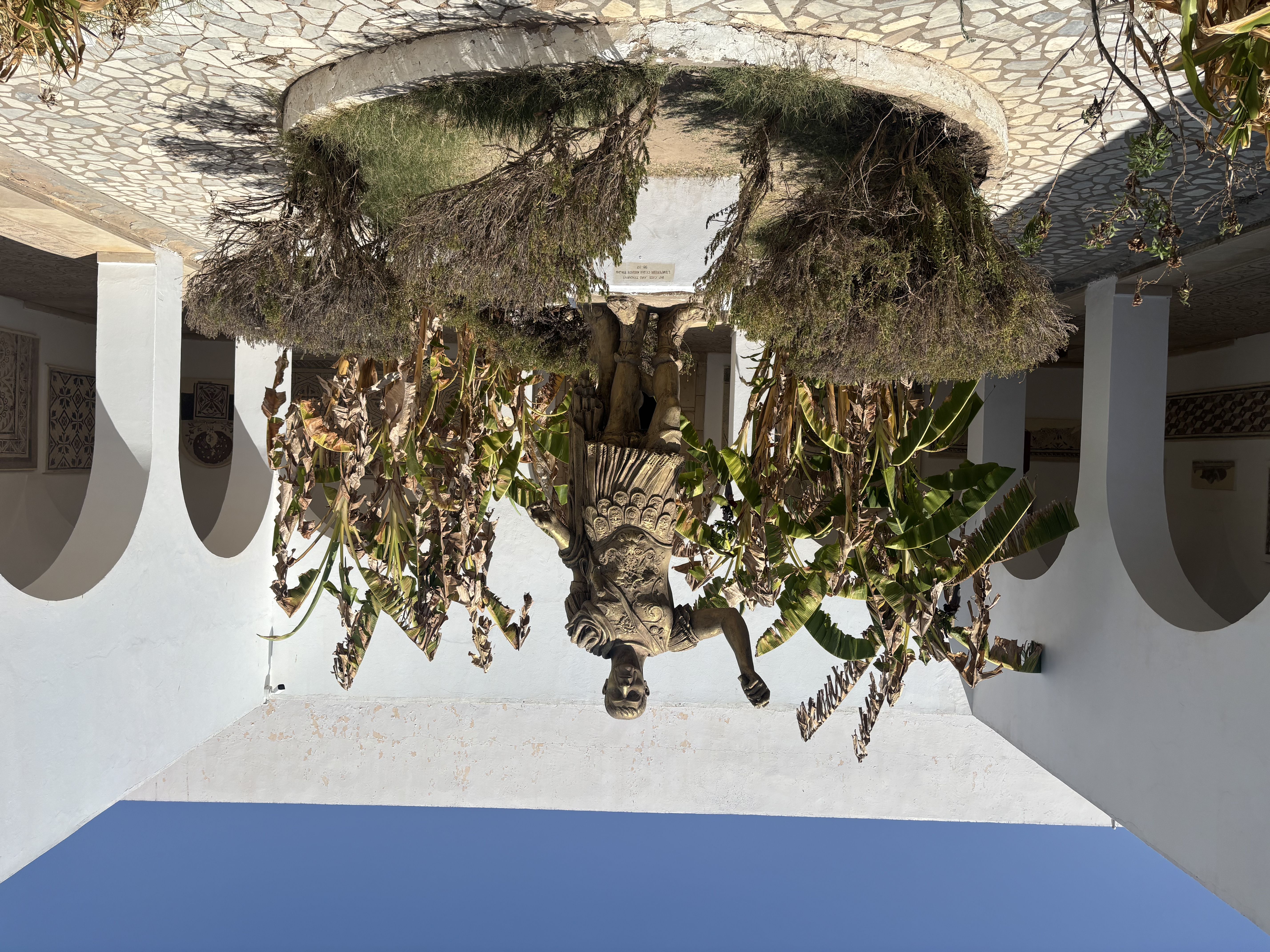
The El Djem Archaeological Museum greets visitors with a really bad reproduction of a famous status of Octavian, better known as Augustus. The Museum contains Roman art, including mythological personages, abstract elements and fauna. Sadly, it was open air, so it was absolutely stifling inside!
An Ancient Artifacts Of Thysdrus
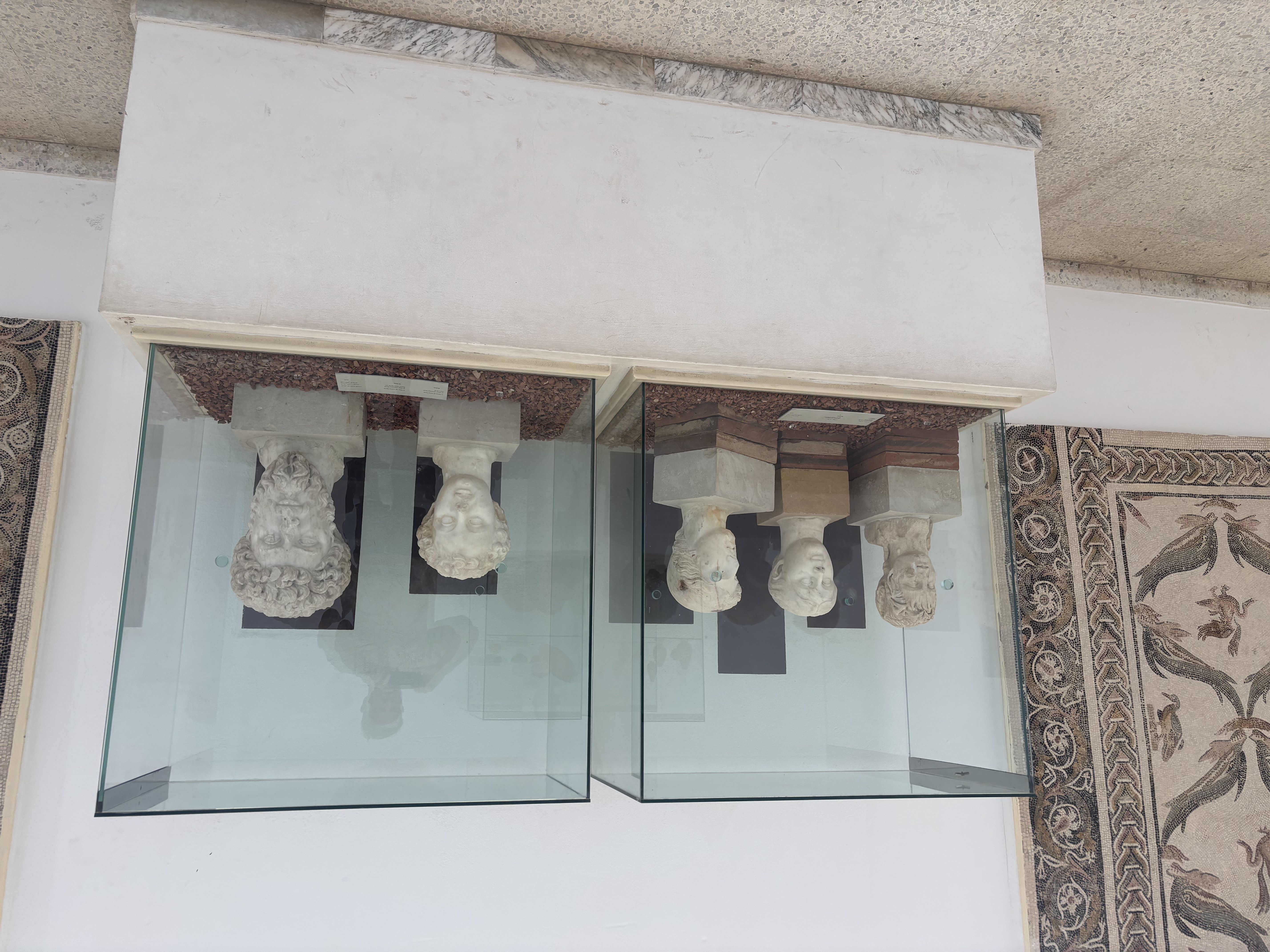
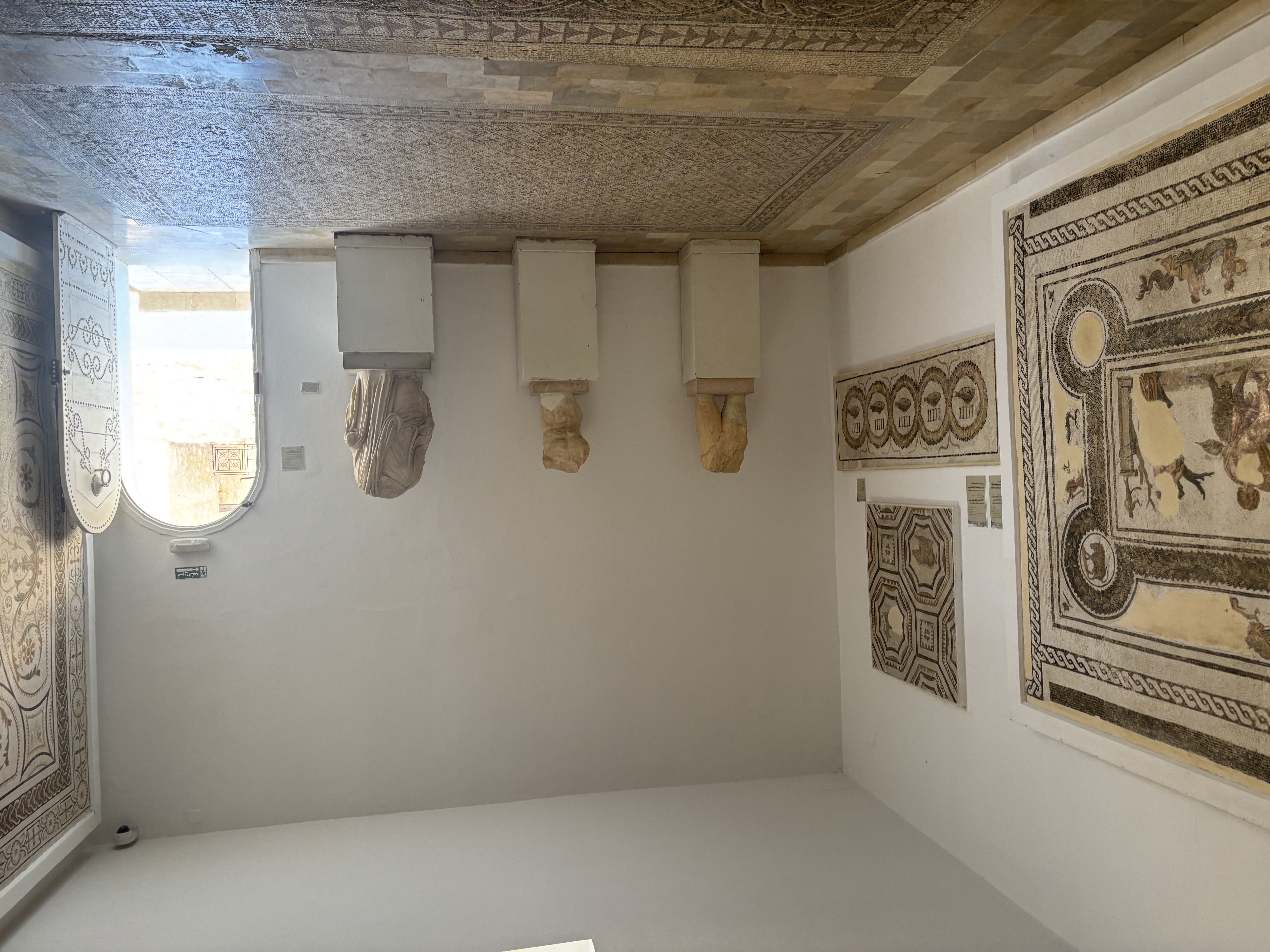
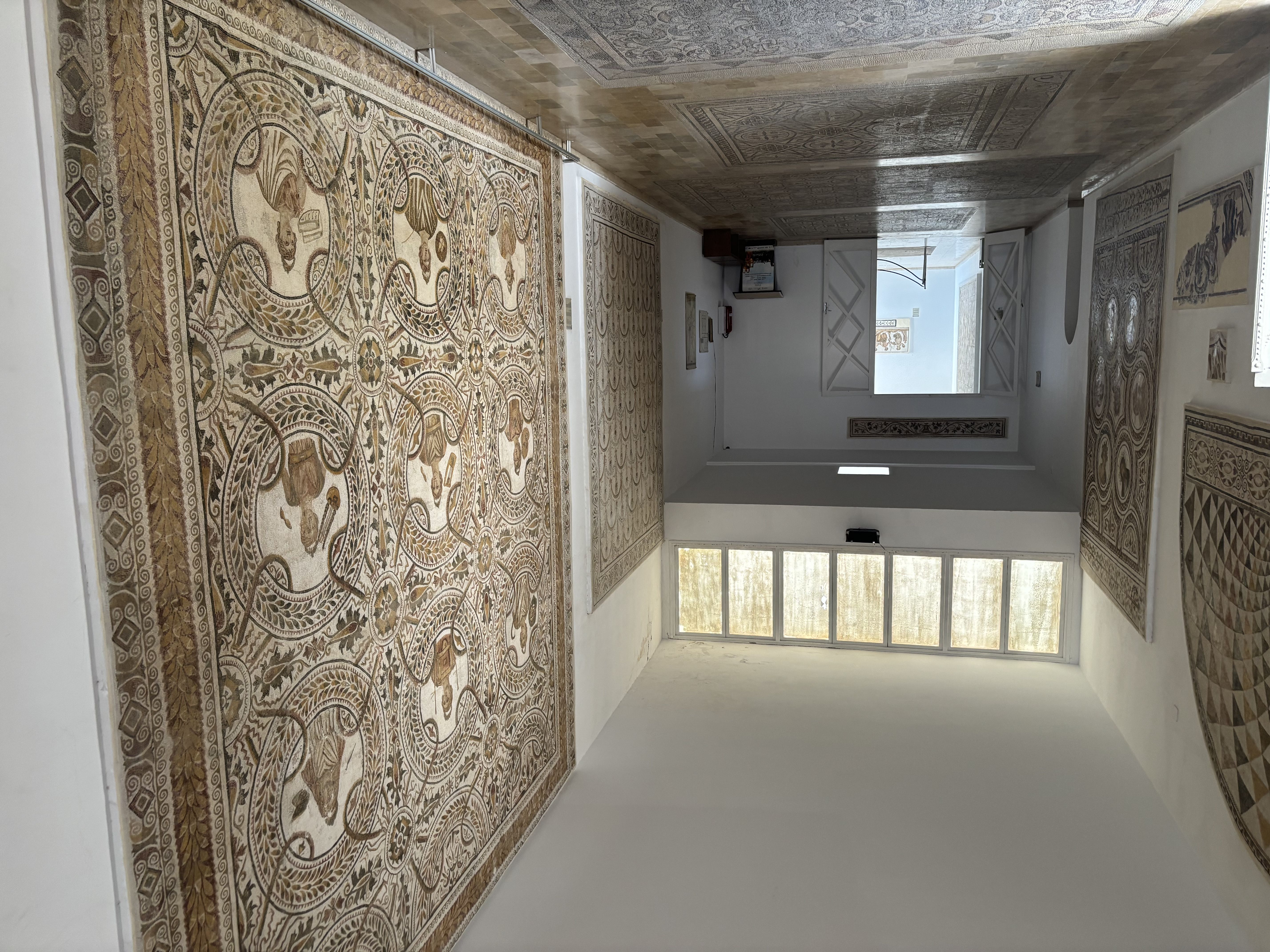
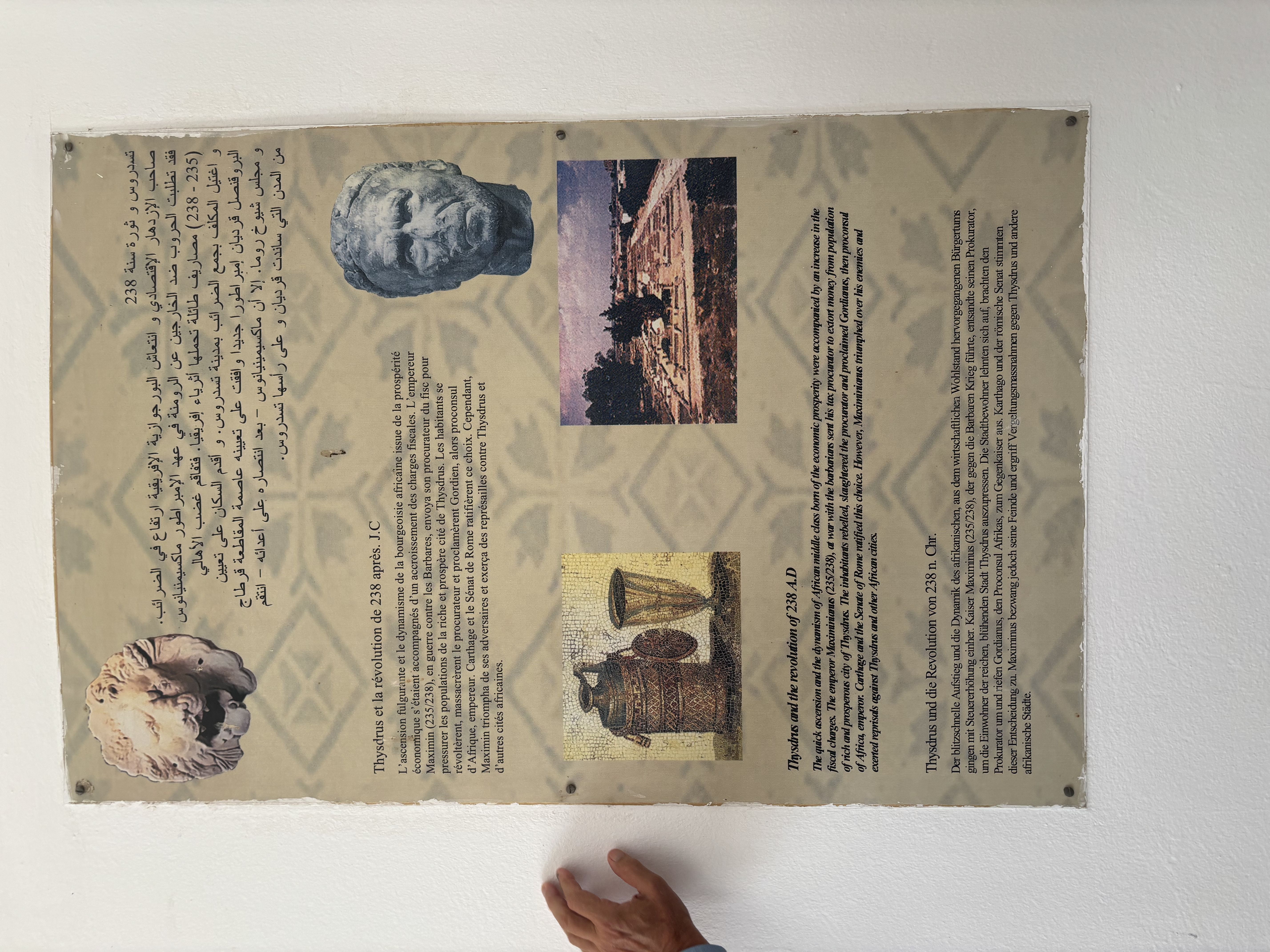
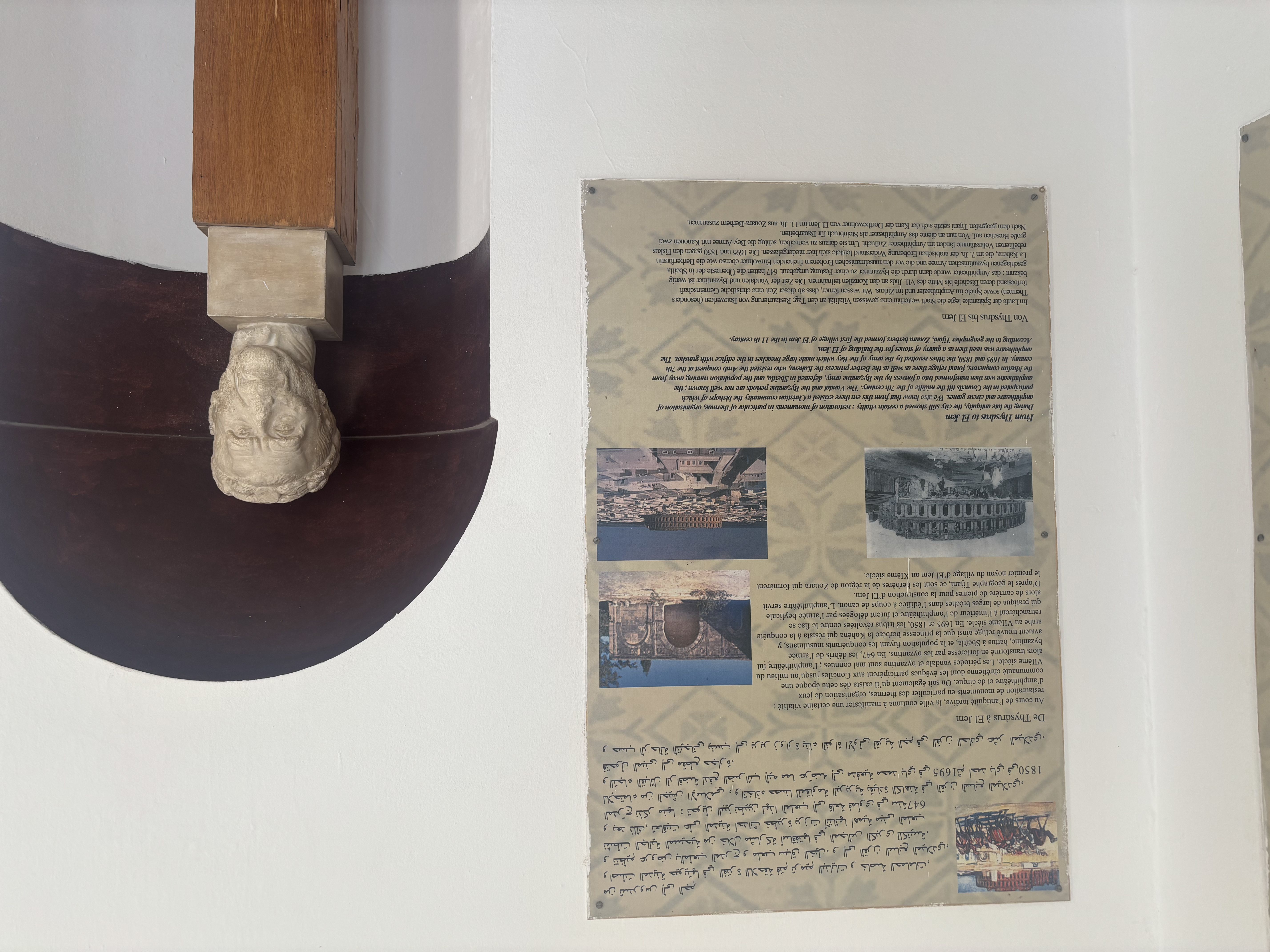
Despite the heat the Museum has an amazing is the number of beautiful mosaics they had literally taken off of the ground and placed on the walls in that will protect them from the elements.
An Ancient Artifacts Of Thysdrus
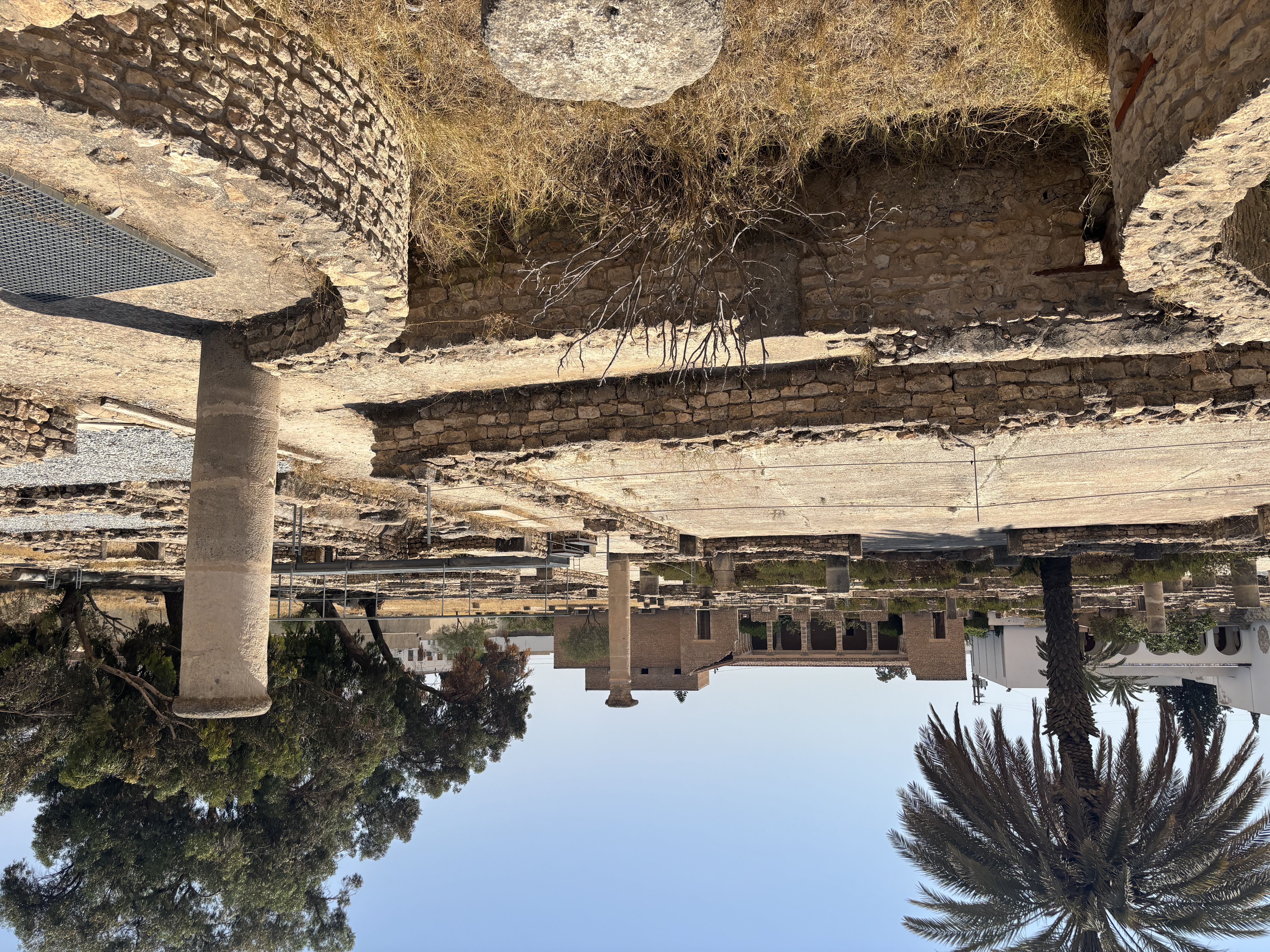
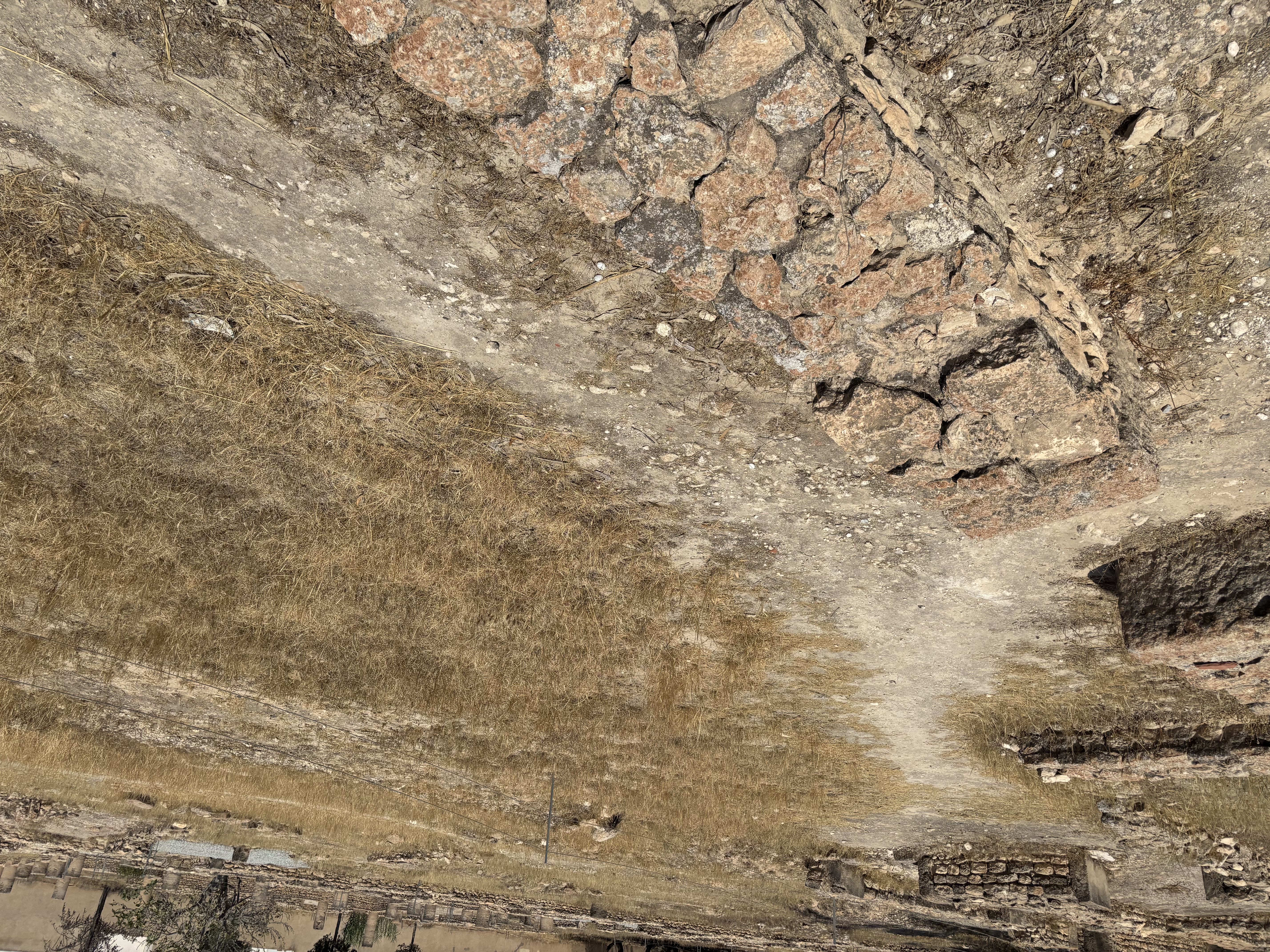
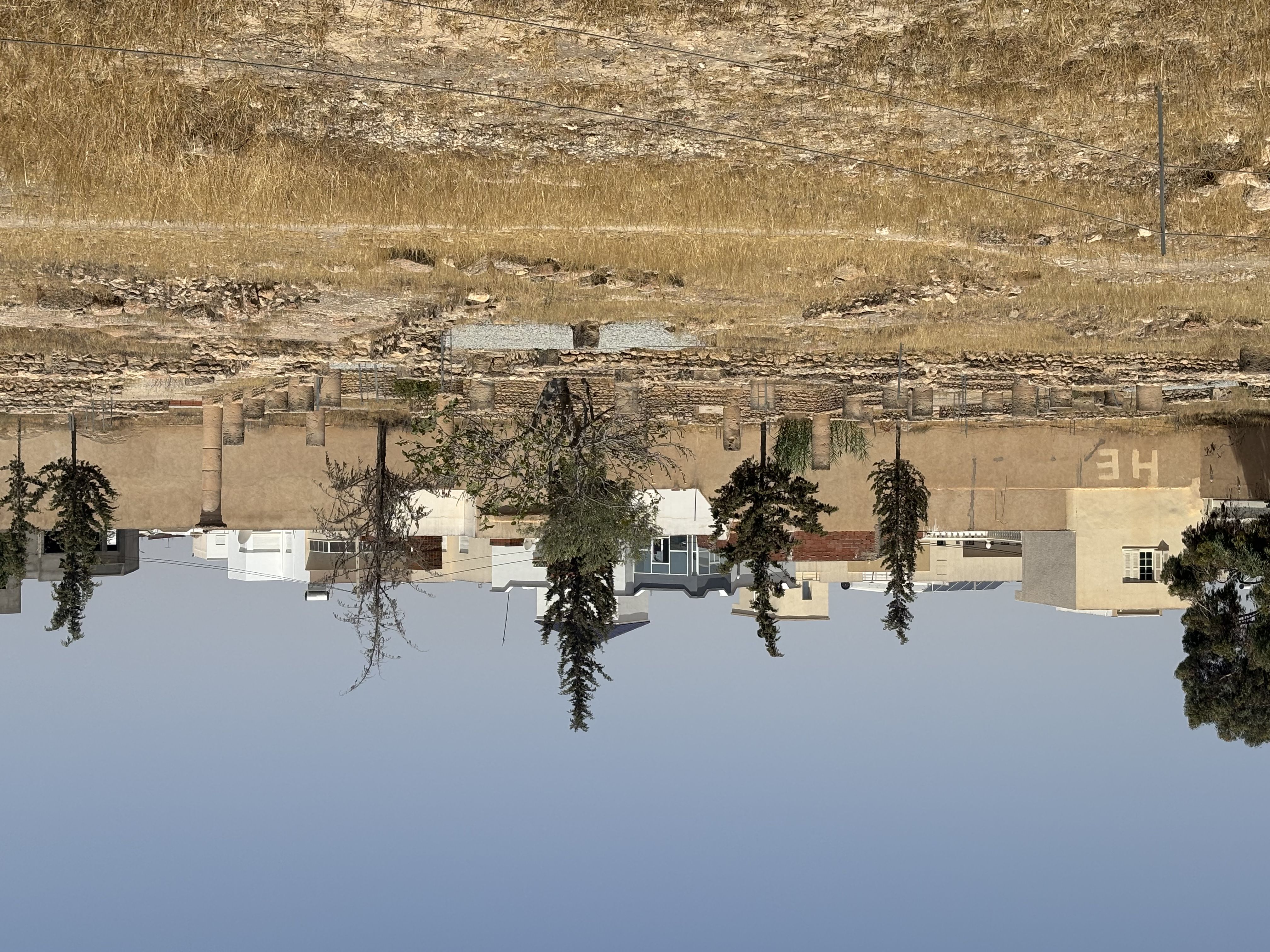
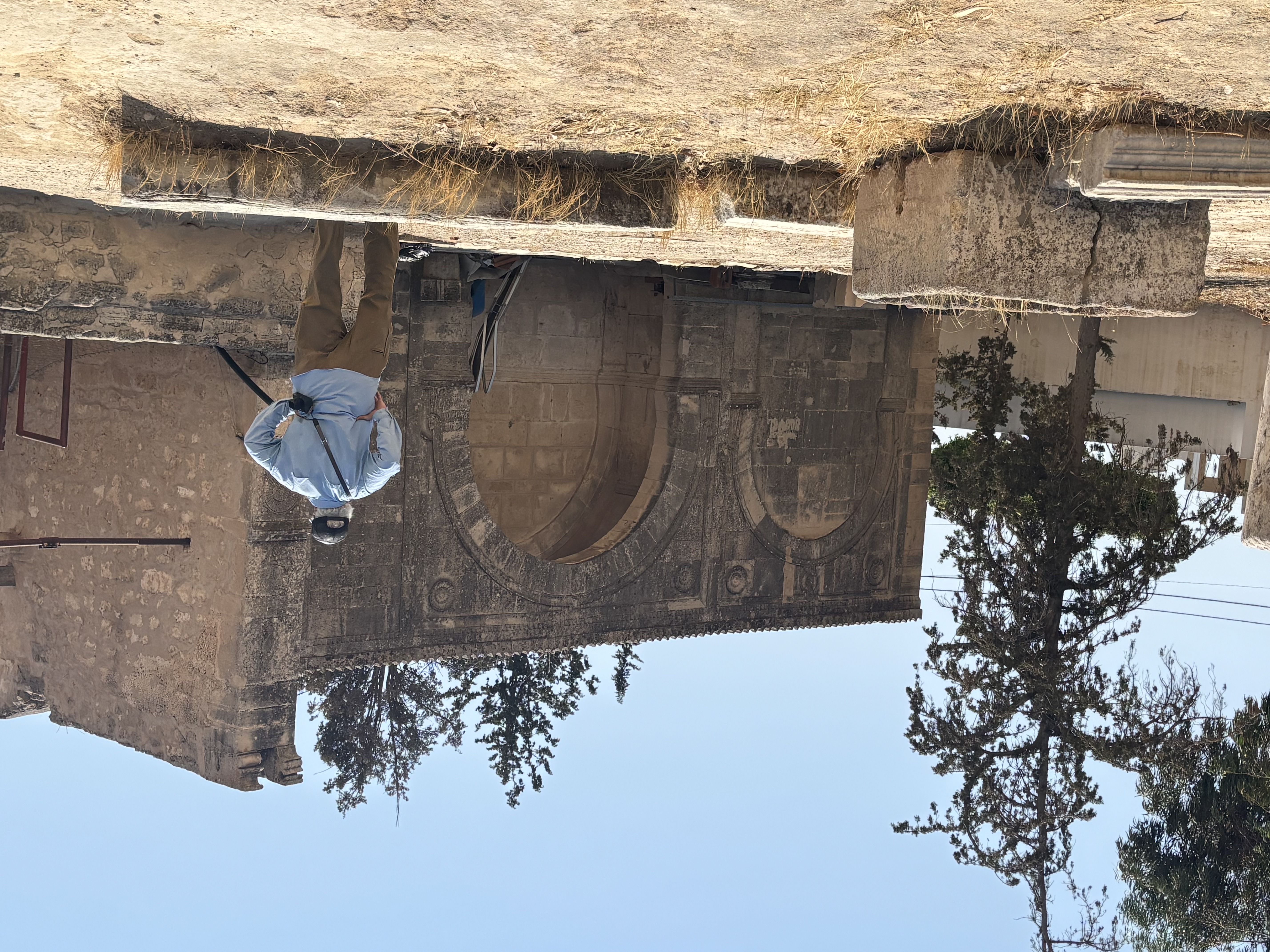
The museum walks out to the Outdoor Archaeological Park, where Mike and Bone wandered through excavated remains of ancient Roman homes and view columns, capitals, and statues in what was the considered the "middle class" part of Thysdrus. With that it was 11:30 and 116 degrees, time to get back in the rental and head back to Tunis!
On AI back Mike and Bone discussed how they had a whole half a day left and even though they planned on hitting the Carthage ruins the next day, the stupid fact was they were staying in Carthage, might as well check it out!
So with an hour to go, Mike and Bone discussed what the heck was this all about!
Prologue: From Republic to Empire: What caused the Ruckus?
Bone shared with Mike that the Roman Republic had been aggressively expanding in the southern Italian mainland for a century before the First Punic War. By 270 BC, when the last Greek cities of southern Italy (Magna Graecia) submitted to Rome after the conclusion of the Pyrrhic War, it had conquered all of Italian peninsula. During this period of Roman expansion Carthage, which is JUST south on the Italian Peninsula and Sicily, with its capital in what is now Tunisia, had come to dominate southern Iberia (modern Spain and Portugal), much of the coastal regions of North Africa, the Balearic Islands, Corsica, Sardinia and the western half of Sicily in a maritime empire.
As Rome and Carthage came closer to sharing a joint border the chances of misunderstandings and hostilities increased. In the event they stumbled into war more by accident than design, with neither anticipating a prolonged conflict.
But boy, was it a prolonged conflict!
ROUND I: Sicily, the main theatre of the First Punic War 264 – 241
The spark that ignited the First Punic War was the issue of control of the independent Sicilian city-state of Messana with the Romans gaining control of the city and a foothold on Sicily at the battle of Messana. Much of the First Punic War was fought on or in the waters near Sicily. Away from the coast, its hilly and rugged terrain made maneuvering large forces difficult, which encouraged defensive strategies. Land operations were largely confined to raids, sieges and interdiction; in twenty-three years of war on Sicily there were only two full-scale pitched battles.
After several years of indecisive battles Rome rebuilt their fleet again in 243 BC after the Senate approached Rome's wealthiest citizens for loans to finance the construction of one ship each, repayable from the reparations to be imposed on Carthage once the war was won. This new fleet effectively blockaded the Carthaginian garrisons. Carthage assembled a fleet which attempted to relieve them, but it was destroyed at the battle of the Aegates Islands in 241 BC, forcing the cut-off Carthaginian troops on Sicily to negotiate for peace. The Treaty of Lutatius was agreed by which Carthage paid 3,200 talents of silver in reparations and Sicily was annexed as the first Roman province. Polybius regarded the war as "the longest, most continuous and most severely contested war known to us in history". Henceforth Rom considered itself the leading military power in the western Mediterranean and increasingly the Mediterranean region as a whole.
Round 1, Goes to Rome!
ROUND II: Second Punic War, 218–201 BC
The second Punic War was really a grudge match between the might of Rome and the hubris of Hannibal!!
Who was Hannibal? Hannibal Barca (247–183/ BC) was a brilliant Carthaginian general and one of the greatest military commanders in ancient history, famous for leading his army, including war elephants, across the Alps to attack Rome on its own home turf.
Hannibal was born in Tunisia as the son of Hamilcar Barca, a top Carthaginian general who fought Rome in the First Punic War. Leadership: At the young age of 26, Hannibal became the commander-in-chief of the Carthaginian army in Spain who hated (HATED) Rome.
As a young boy (around age nine), Hannibal swore a sacred blood oath at his father's command to be an eternal enemy of Rome. His father deeply resented Rome for defeating Carthage and stripping away its wealth and territories (like Sicily) after the First Punic War.
Hannibal directly triggered the Second Punic War in 219 BC by attacking Saguntum, an independent coastal city in Spain that had an alliance with Rome. Rome viewed the attack as an act of war and demanded Hannibal be handed over, setting off decades of near-constant conflict.
There is a lot of debate as to whether Hannibal deliberately provoked the Romans with this attack or if the Romans were not concerned with any perceived impact on their self-respect as much as using the episode as a pretext to militarily curb Carthaginian expansion. There were three main military theatres in the Second Punic War: Italy, where Hannibal defeated the Roman legions repeatedly, with occasional subsidiary campaigns in Sicily, Sardinia and Greece; Iberia, where Hasdrubal, a younger brother of Hannibal, defended the Carthaginian colonial cities with mixed success before moving into Italy; and Africa, where the war was decided. The highlight (or lowlight if you were Roman) was the epic battle of Cannae.
Cannae was a very bad day for Rome!
Fought on August 2, 216 BC during the Second Punic War, this clash between the Roman Republic and Carthage remains a benchmark for military commanders seeking a "battle of annihilation". Hannibal made this battle famous for “creating the famous “The Double-Envelopment Tactic”, Hannibal arranged his weaker infantry in a bowed, outward-curving center. As the heavy Roman legions pushed forward and broke through this center, the line gradually buckled inward. Hannibal's stronger veteran flanks held firm, and his superior cavalry swung around to trap the Romans from behind, completely encircling them, inflicting massive casualties.
Out of roughly 80,000 to 86,000 Roman troops, modern estimates suggest that between 55,000 and 70,000 were killed or captured, making it one of the bloodiest single days of combat in human history and the worst defeat the Roman Republic ever suffered.
In fact Cannae, became a Blueprint for Modern Warfare, the maneuver at Cannae became the gold standard for military strategy. Generals across history—including Count Alfred von Schlieffen with his WWI German war plans and General Dwight D. Eisenhower in modern times, studied and tried to replicate Hannibal's tactical masterpiece! However, that Rome is all sorts of stubborn. The resilience of Rome shown through and despite the catastrophic loss of life and leadership (including a Roman consul), Rome refused to surrender. Instead, they changed their strategy, avoided pitched battles against Hannibal, and ultimately won the war years later under Scipio Africanus. In 205 BC Publius Scipio was given command of the legions in Sicily and allowed to enroll volunteers for his plan to end the war by an invasion of Africa. In spring and summer 203 BC the Romans gave battle to two large Carthaginian armies and destroyed both.
Rome and Carthage entered into peace negotiations and Carthage recalled Hannibal from Italy. The Roman Senate ratified a draft treaty, but because of mistrust and a surge in confidence when Hannibal arrived from Italy Carthage repudiated it. Hannibal was placed in command of an army formed from his and Mago's veterans from Italy and newly raised troops from Africa, but with few cavalry. The decisive battle of Zama right outside of current day Tunis, followed in October 202 BC. Unlike earlier battles of the Second Punic War, the Romans had superiority in cavalry and the Carthaginians in infantry. Hannibal attempted to use 80 elephants to break into the Roman infantry formation, but the Romans countered them effectively and they routed back through the Carthaginian ranks. The Roman and allied Numidian cavalry then pressed their attacks and drove the Carthaginian cavalry from the field. The two sides' infantry fought inconclusively until the Roman cavalry returned and attacked the Carthaginian rear. The Carthaginian formation collapsed; Hannibal was one of the few to escape the field.
The new peace treaty dictated by Rome was punitive to the Punic's! They stripped Carthage of all of its overseas territories and some of its African ones; an indemnity of 10,000 silver talents was to be paid over 50 years; hostages were to be taken; Carthage was forbidden to possess war elephants and its fleet was restricted to 10 warships; it was prohibited from waging war outside Africa and in Africa only with Rome's express permission. Many senior Carthaginians wanted to reject it, but Hannibal spoke strongly in its favor and it was accepted in spring 201 BC. Henceforth it was clear that Carthage was politically subordinate to Rome. Scipio was awarded a triumph and received the new last name of "Africanus."
Round 2 Go’s to Rome to, but with a BIG black eye !
ROUND III: A Product of Paranoia and Cato!?! 149 – 146 BC
The Third Punic War was caused by a combination of Carthage's treaty violation against Numidia, but more over Rome's deep-seated fear of Carthaginian economic recovery, and aggressive political instigation in the Roman Senate. After the Second Punic War ended, a peace treaty banned Carthage from waging war without Rome's explicit permission. Rome’s neighbor and ally, King Masinissa of Numidia, repeatedly raided and annexed Carthaginian lands with Roman backing instigating Carthage. Finally, in 150 BC, after decades of provocation, a desperate Carthage raised an army and counter-attacked Numidia without Roman approval, giving Rome the pretext it wanted to get rid of Carthage especially despite being militarily neutered, Carthage rebounded quickly in trade and agriculture, raising Rome’s paranoia. Influential Roman senators like Cato the Elder grew alarmed by this renewed prosperity and famously ended every speech by declaring that Carthage must be destroyed.
The third war was the shortest and for the Carthagians the final one.
In 149 BC a Roman army of approximately 50,000 men, jointly commanded by both consuls, landed near Utica, about 22 mi north of Carthage. Rome demanded that if war were to be avoided, the Carthaginians must hand over all of their armaments. Vast amounts of materiel were delivered, including 200,000 sets of armor, 2,000 catapults and a large number of warships. This done, the Romans demanded the Carthaginians burn their city and relocate at least 10 miles from the sea; viewing this as suicide the Carthaginians broke off negotiations and set to recreating their armory.
For a while Carthage made a go of it. The Roman army tried to lay siege to Carthage, but its walls were so strong, and its citizen militia so determined it was unable to make any impact, while the Carthaginians struck back effectively. Their army raided the Roman lines of communication, and in 148 BC Carthaginian fire ships destroyed many Roman vessels. Originally the main Roman camp was in a swamp, which caused an outbreak of disease during the summer. The Romans moved their camp, and their ships, further away – so they were now more blockading than closely besieging the city, causing the war dragged on into 147 BC.
In early 147 BC Scipio Aemilianus, an adopted grandson of Scipio Africanus who had distinguished himself during the previous two years' fighting, was elected consul and took control of the war. The Carthaginians continued to resist vigorously: they constructed warships and, during the summer, twice gave battle to the Roman fleet, losing both times. The Romans launched an assault on the walls; after confused fighting they broke into the city, but, becoming disoriented in the dark, withdrew. Hasdrubal (Hannibal’s brother) and his army retreated into the city to reinforce the garrison. Hasdrubal had Roman prisoners tortured to death on the walls, in view of the Roman army. He was reinforcing the will to resist in the Carthaginian citizens; however, from this point on there could be no possibility of negotiations. Some members of the city council denounced his actions and Hasdrubal had them put to death and took control of the city. With no Carthaginian army in the field, those cities which had remained loyal went over to the Romans or were captured.
Scipio moved back to a close blockade of the city and built a mole which cut off supply from the sea. In the spring of 146 BC the Roman army managed to secure a foothold on the fortifications near the harbor.
Finally, Scipio launched a major assault which quickly captured the city's main square, where the Roman legions camped overnight. The next morning literal was the end of Carthage the City and Nation, the Romans started systematically working their way through the residential part of the city, killing everyone they encountered and burning the buildings behind them.
At times, the Romans progressed from rooftop to rooftop, to prevent missiles being hurled down on them. It took six days to clear the city of resistance; only on the last day did Scipio take prisoners. The last holdouts, including Roman deserters in Carthaginian service, fought on from the Temple of Eshmoun and burnt it down around themselves when all hope was gone.
In the end, there were only 50,000 Carthaginian prisoners, a small proportion of the pre-war population, who were sold into slavery.
The Romans had physically flattened that which the Phoenicians built Afterwards, Rome was determined that the city of Carthage remain in ruins. The Senate dispatched a ten-man commission and Scipio was ordered to carry out further demolitions.
A curse was placed on anyone who might attempt to resettle the site in the future. The former site of the city was confiscated as ager “publicus”, public land by the Roman Senate. The remaining Carthaginian territories were annexed by Rome and reconstituted to become the Roman province of Africa. The province became a major source of grain and other foodstuffs for Rome.
Interesting fact about the Phoenicians, numerous large Punic cities, such as those in Mauretania, were taken over by the Romans, although they were permitted to retain their Punic system of government and culture. The Romans did not interfere in the locals' private lives, with Punic culture, language and religion surviving, which modern scholars describe as "Neo-Punic civilization". The Punic language continued to be spoken in north Africa until the 7th century AD.
So how is there a Roman Carthage!?!
Well a century after the end of the Punic Wars, the site of Carthage was rebuilt as a Roman city by Julius Caesar; it became one of the main cities of Roman Africa by the time of the Empire and became the third largest and important cities behind Rome and Alexandria. Carthage (and Tunis) position on the map being halfway across Africa and jutting out close to Sicily makes it to good of a port as those seafaring Phoenicians figured out in 853 BC!
However, FINALLY, they made peace, in 1985, a symbolic peace treaty and pact of friendship was signed between the mayors of Rome and Carthage.
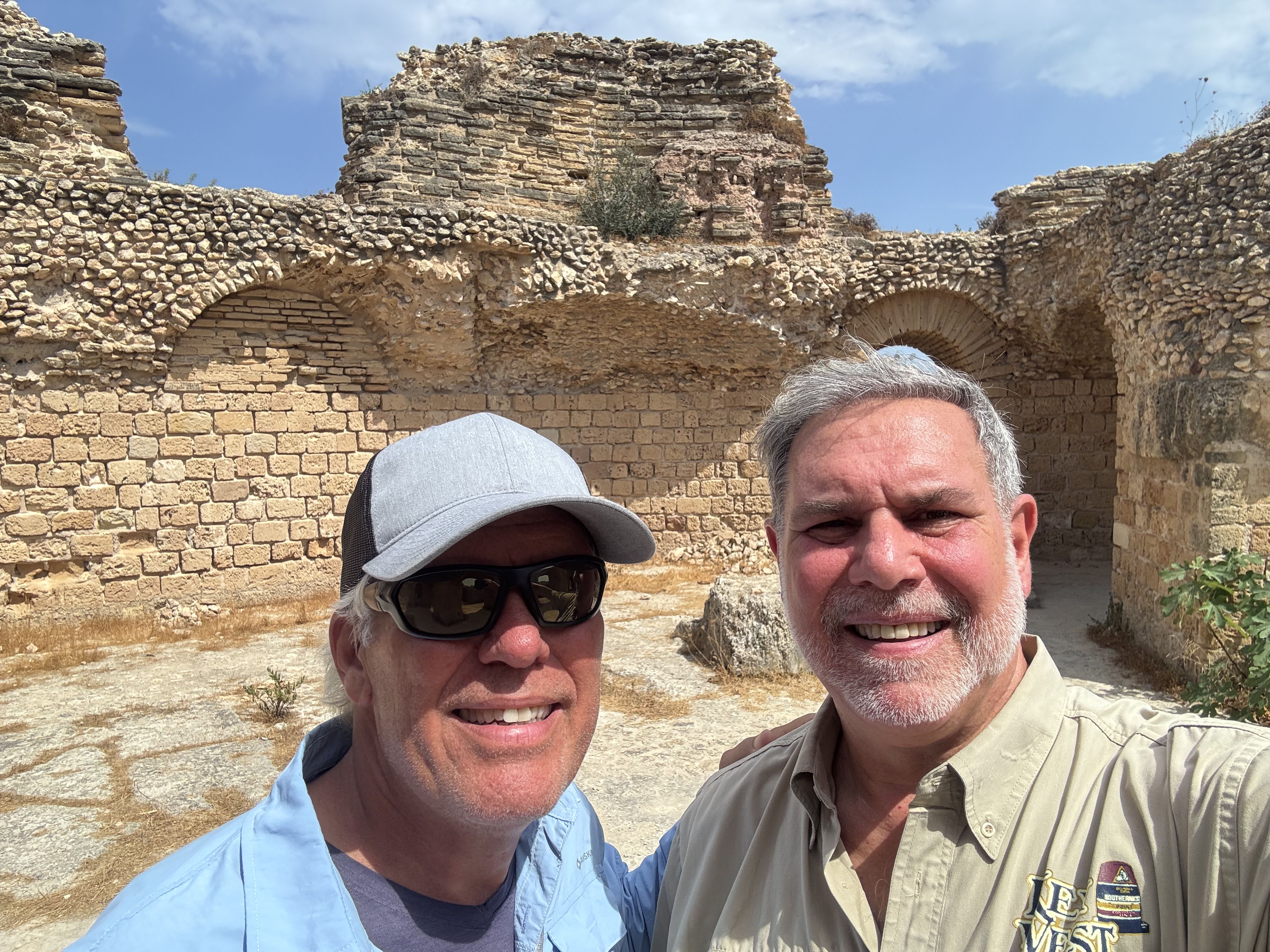
The story was finished just as the Boys pulled up the remnants of the Punic and Roman ruins of Carthage, the Baths of Antoinius!
Causing Chaos in Carthage!
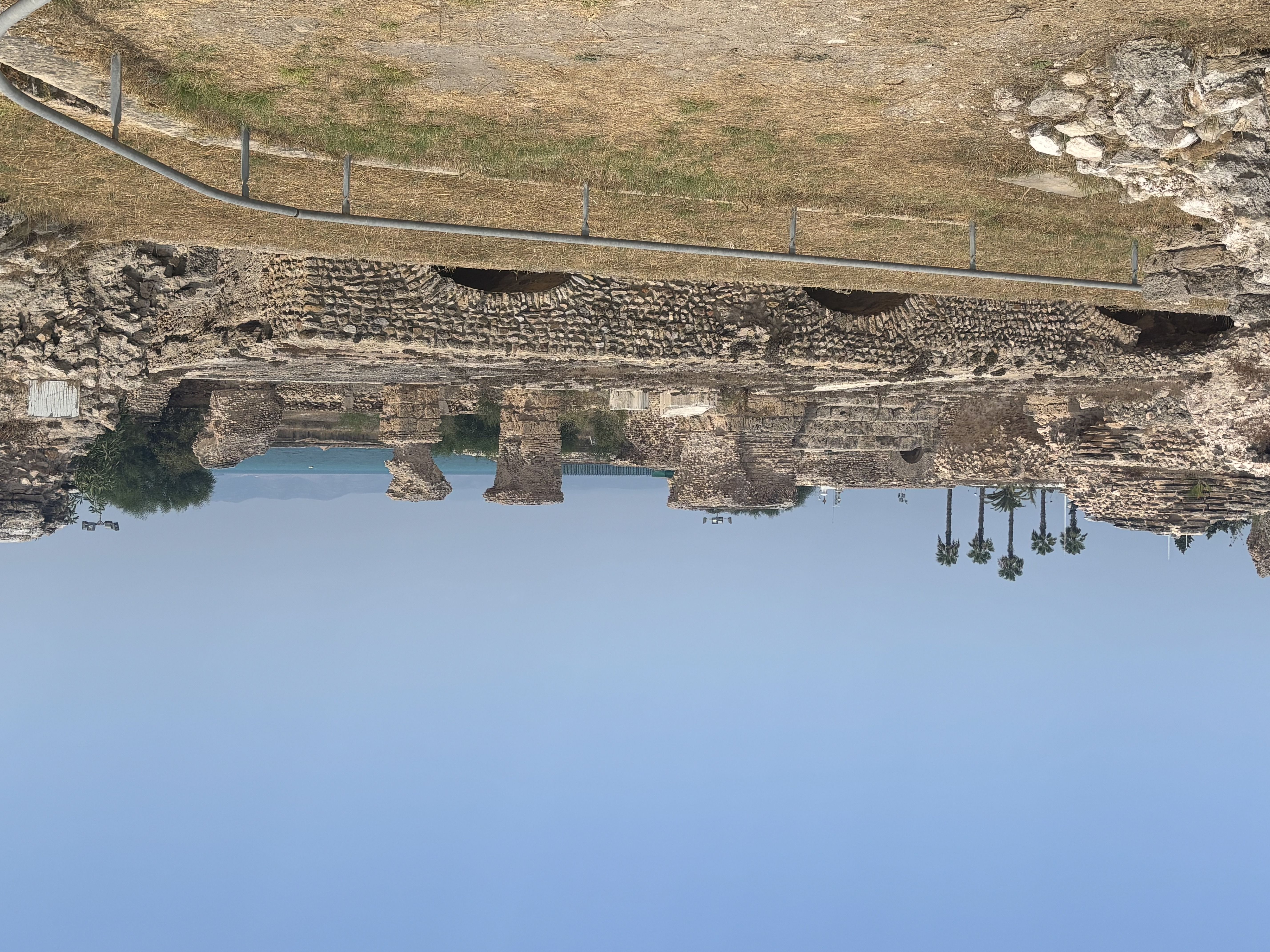
The old story of what is good for the goose is good for the gander, or better still if my enemy liked this place, I likely will! Where the Punic's built Carthage was not the salted earth, but a very strategic spot to start over. So the Antonine Baths was a whole complex that overlapped the Punic Carthage. Plus, add the Visigoths, later Roman's(AKA Byzantines) and then Arabs after the 640's an the whole area has been built, plundered, built, plundered, built, plundered so many time that maybe 30% of the Roman ruins are there, and 10 % of the Punic ruins are there.
The World Famous Antonine Baths!
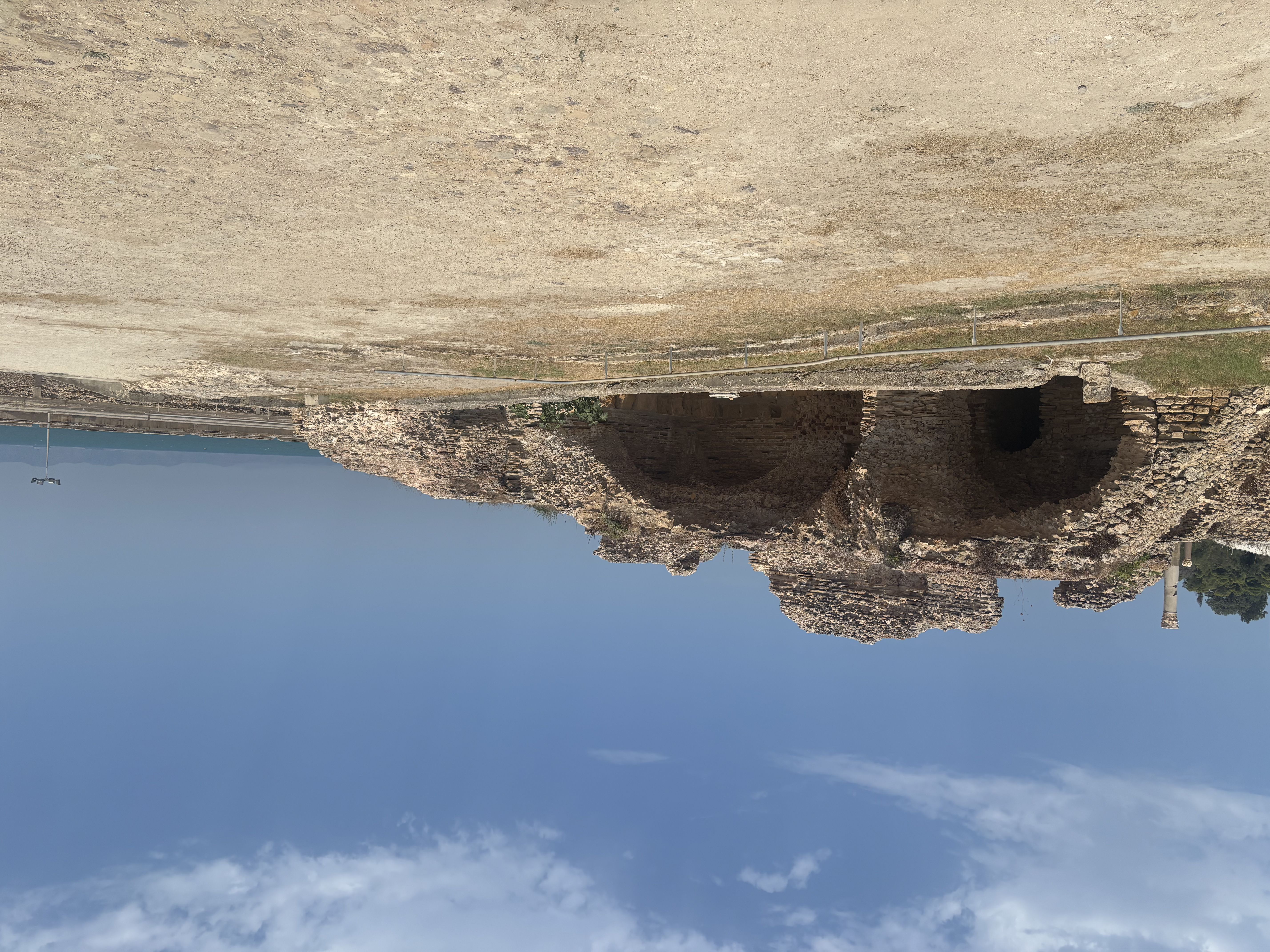
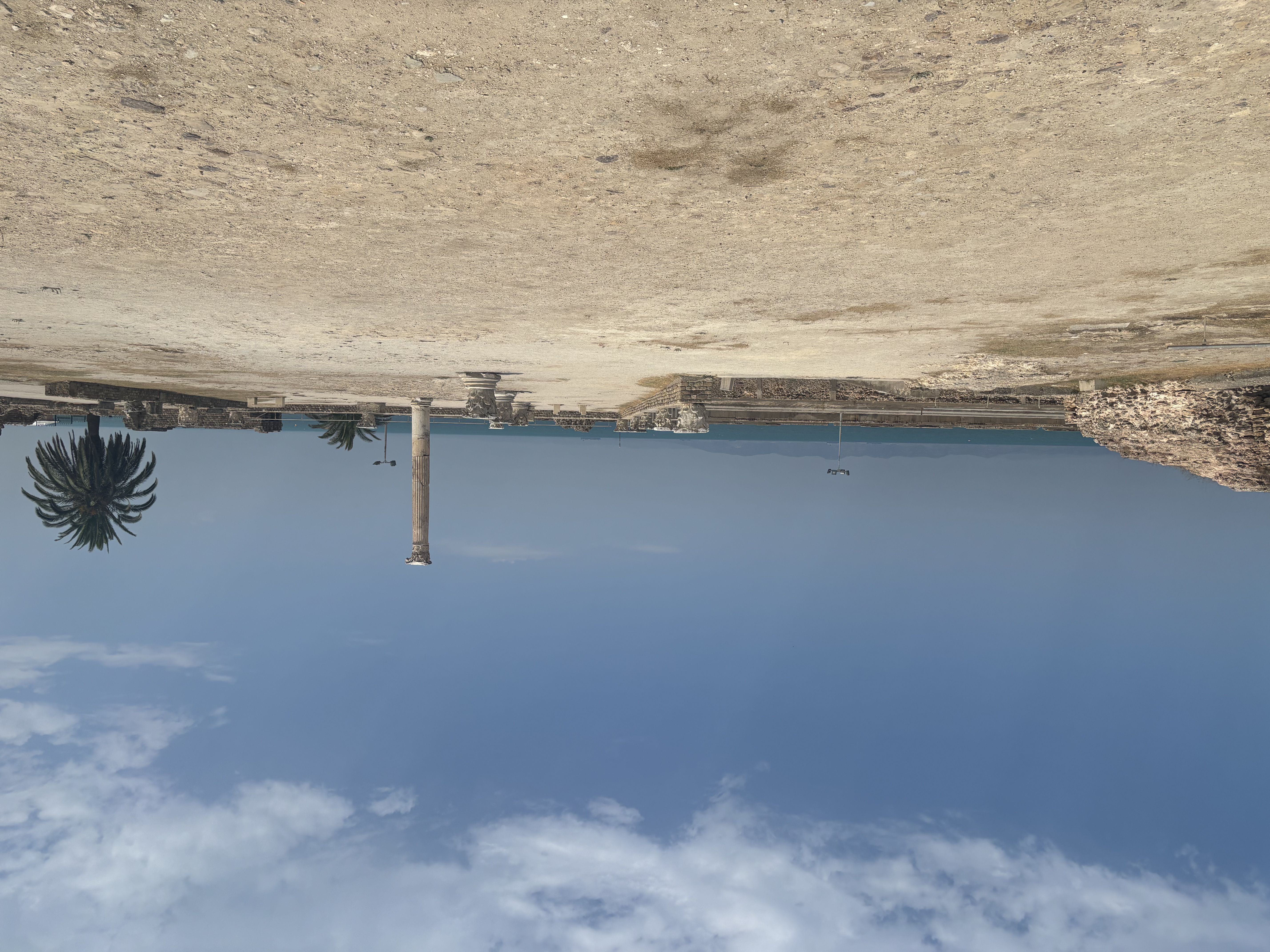
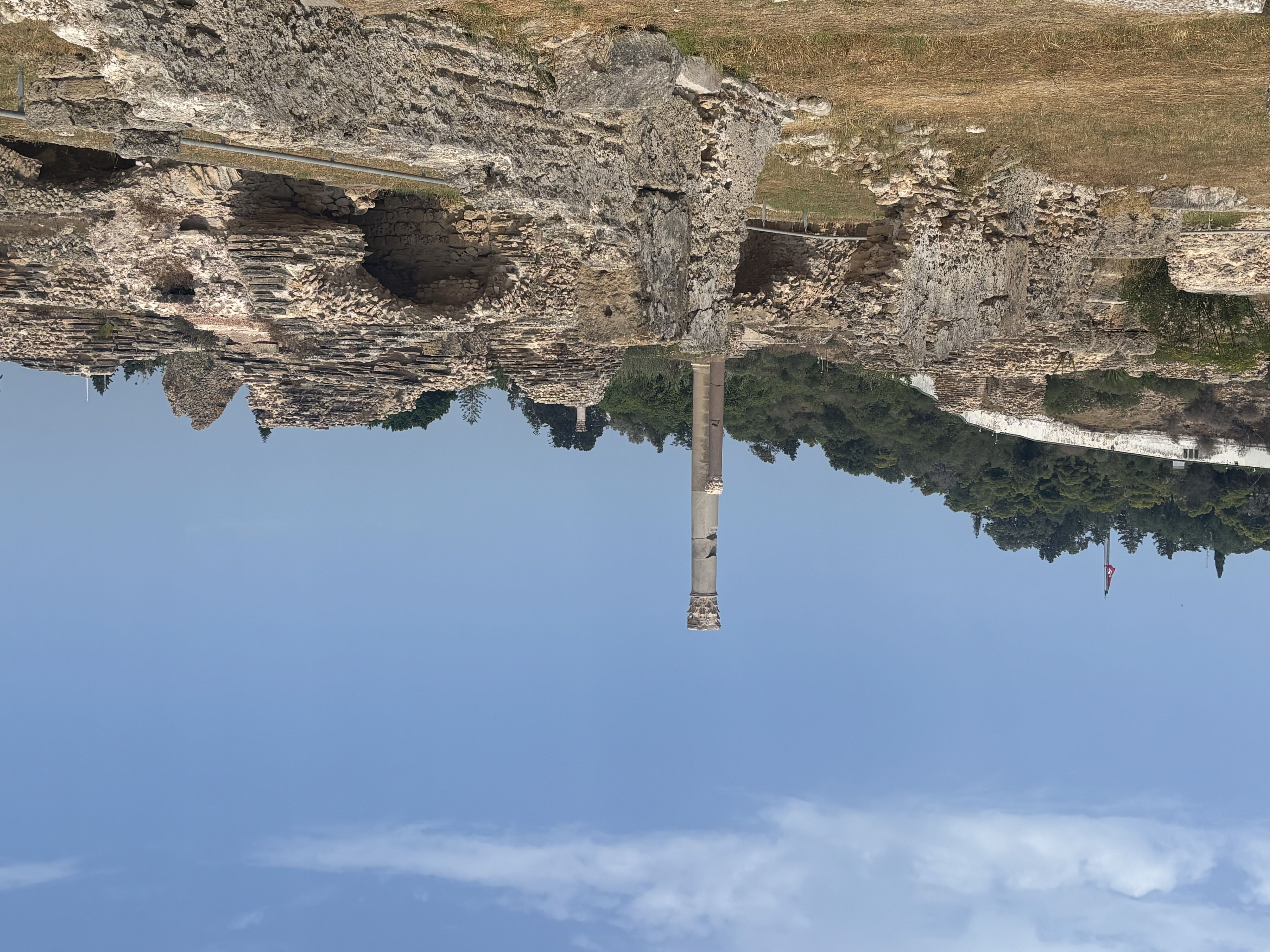
Mike and Bone walked in and found the Antonine Baths fascinating with the picturesque Mediterranean sea as a backdrop. As the largest set of Roman thermae built on the African continent and one of the three largest built in the Roman Empire, the Antonine Baths were a huge Roman bath complex in ancient Carthage, Tunisia. Today, the well-preserved ruins are a popular UNESCO World Heritage Site. The baths are in the south-east section of the Archaeological Site of Carthage. The archaeological excavations started during the Second World War and concluded by the creation of an archaeological park for the monument.
Mike and Bone in,,,,,, CARTHAGE!!?!!
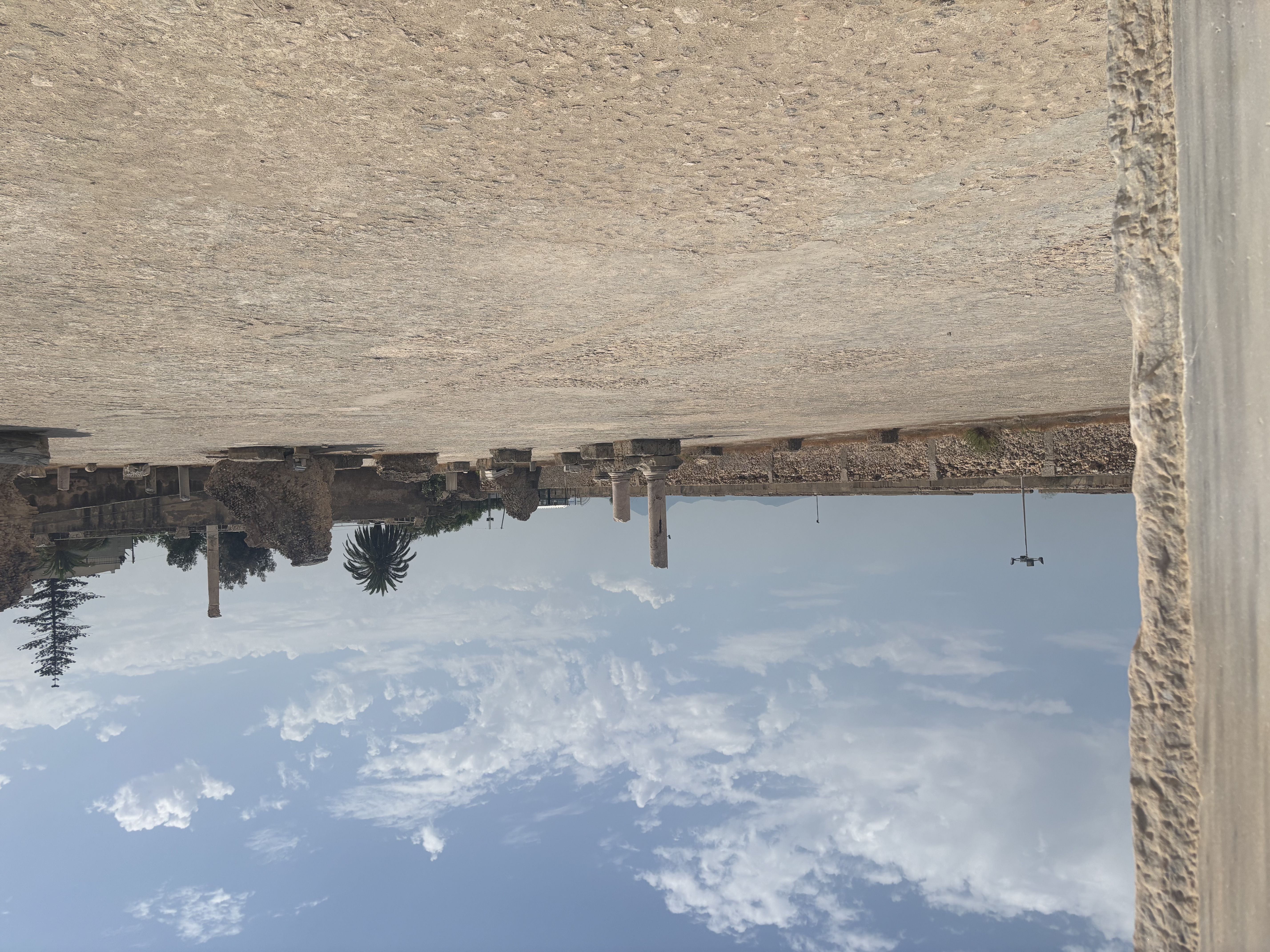
The Baths of Antoninus are structurally unique compared to other Roman bathhouses. The clay soil that bordered the Mediterranean Sea created a need for a larger foundation. The typical structure of the bathhouses had service areas in the basement, but the soft clay would not accommodate such developments. The designers had to adapt and raise the structure of this particular bath, making the Baths of Antoninus taller than other Roman bathhouses.
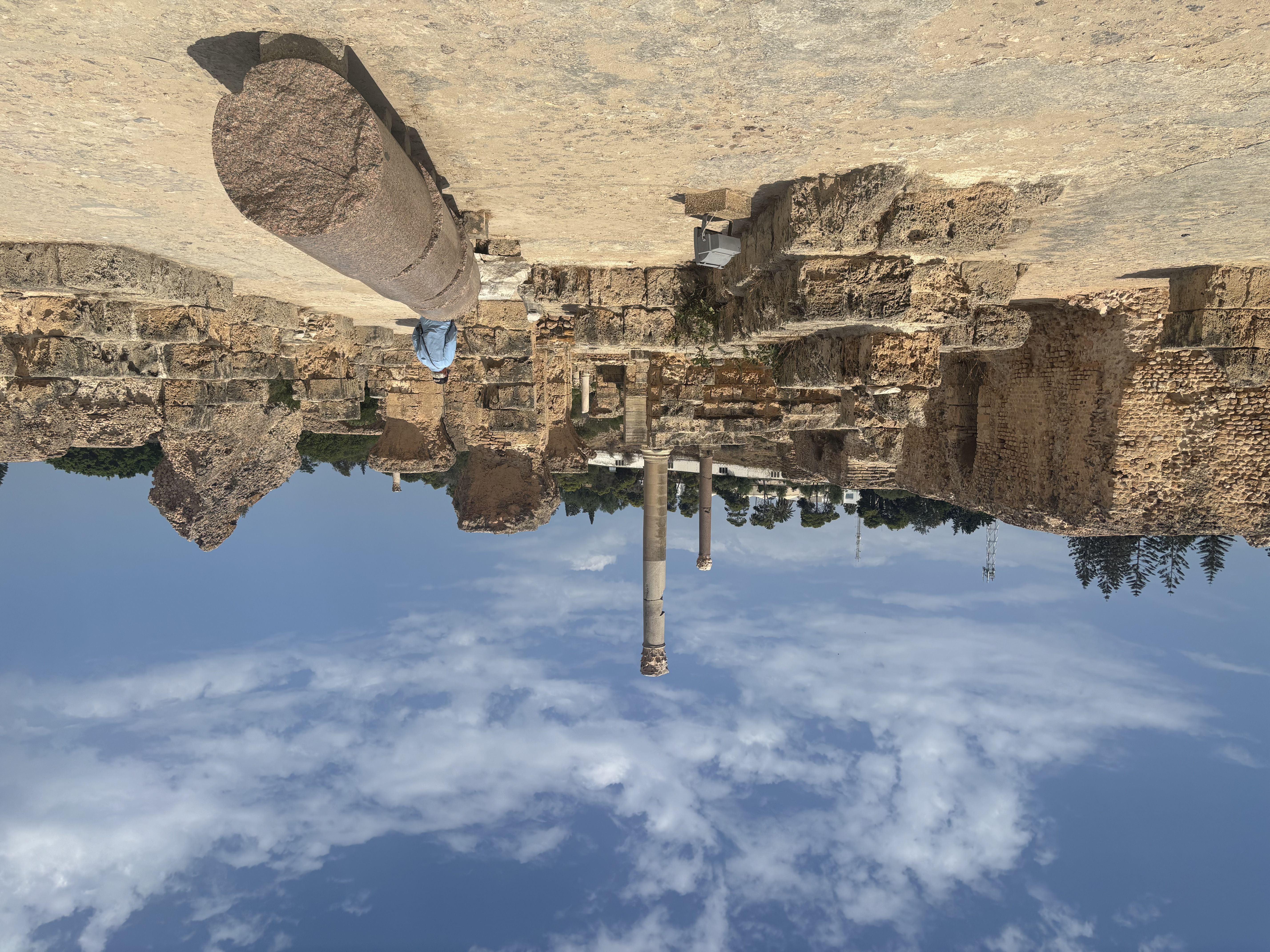
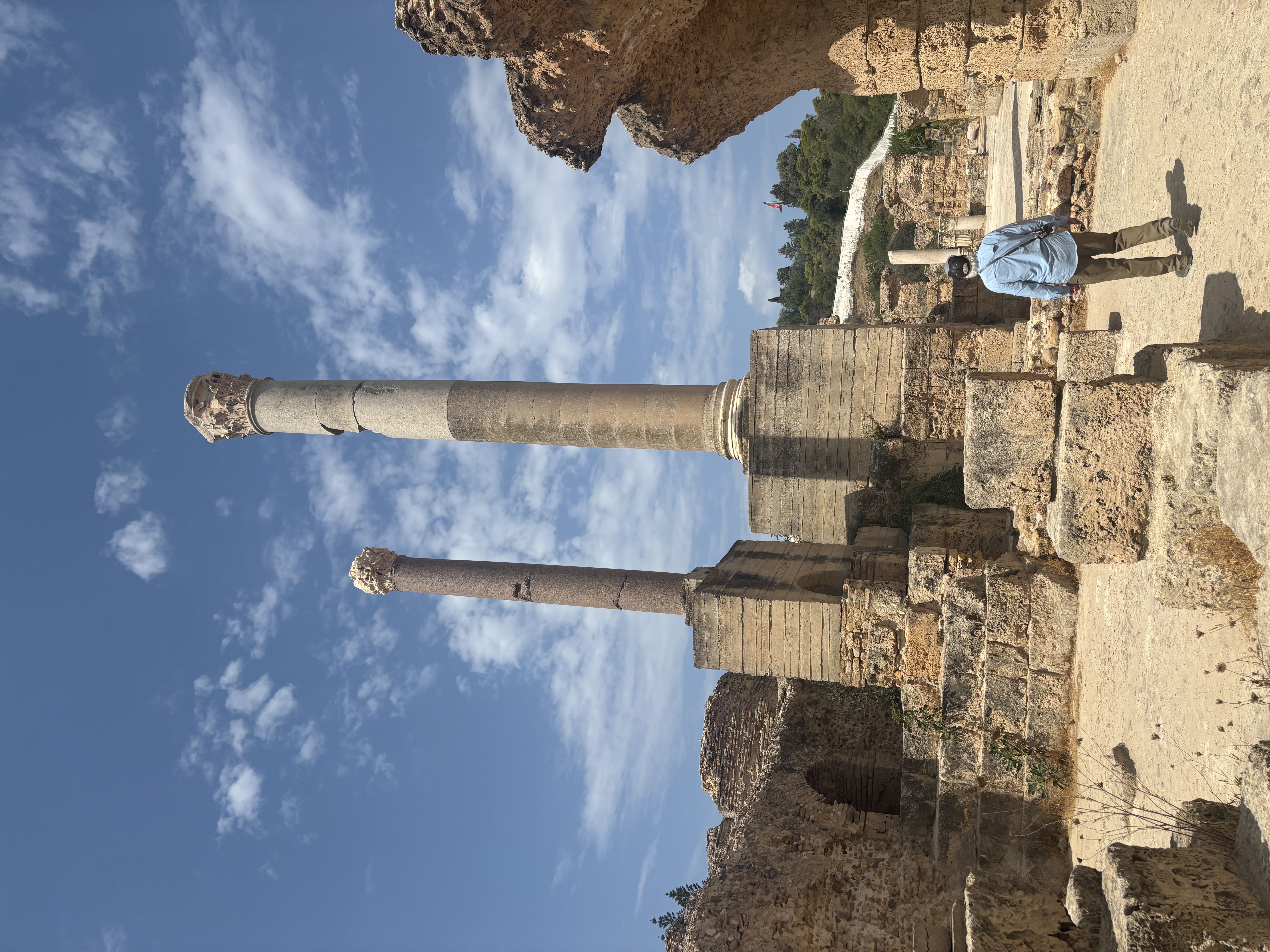
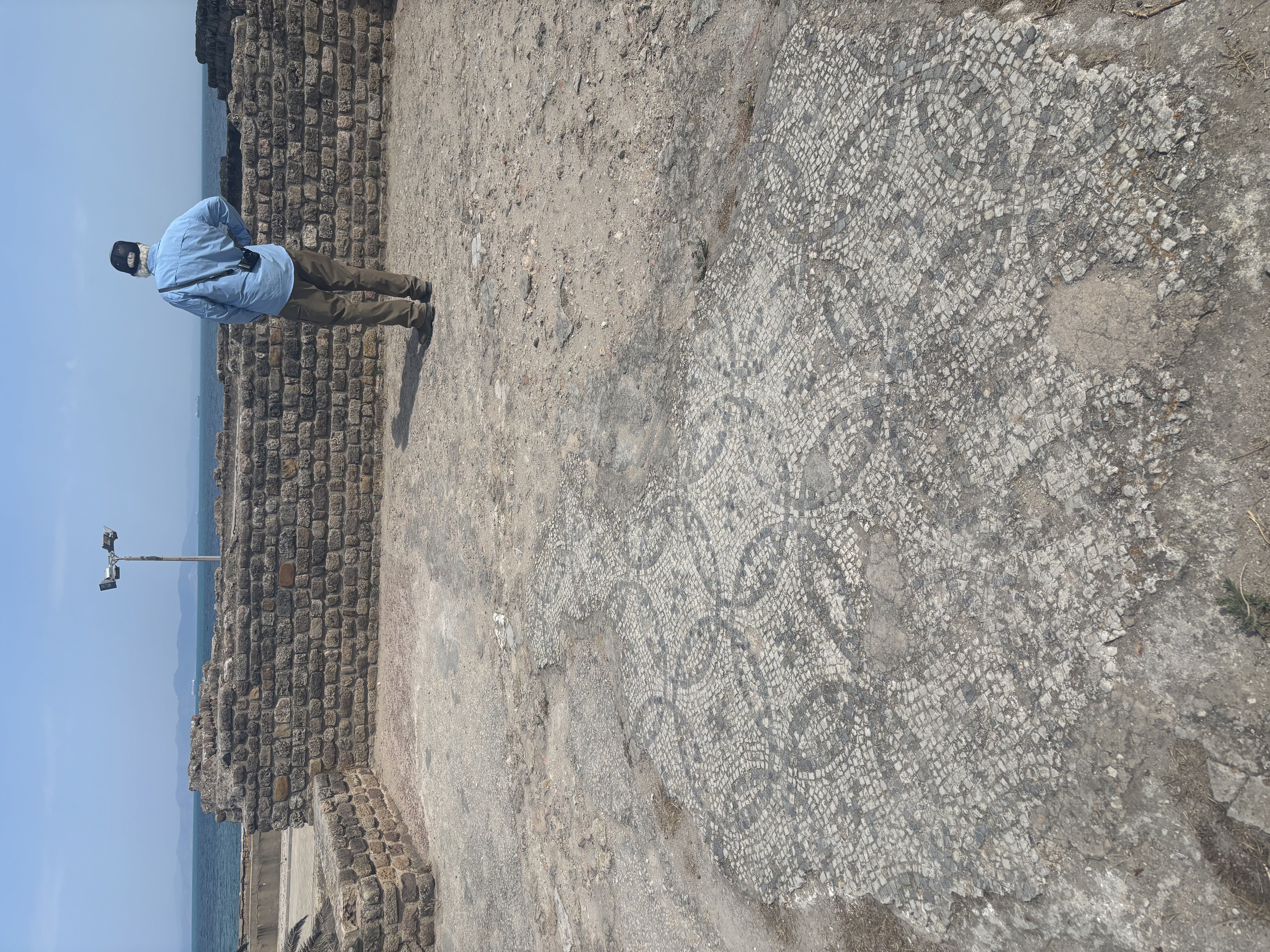
Originally built from 145 to 165 AD, started by the true “builder of Rome Hadrian, (“Rome wasn’t built in a day, but likely by Hadrian!”) and finished during the reign of the Roman Emperor Antoninus Pius, the Antonine Baths were among the largest baths to be built in the Roman world and were the largest such complex in North Africa.
The baths could cater for a multitude of visitors and contained a number of rooms and chambers standard to such ancient bath complexes, including the Frigidarium (cold room), Caldarium (hot room) and Tepidarium (hot bath). There was once also an enormous seaside swimming pool as well as a Gymnasium for physical activity.
Map of Roman Carthage
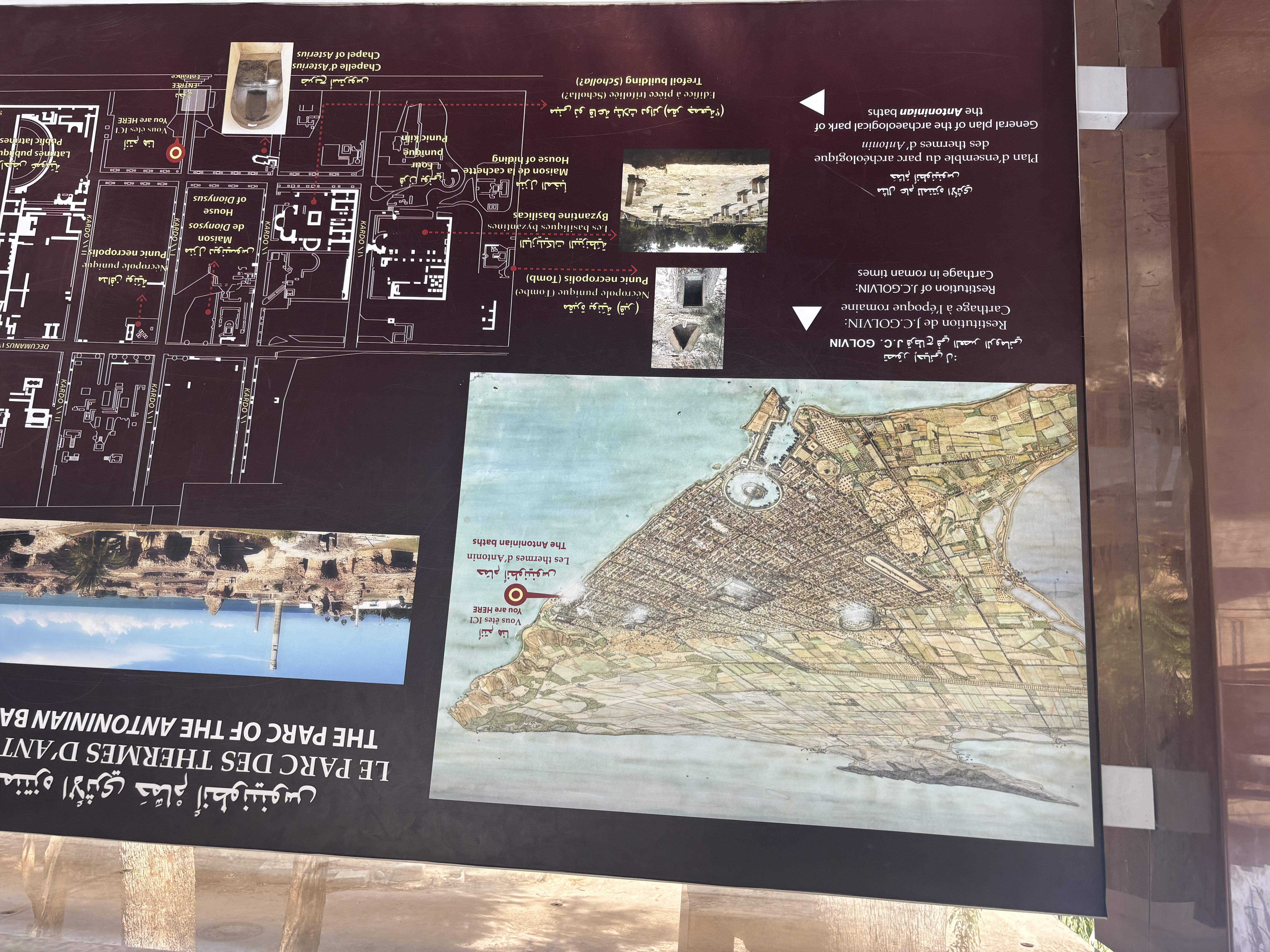
Mike and Bone learned that the baths were destroyed by the Vandals ( hence the term "Vandals"!?!) in 439 AD, and the stone was reused by the Arabs during the construction of Tunis. Today, the ruins are relatively well-preserved, and it is easy to imagine the thriving landscape.
Harboring Roman Dreams
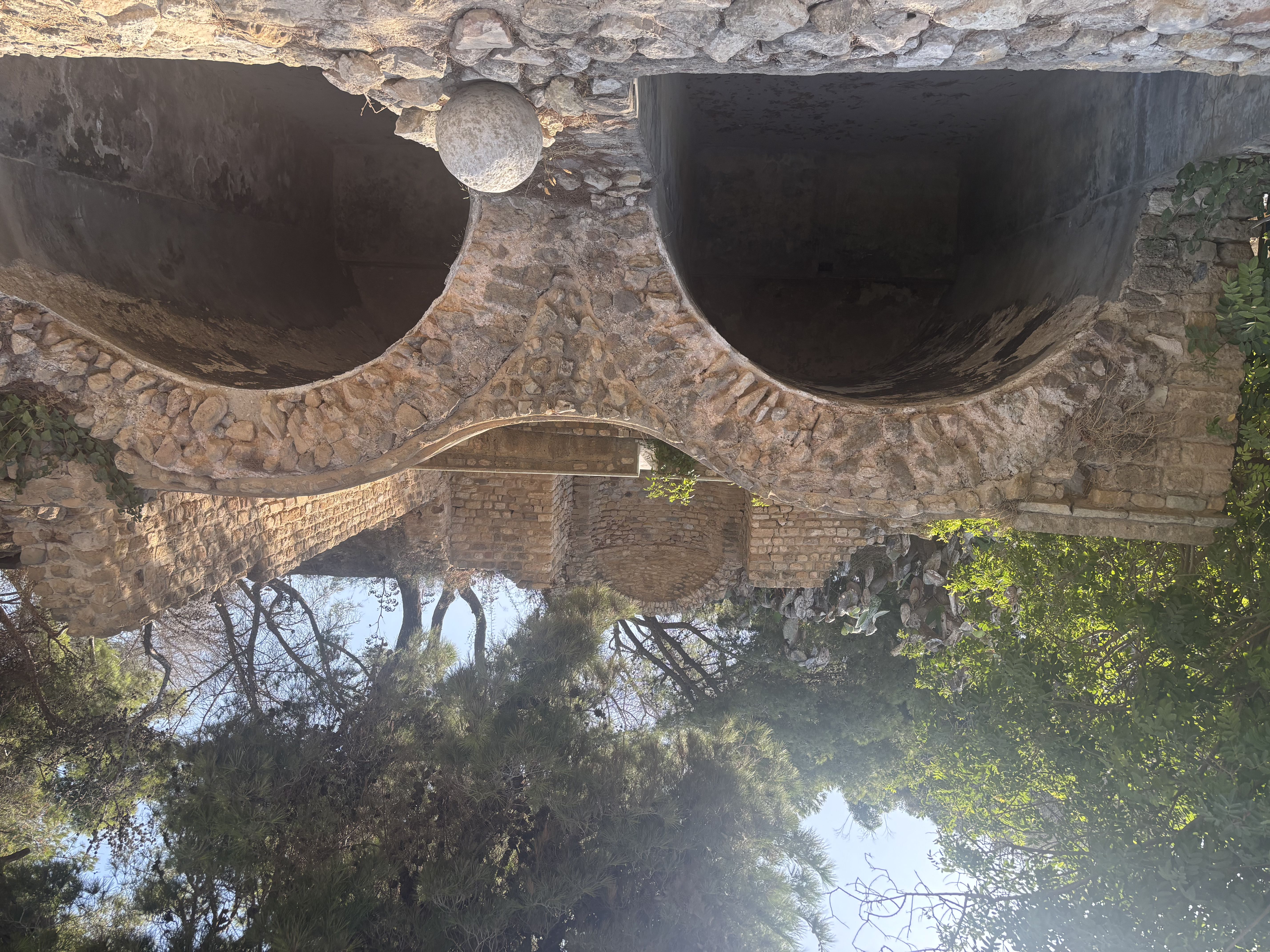
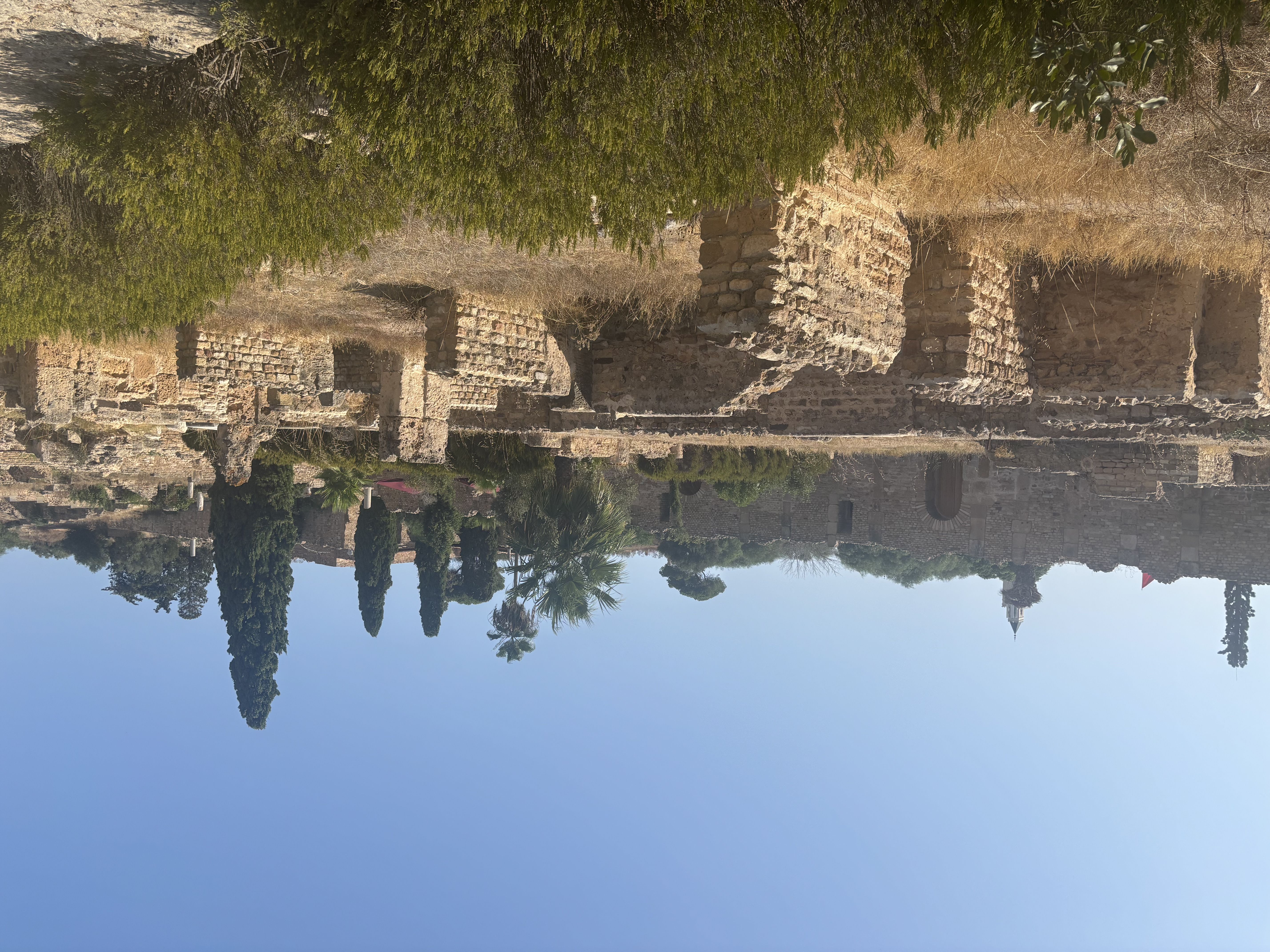
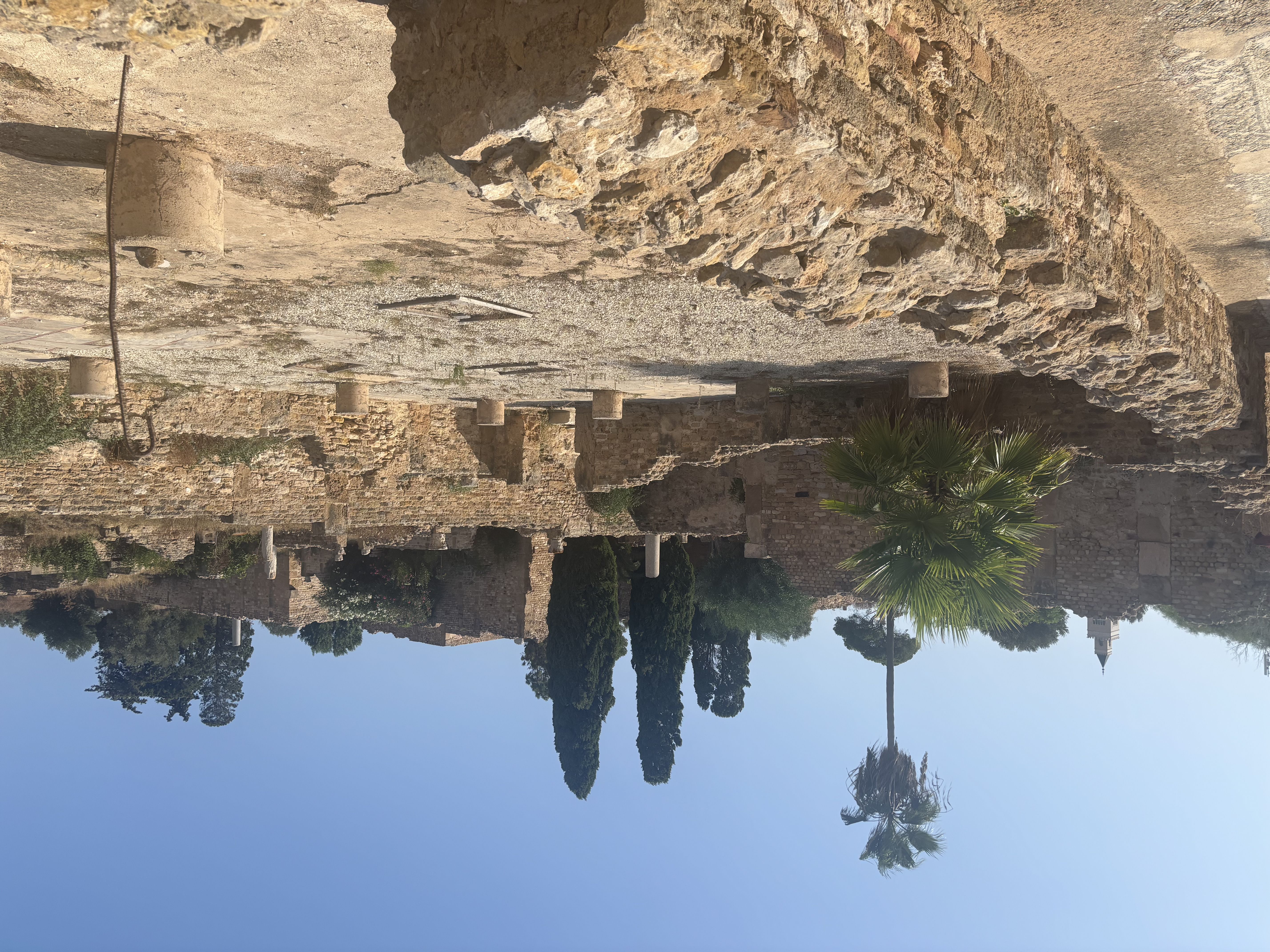
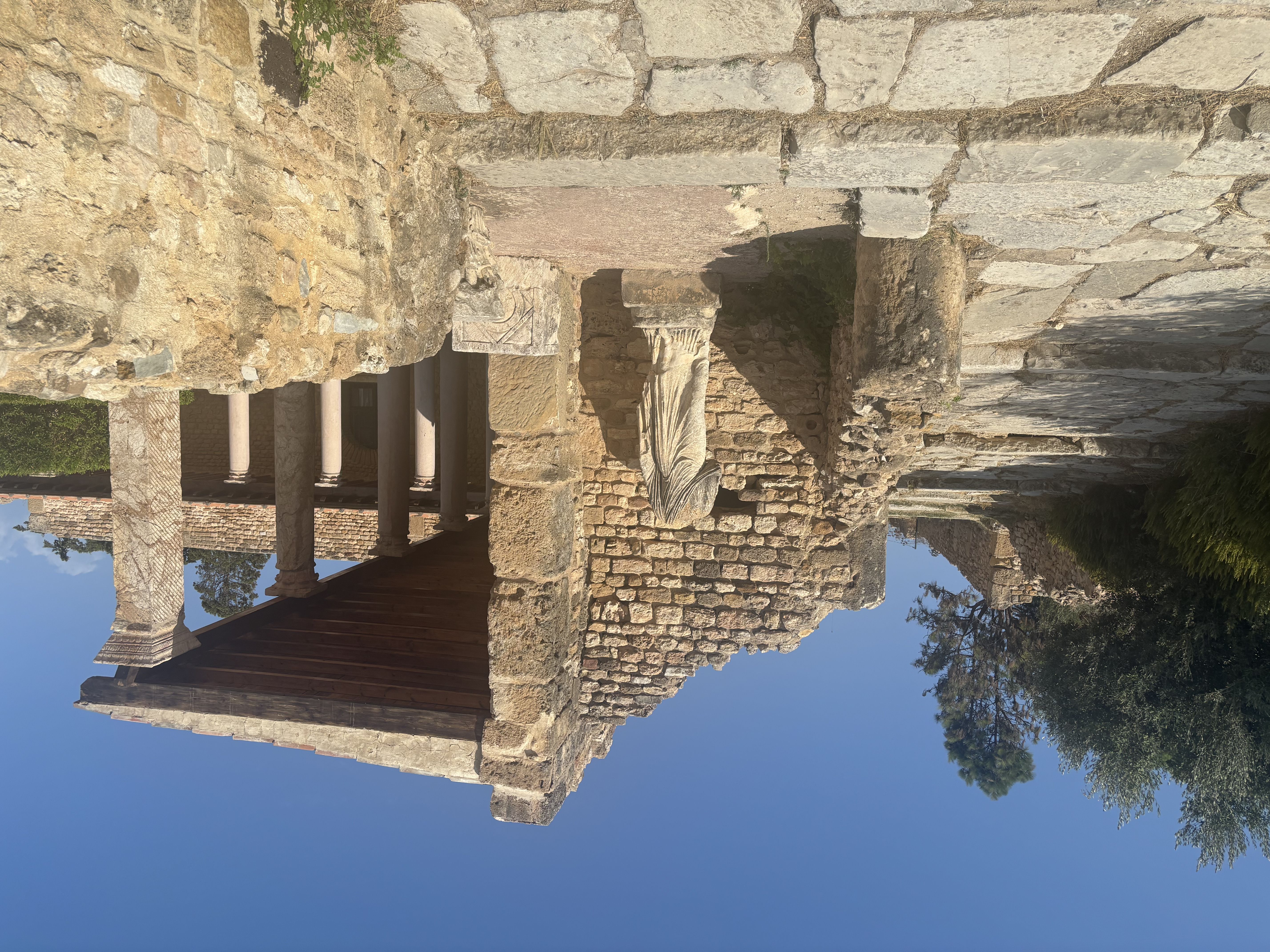
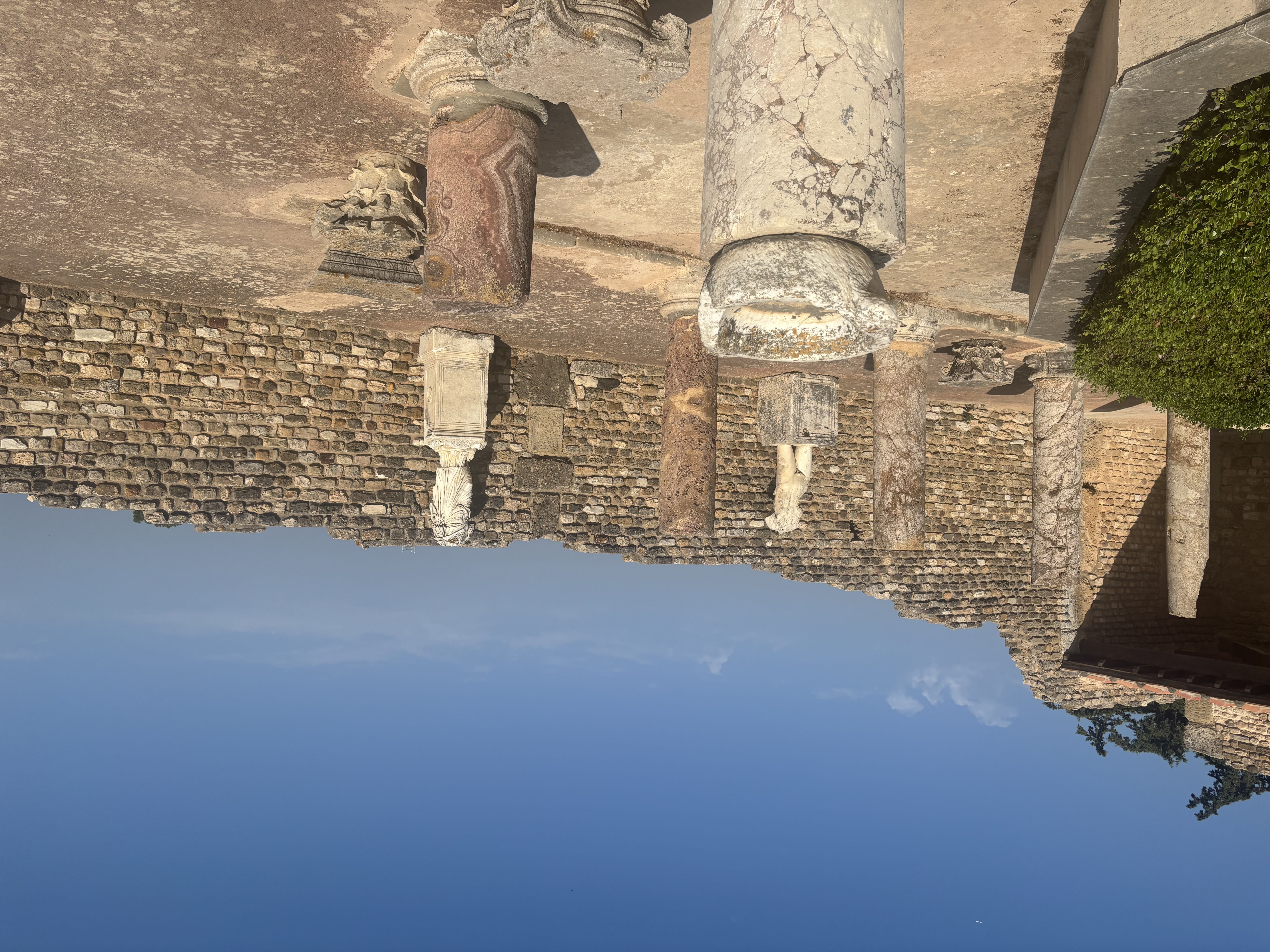
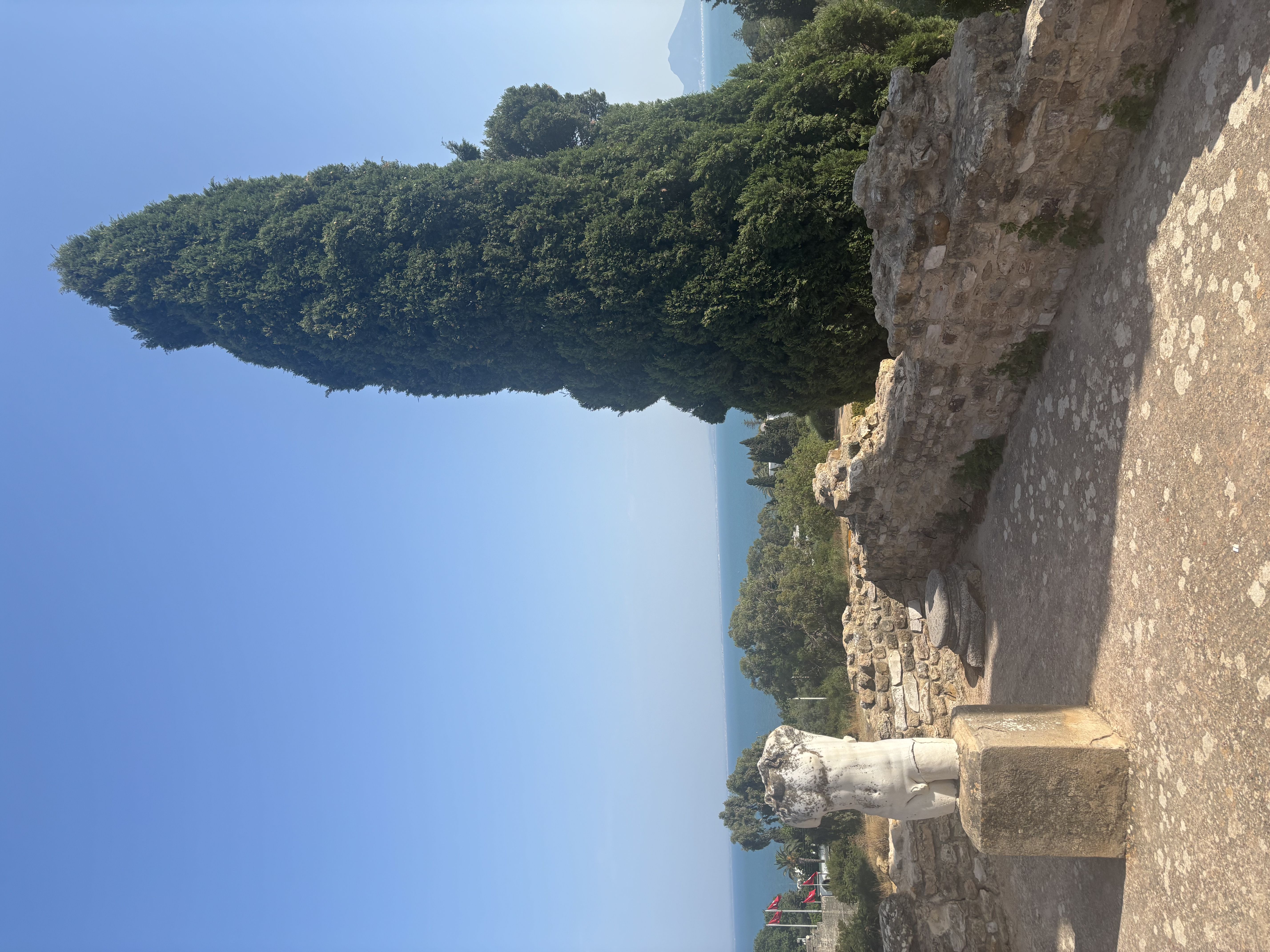
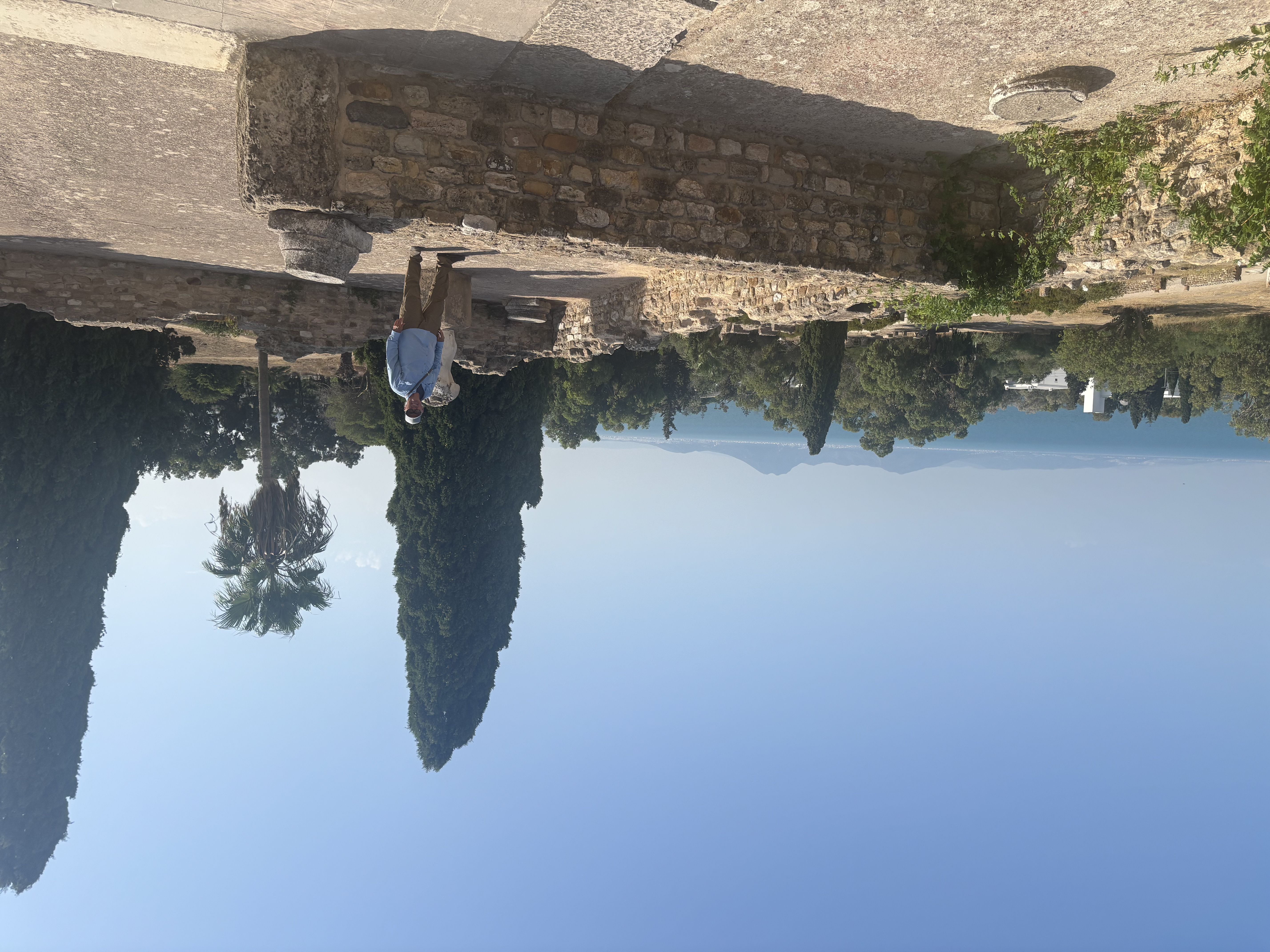
Although the baths would have once been many stories high, the remains that can be seen today are primarily of the lower levels only. Nonetheless, it is not difficult to imagine the scale and grandeur that the baths would have commanded from what is still visible. Walking around down by sea in the southwest a huge semi-circular construction was discovered with around 80 seats, which archaeologists first thought to be a theatre, before realizing that it was, in fact, a communal latrine! Not peed-off, Mike and Bone wandered a little in-land and finally found something Punic!
Finally !!! Phoenicians!
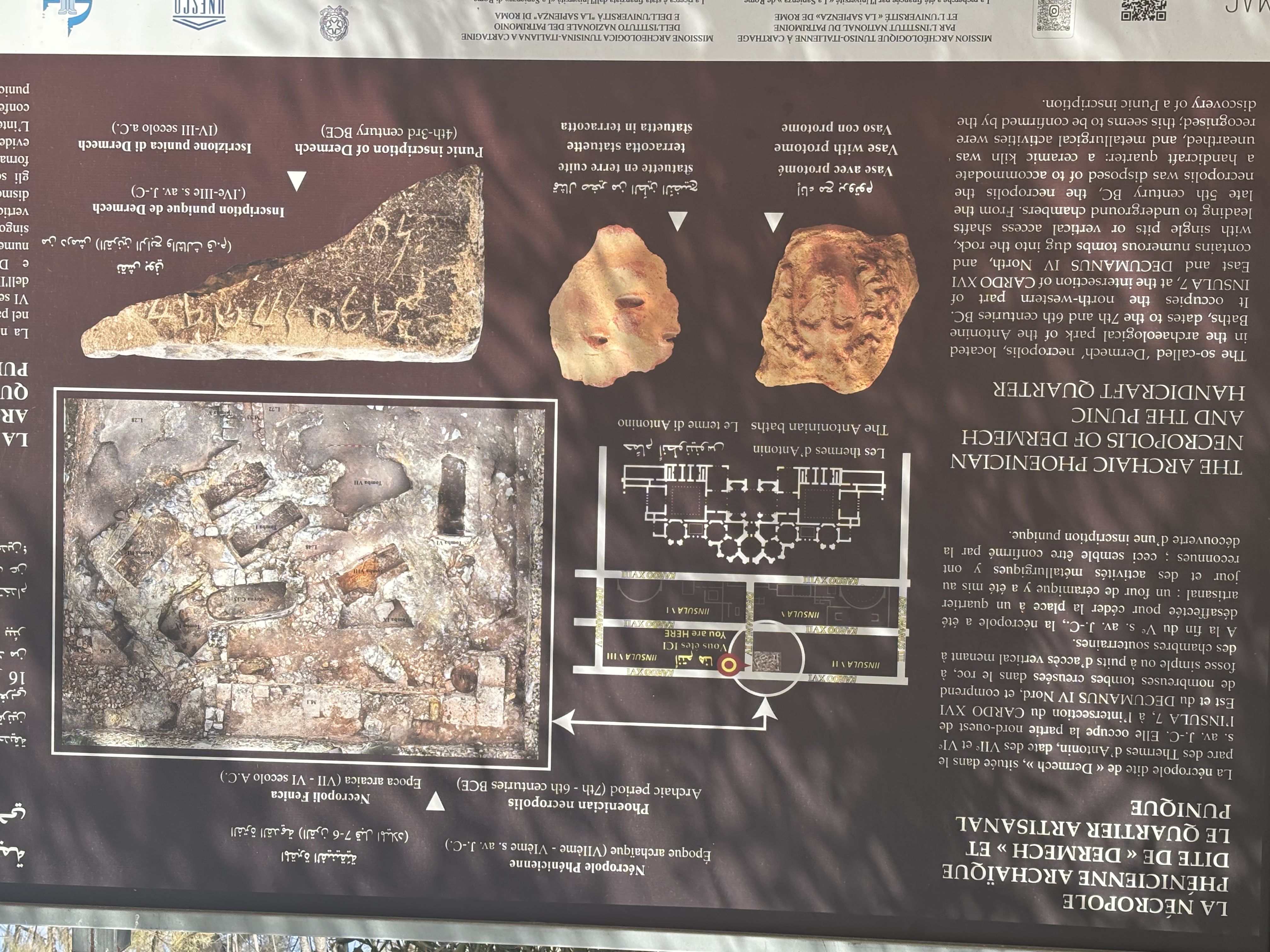
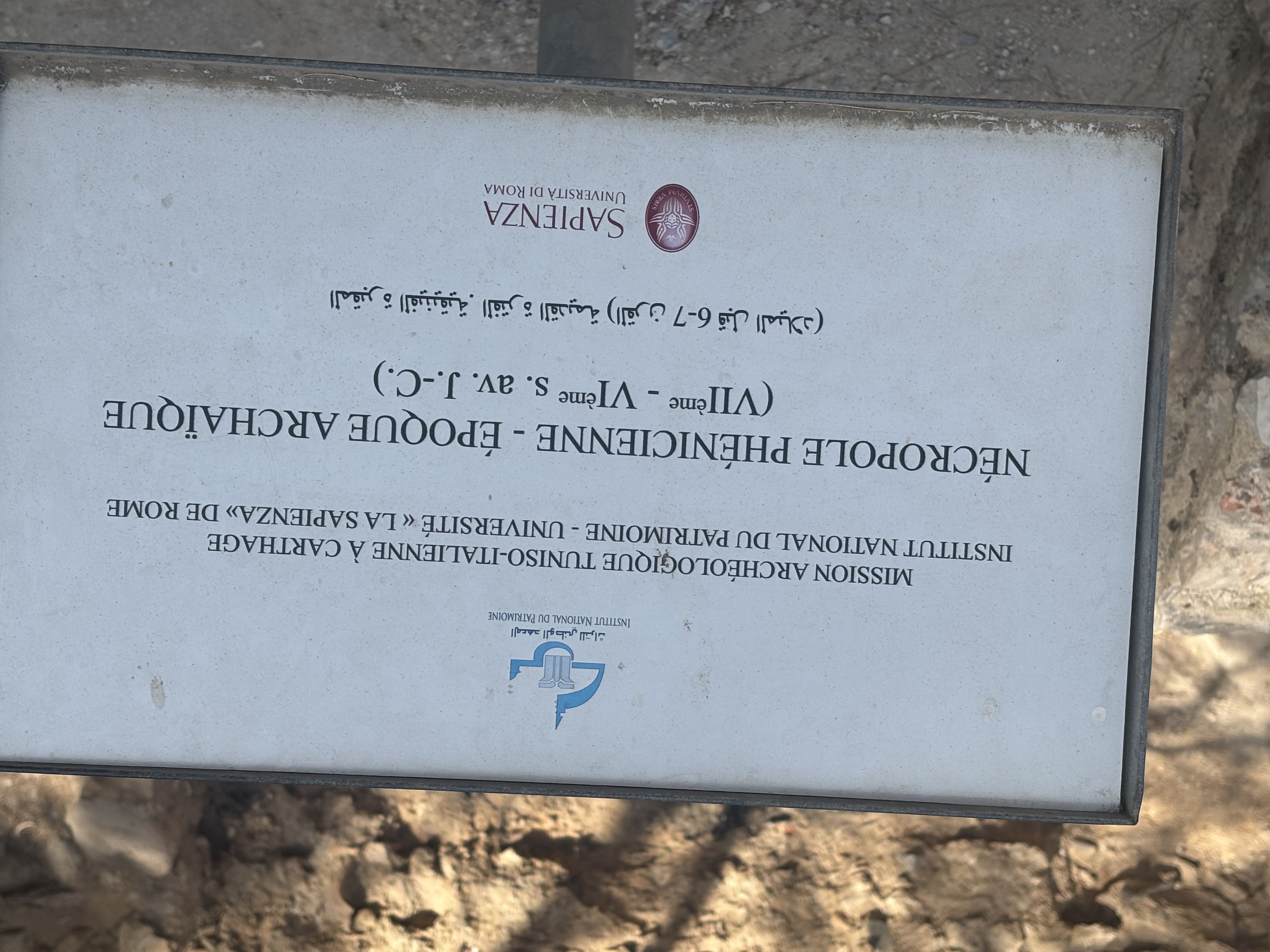
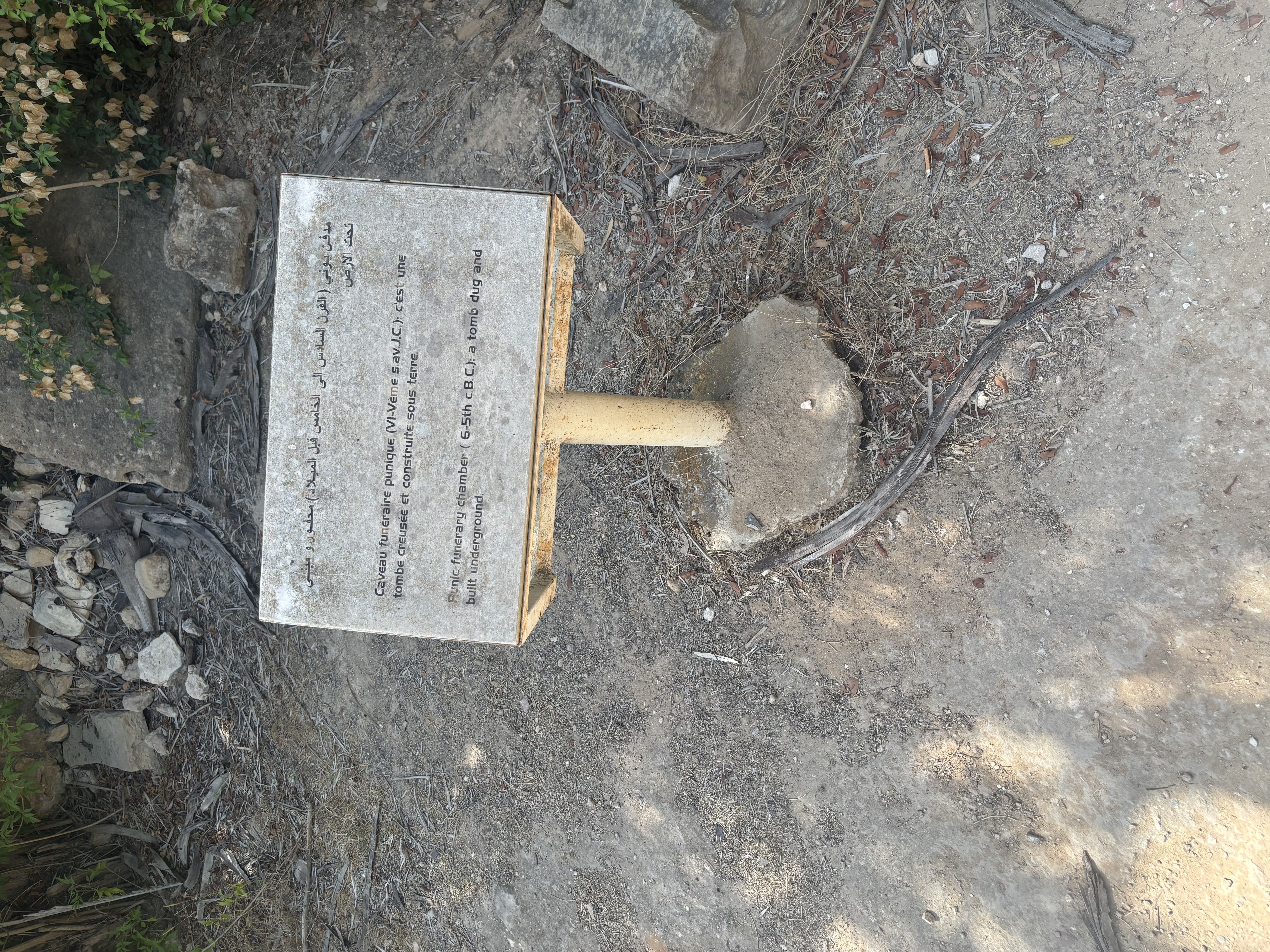
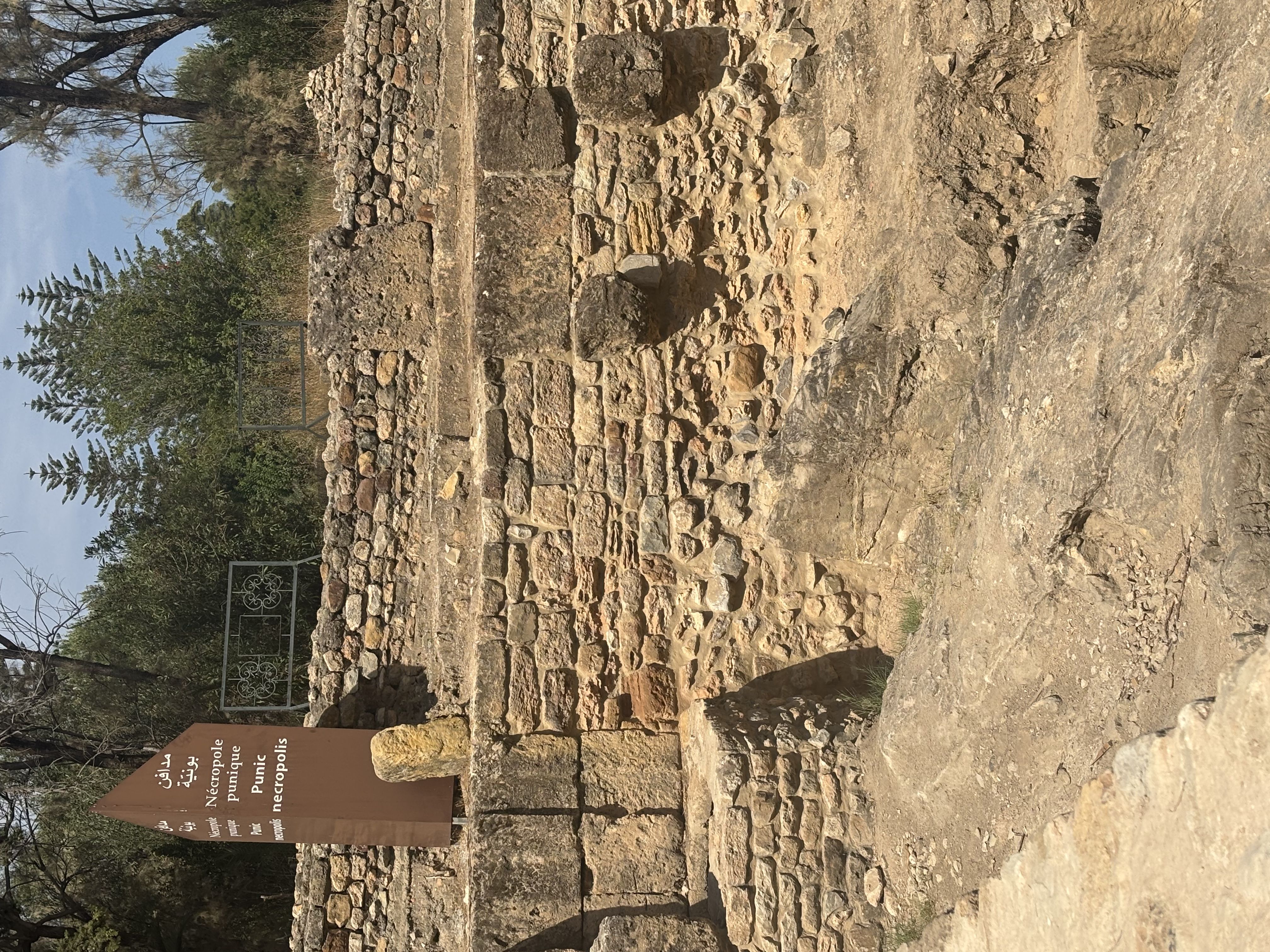
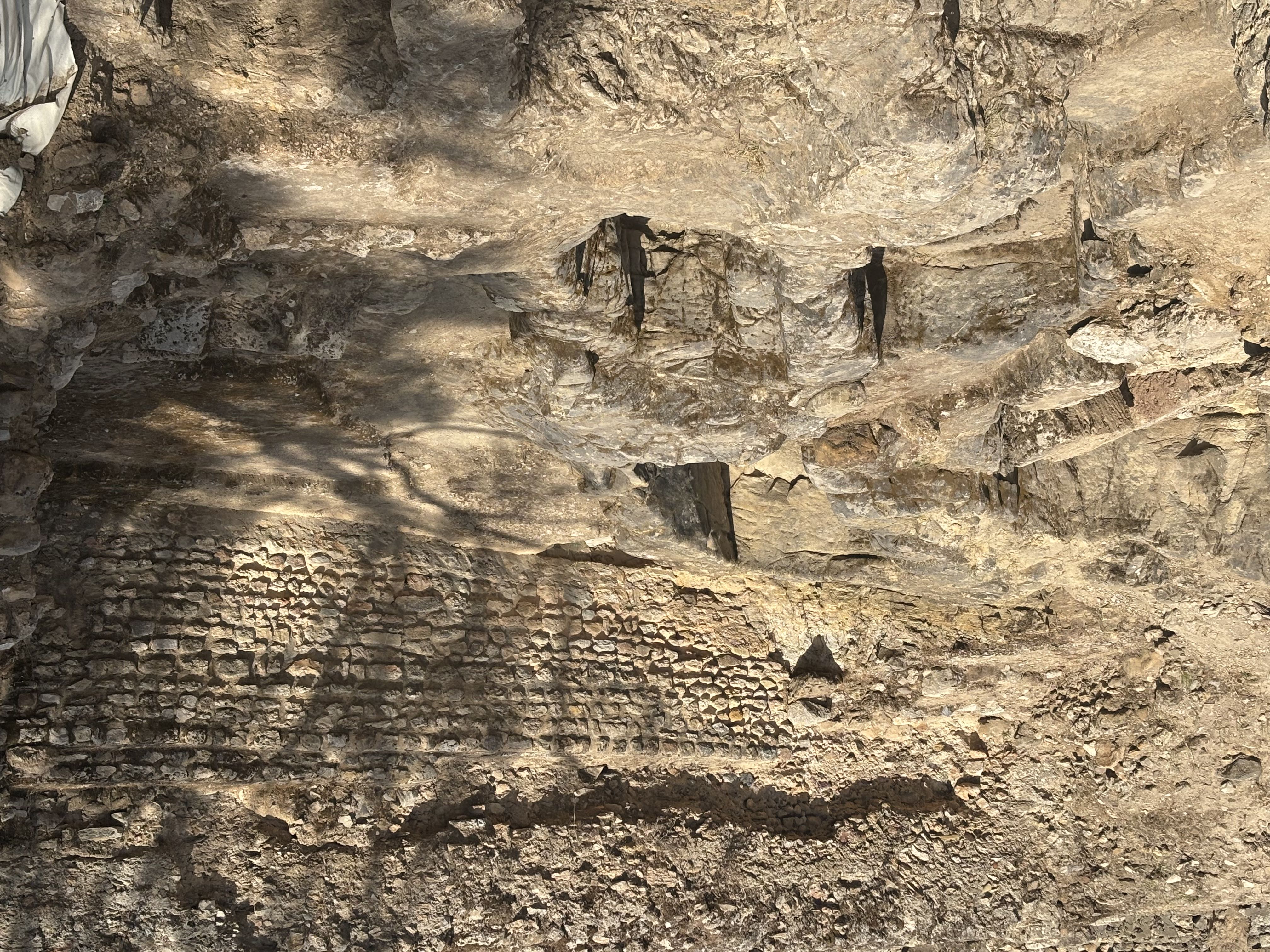
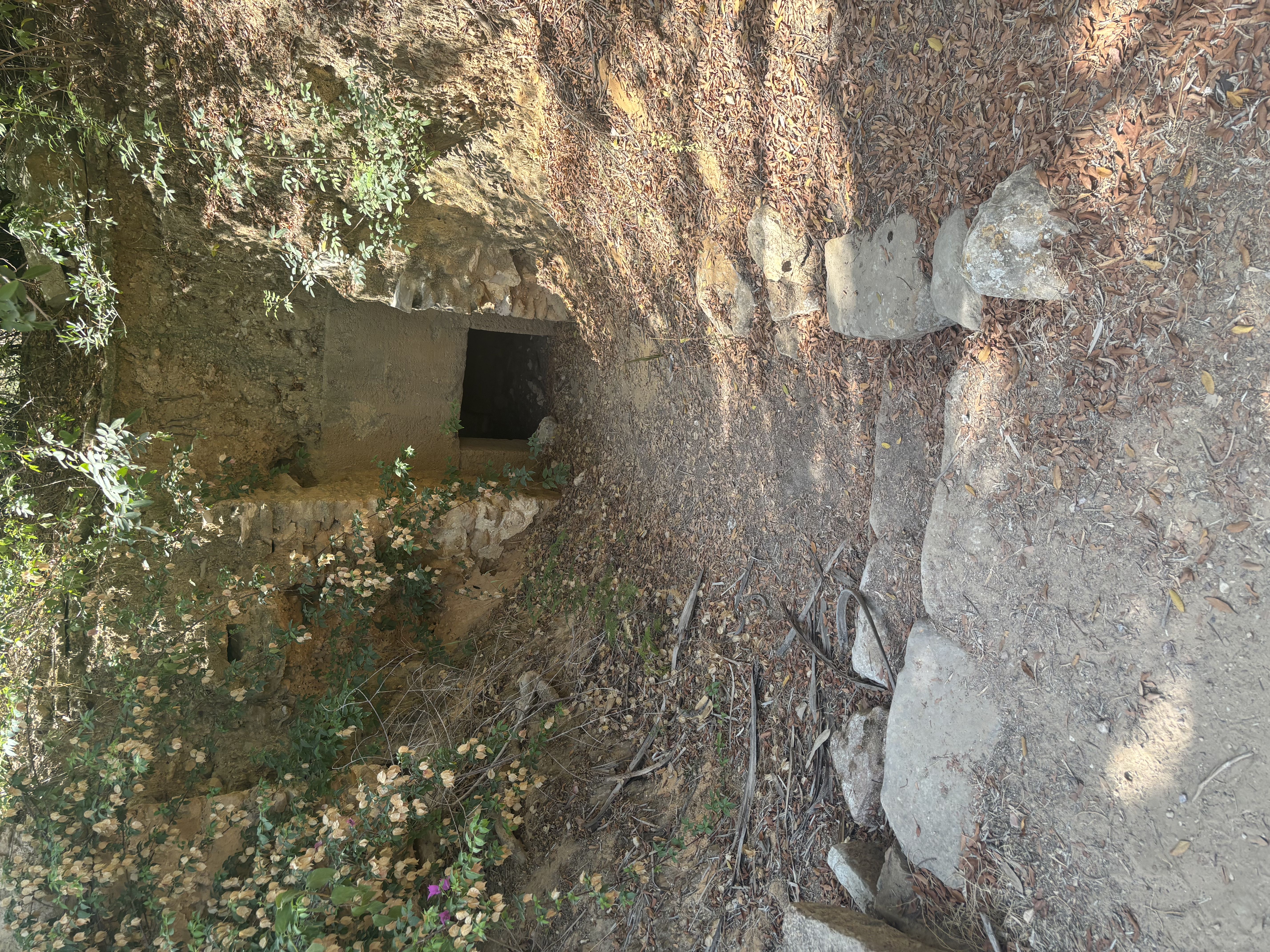
In the northwestern part of the Archaeological Site of Carthage is the Punic 'Dermech' Necropolis, where there are numerous tombs dug into the rock. Which made since that the Carthagians would want to bury their dead away from the main town on the harbor.
Sadly the Roman's destroyed part of the necropolis to build a ceramic kiln, so much for respect for the dead!
Later Roman (AKA Byzantine) Christian Church Ruins
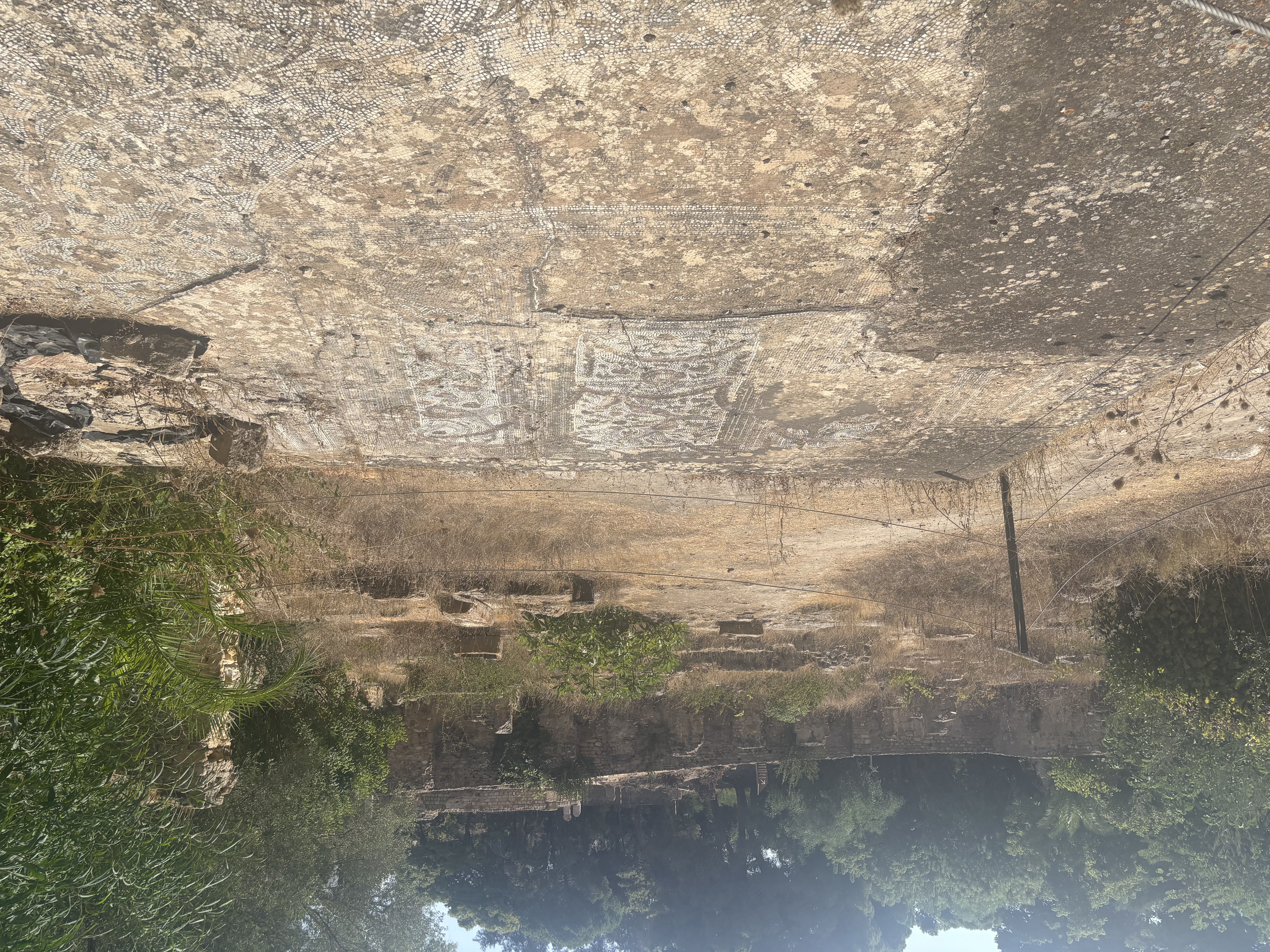
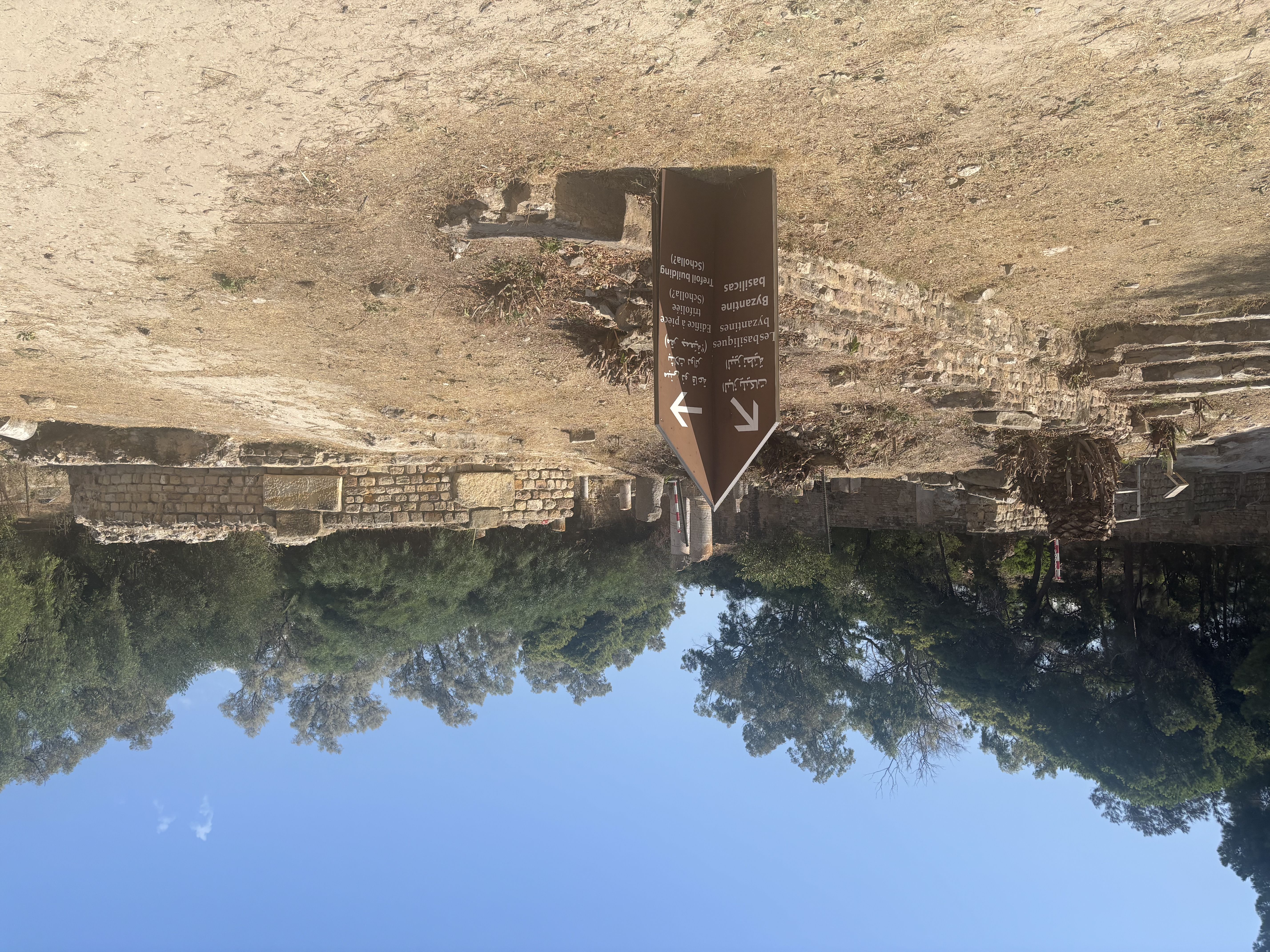
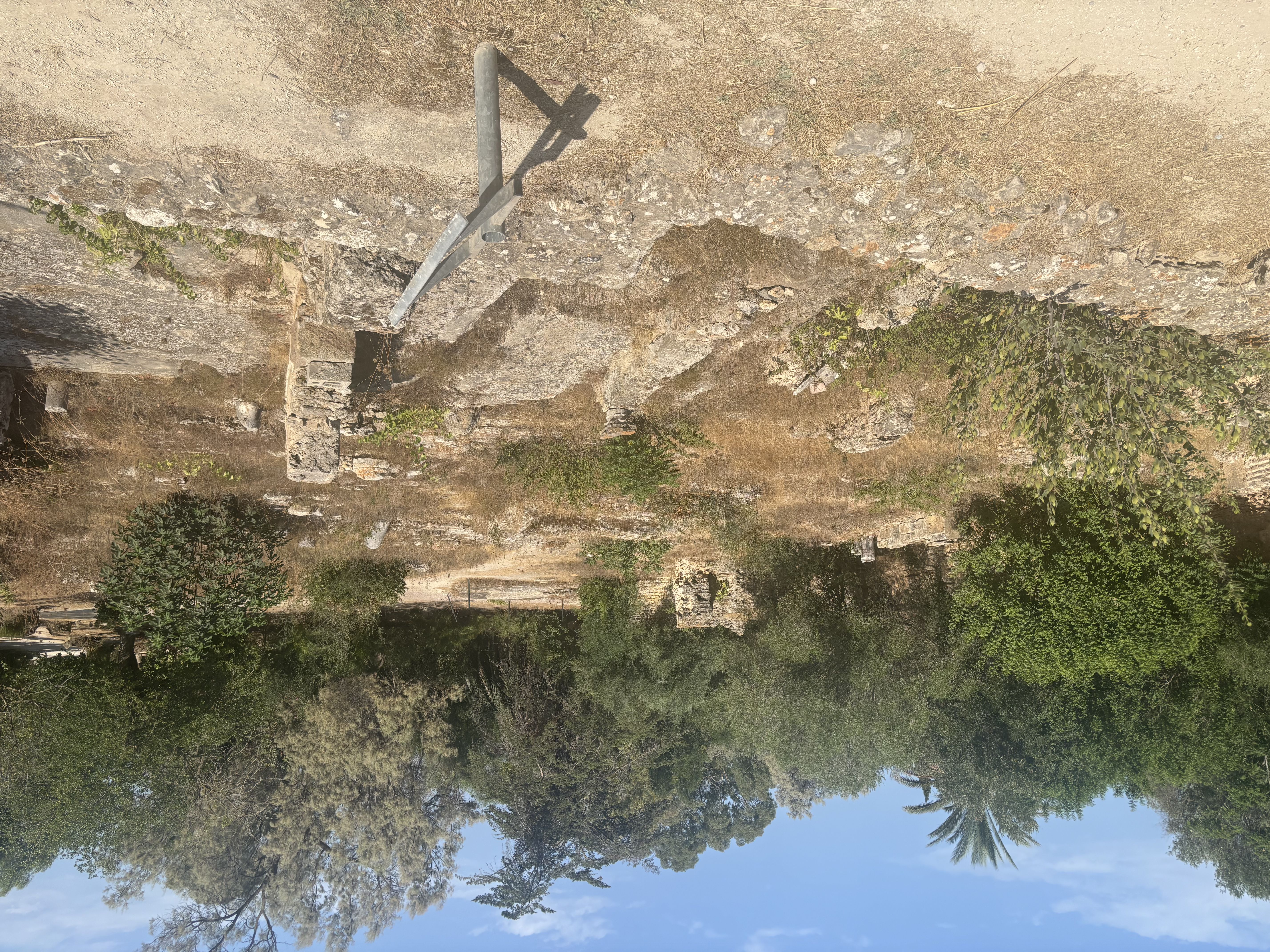
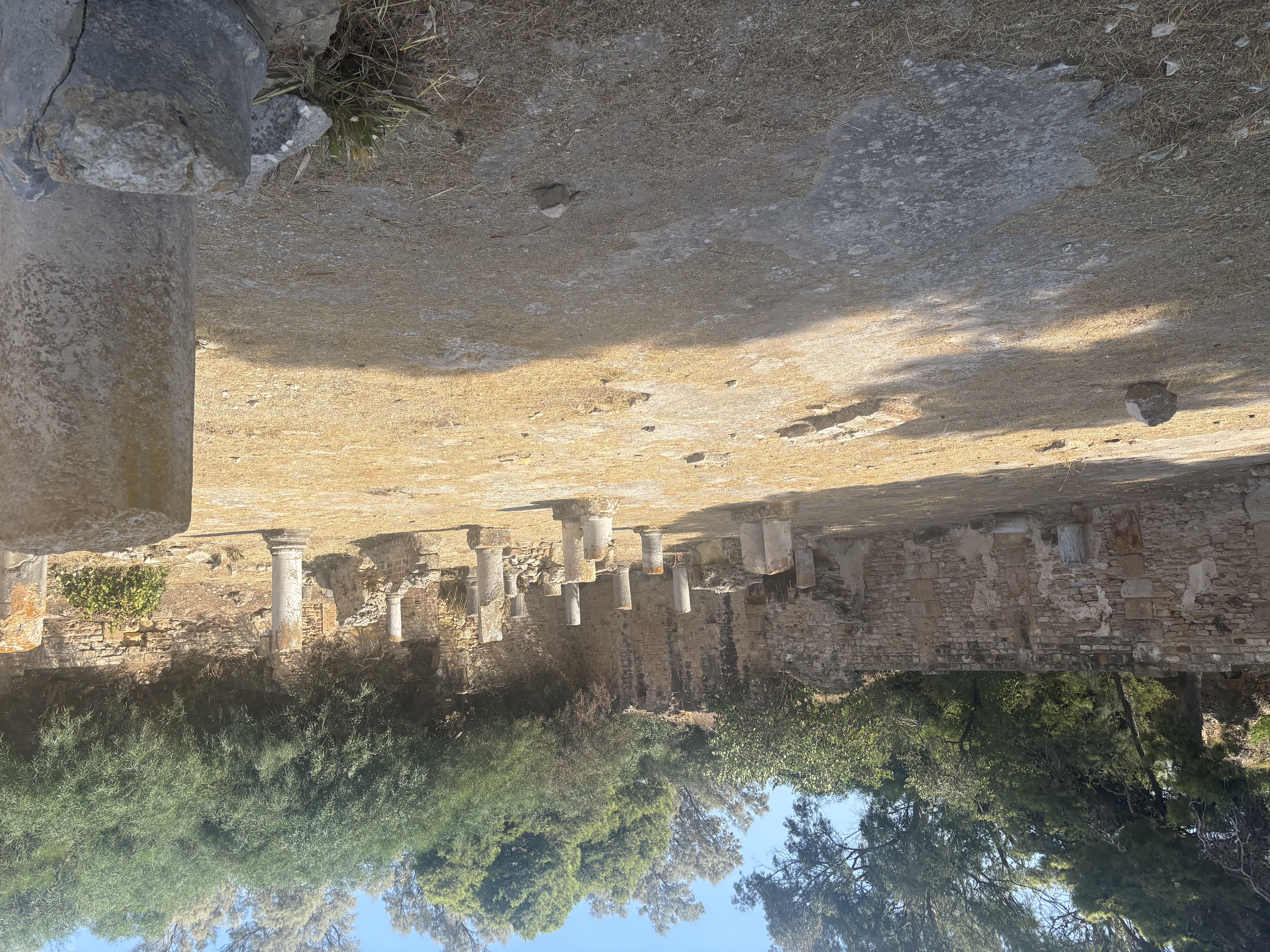
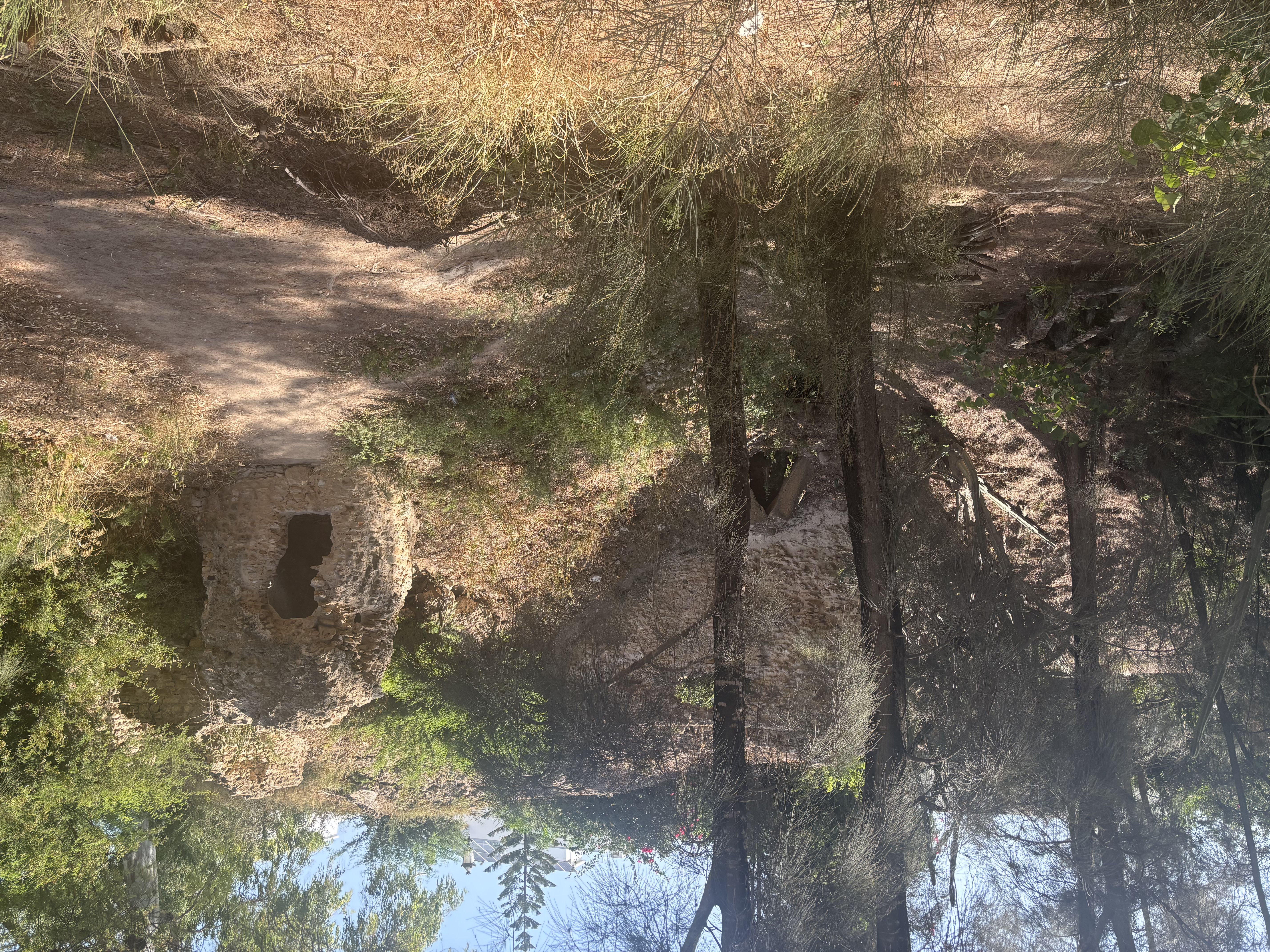
A mentioned earlier this site has been built and sacked multiple times boy multiple parties. The Goths destroyed the Antonine Baths when they conquered North Africa in 435 AD, then Emperor Justinian (in Constantinople), sent General Belisarius to re-conquer Carthage in 533 AD almost 100 years later. To celebrate, they build a Christian Church, that was subsequently destroyed by the Umayyad Muslims when they conquered it from the Romans in 695. Fearing future re-conquests by the Romans, in 698 the Umayyad forces largely destroyed and razed the ancient city, shifting their regional administrative and military headquarters nearby to what is now modern Tunis. By now it was hitting 5:00, Mike and Bone had covered the whole park and decided to head back.
The Random Roman Villa District
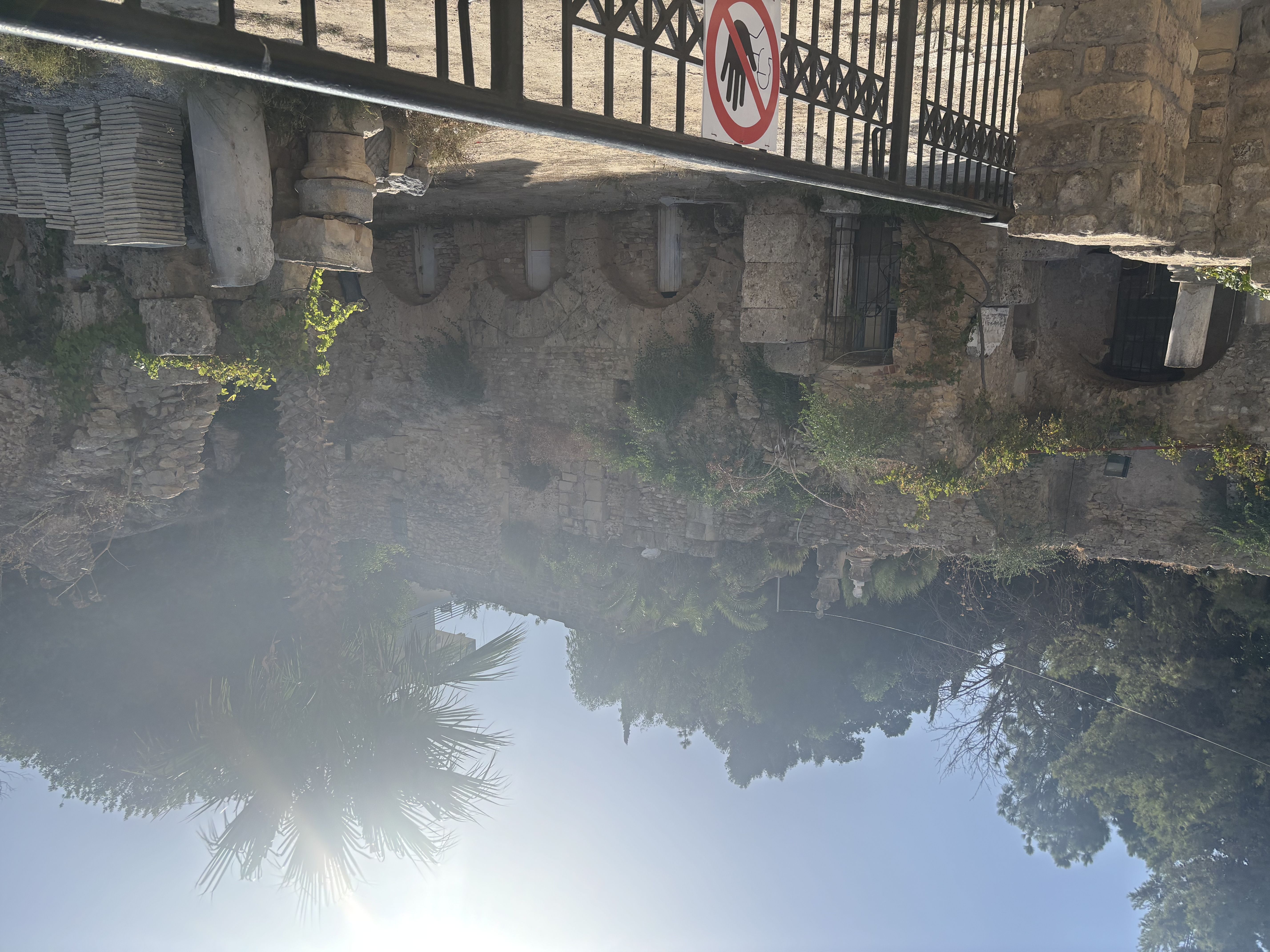
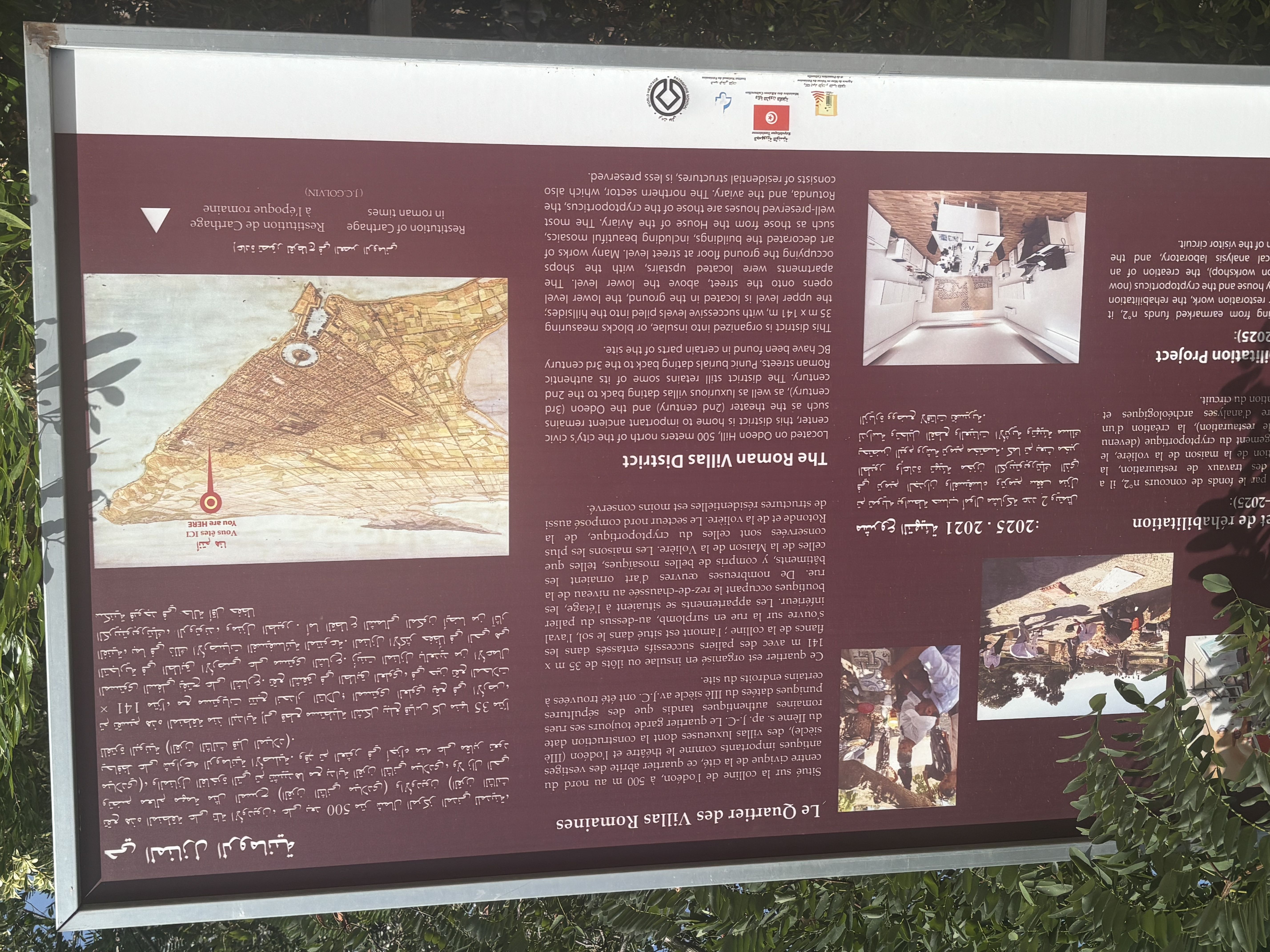
Driving back on the hilly terrain just out of the Antonine Bath's site, the Boys saw some Roman ruins. Now the City of Rome was built on the 7 famous hills and the Forum is between the Capitoline and Palentine hills. To this day you can see that the rich and shameless (whoops) famous live on top of the hills. In fact the Emperors Palace ruins is on the Capitoline Hill. So it is no surprising that Roman Carthage's wealthy live on the hills overlooking the rest of Carthage. Located only 1,500 feet from the ancient city center, it was home to luxurious villas dating back to the second and third century. To this day it still retains some of its authentic Roman streets. The Villa District had its own a theater and an Odeon. Sadly, archeologists have discovered that the Romans built the Villas over the Punic burial grounds which is no more than 100 yards from the Punic burial grounds in the Antonine Bath Archeological Site.
They did it! Carthage in a day! Now time to have a nice dinner and reflect! Mike found a very upscale restaurant nearby by up the hill called Dar Zarrouk where the orders two fine fish dinners and well-deserved cocktails!
A Well Earned Tunisian Dinner !
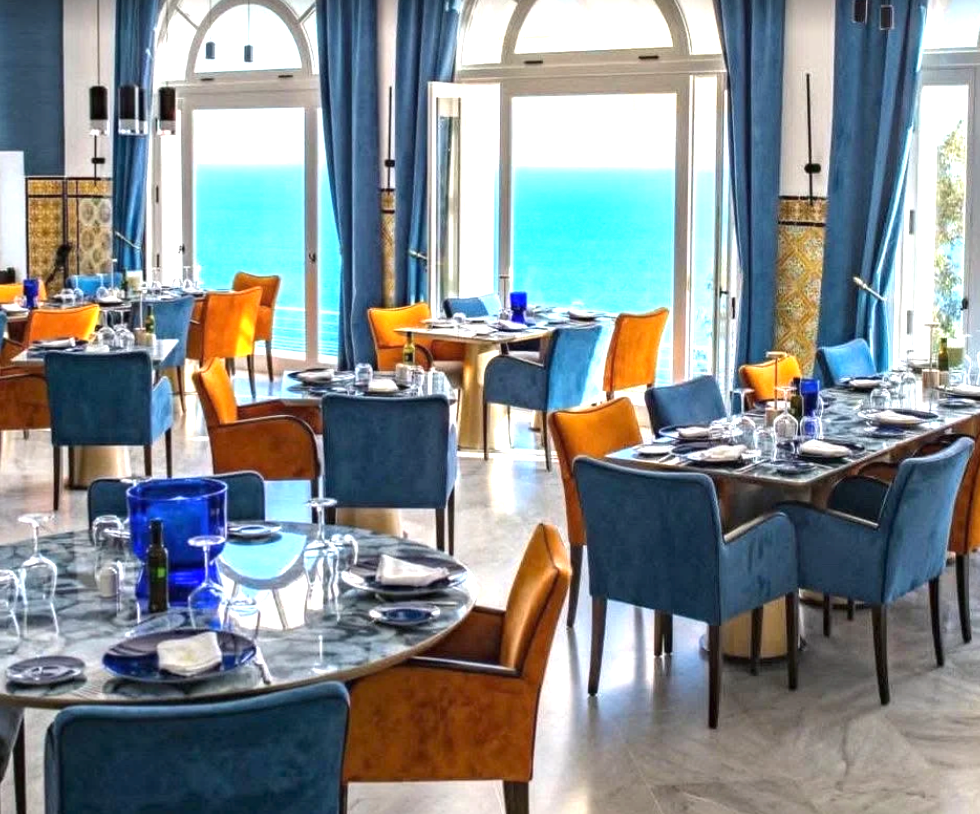
Bone enjoying his Lemon Schweppes and Vodka, reflected that if they stayed and flew the next night, they would not have a lot of time to drive to Marseille. Since they had had accomplished their objective in Tunesia MAYBE, it would be a good idea to fly tonight, and start Spain tomorrow!?!
Mike readily agreed and after their great service, meals, and drinks, Bone rebooked for the evening as they headed back to the Dar Elyssa Hotel to relax a little bit before they headed to drop off the rental and go the Airport for their 1:30 AM (yep that early) flight to Madrid, with a connector to Malaga.
A Nite Swim, before heading to the Airport!
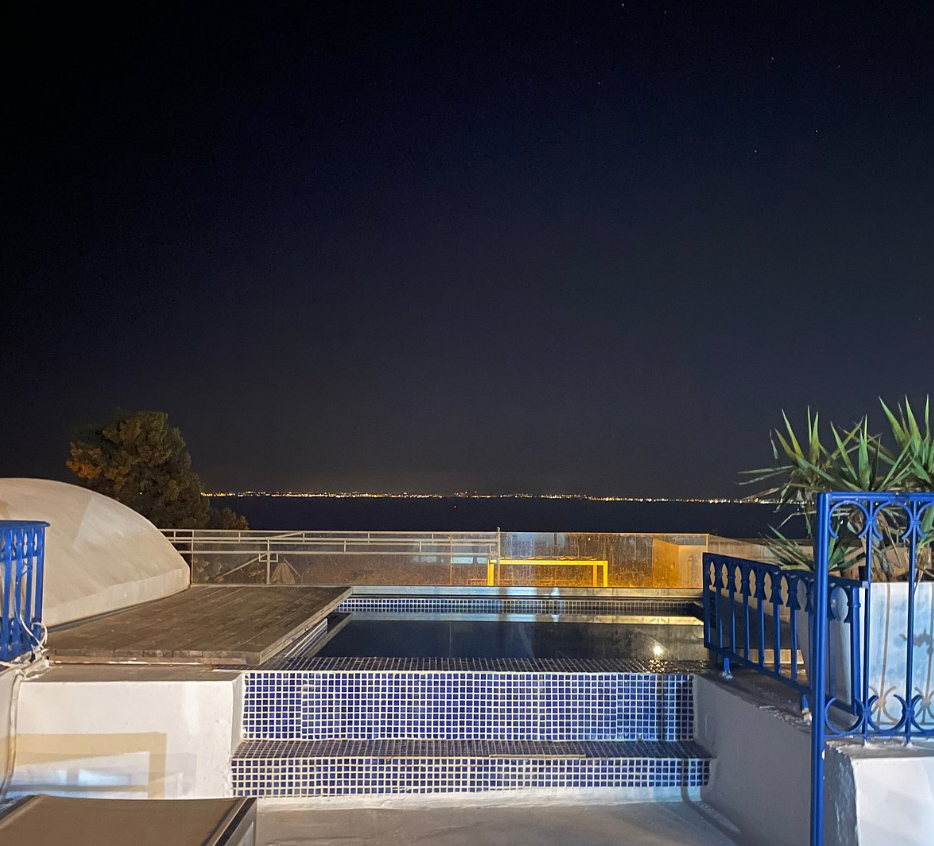
Arriving at the Hotel Mike and Bone were met by demure hostess Sheyanne, whom was surprised when she asked what time they would like their breakfast and the Boys let her know they were heading out in a couple of hours!
With a few hours to kill since they did not have to be at the airport till 12:30 AM and it was only 9:00 PM, the Boys thought what better way to refresh themselves after a long hot day in the Tunisian Sun checking out Roman and Punic ruins then a refreshing dip in the pool overlooking the Sultry Tunisian evening on the gorgeous Mediterranean!
While they were BS'ing in the Pool, Sheyanne brought the Boys Tunisian Cookies and Tea that they could nosh on by the Pool. What a day it had been and what a night they were signing up for! They had just flown in the day before, but the idea of heading out tonight would give them more time on the road in Spain and France.
On the Road Again!
Ole Willie Nelson has nothing on Mike and Bone! Around 10:00 PM Mike and Bone gathered their gear and bade a found farewell to their pleasant hostess and headed tensely to the Airport. The Tunisian drivers weren't really any better in the night and maybe wobbled even a bit more in and out of their lanes! The Boys were also a little nervous on whether there would be staff at the Hertz and better yet, would they find the Hertz!
Fortunately there was zero drama. They found the hidden Hertz in the Corporate Center, and were politely driven to the Airport.
Security wasn't an issue either and since there ain't a lot of idiots (other than Mike and Bone!) flying at odd hours in the night, their wasn't a long line or crowds milling about.
They were able to get a mid-night (yep mid-night) snack of two faux French sandwiches, which were not as good as they looked, milled around and had a local coffee to keep them from passing out sitting around. Finally about 12:45 AM they boarded their flight to Madrid, and passed out as the Plane taxied on the runway, ending a looong and eventful Tour of Tunisia!